
Large-SUV collision control for the GLS
Mercedes-Benz GLS Body Repair Dubai
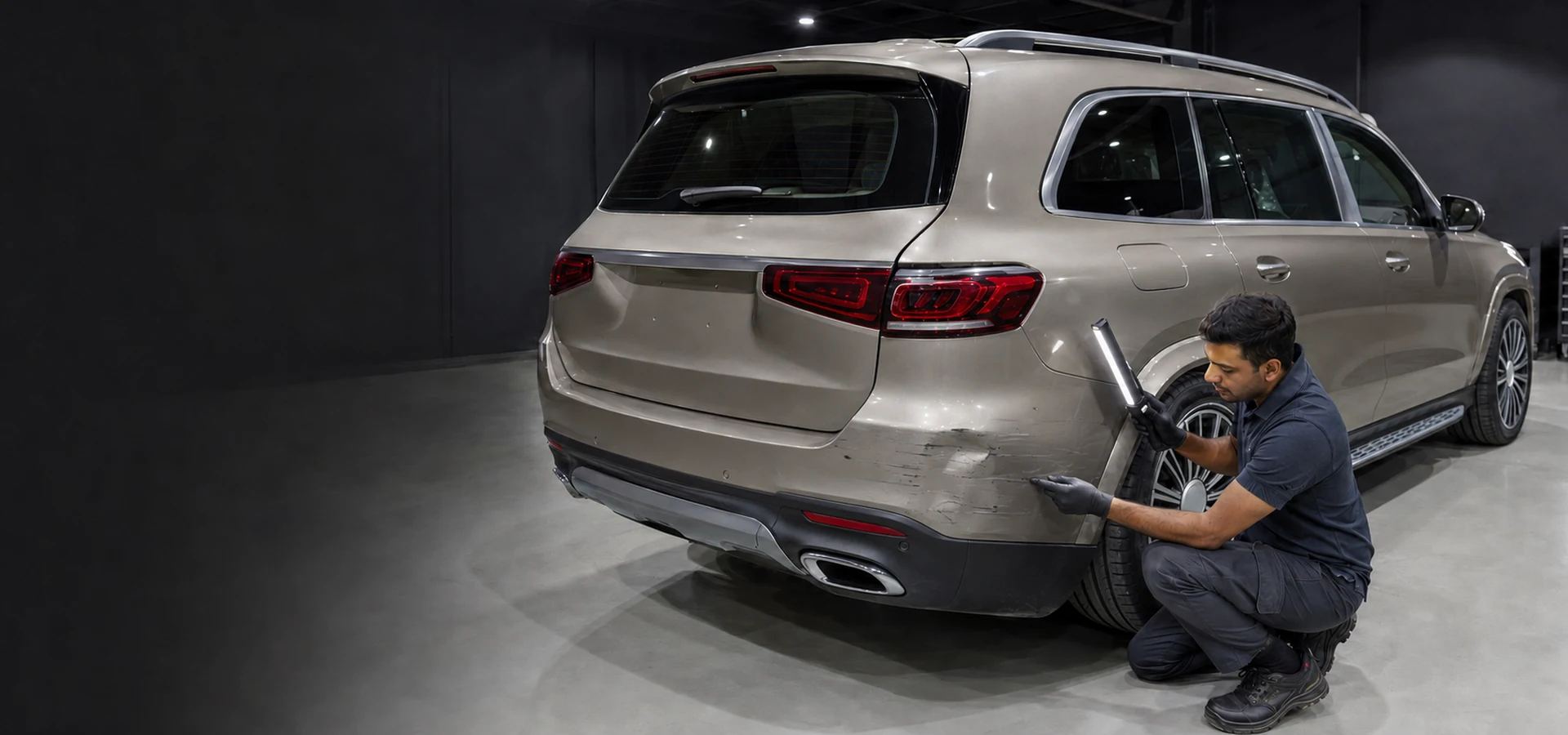
Mercedes-Benz GLS body repair in Dubai must account for the distance between an exterior contact and the third-row, luggage and powered-closure areas behind it. A rear bumper can look nearly normal after springing back while guides, vents, lamp pockets or the tailgate opening remain disturbed. Our repair chain therefore travels inward before it returns to the paint surface.
Mercedes Benz GLS Body Repair Dubai starts beyond the bumper skin
Plastic can recover after contact and hide a distorted guide or absorber behind it. The first GLS inspection records scuff direction, fastener movement and the relationship between bumper, quarter panels and tailgate. A wide rear photograph taken at lamp height gives more useful context than a close image of one painted mark.
If the impact was substantial, the owner should also report any change in steering, suspension, warnings, fluids, exhaust-area noise or closure behaviour. A vehicle is not declared safe to drive from photographs. Where structural, restraint, wheel or cooling risk is possible, controlled recovery and inspection are the appropriate next steps.
The mounting layer stays visible until it is documented
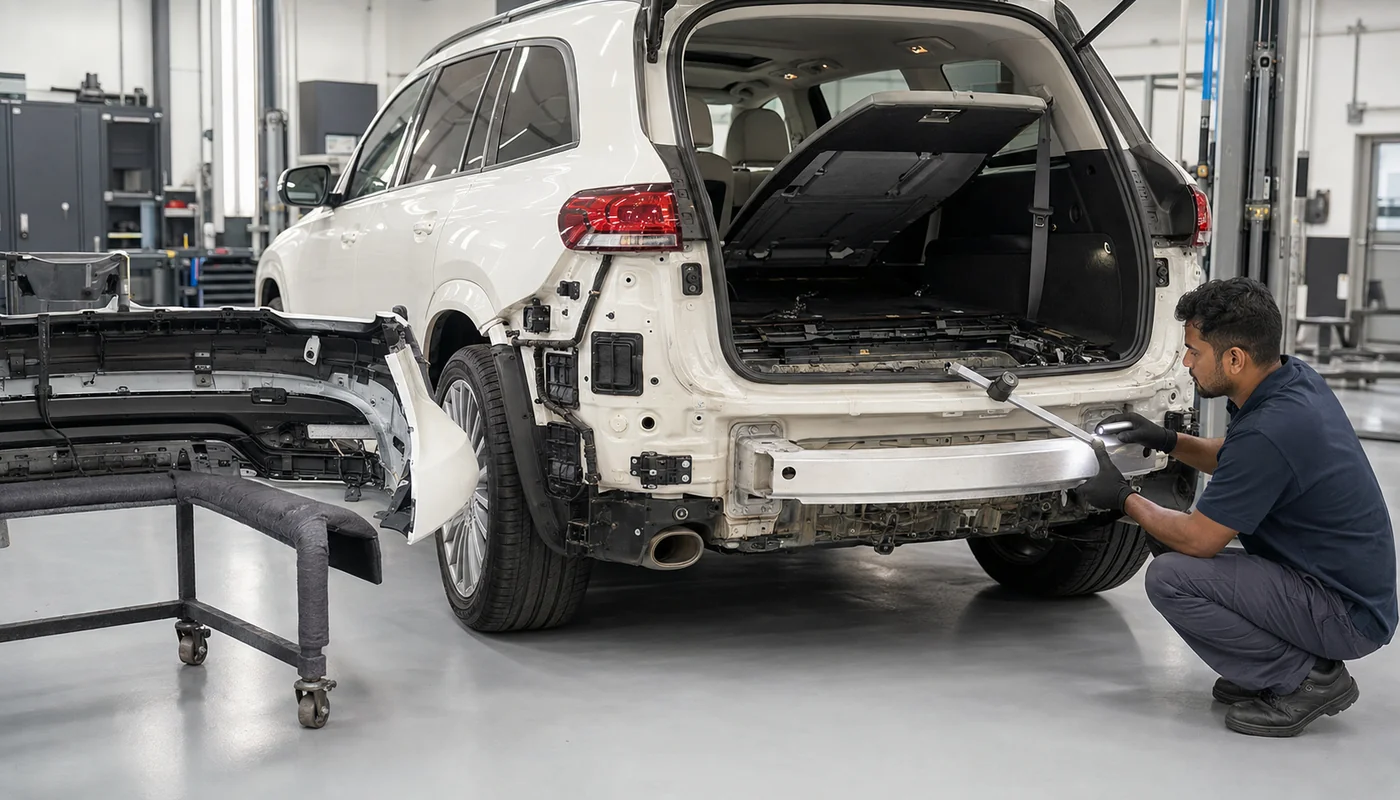
After controlled removal, the bumper carrier, energy-absorbing elements, side guides and sensor holders are inspected individually. Marks are followed rather than cleaned away immediately. A fractured guide can pull the finished skin out of position later even when the first trial fit appears acceptable.
Hardware is counted and transfer items are labelled. Replacement decisions consider the permitted operation, not only whether adhesive could hold a crack. Before closure, photographs should show the repaired or renewed mounting layer in its final orientation so the exterior finish is not the only proof left in the file.
GLS rear-impact transfer chain
Read a rear strike from the bumper to the occupied cabin
Each link has its own evidence and stop condition. The chain is deliberately rear-led because the GLS combines a large bumper, powered closure, luggage space and three seating rows in one impact path.
Tailgate geometry is established before powered cycling
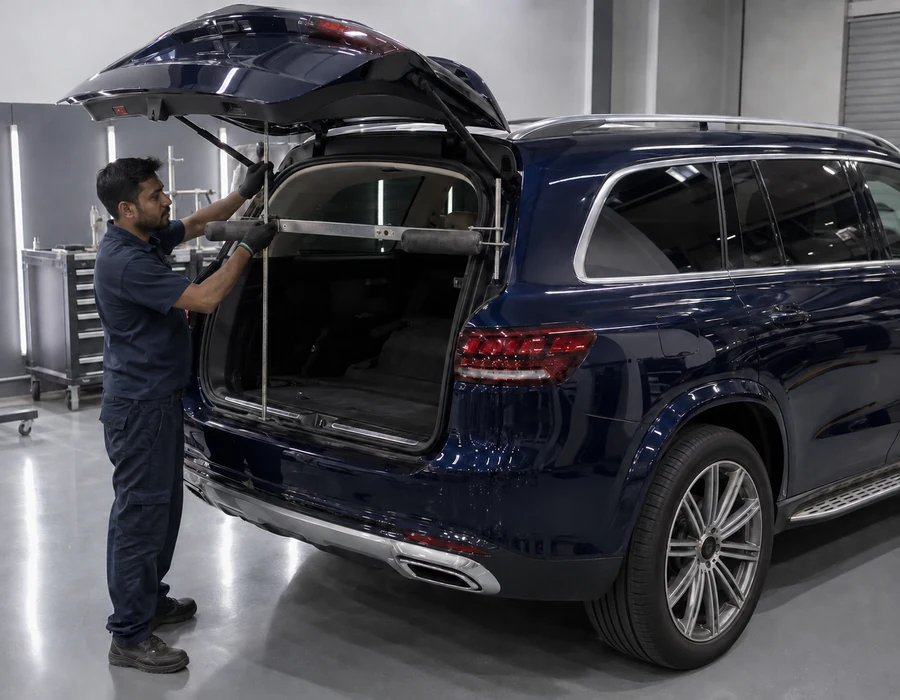
The GLS tailgate is observed at rest for height, flushness and left-to-right gap changes. If resistance, scraping or abnormal motion appears, repeated powered operation is avoided. The aperture, hinge references, latch and operating hardware are checked in a sequence that separates body distortion from an electronic symptom.
Adjustment begins only after the opening is measured. Pulling the latch to make one gap look even can transfer the error to seals, lamp relationships or closing effort. The final test confirms normal movement under the conditions specified for the vehicle and records any limitation outside the approved body-work scope.
Split rear references reveal a displaced opening
Reference lines
Rear lamps, quarter edges, tailgate surfaces and bumper corners create repeated horizontal and vertical cues across the rear opening.
Side-to-side check
Both sides are compared without assuming the undamaged side is perfect. Previous repair, load and build tolerance are noted before one side becomes the standard.
Lamp and aperture evidence
A working lamp can still sit in a moved pocket or carry a cracked mount. Support, alignment, water paths and harness routing remain visible until the zone passes inspection.
Luggage-floor evidence deserves an early look
Inspection
Trim can conceal creasing, disturbed seam material, loose brackets or evidence that stored objects moved during the collision. We document the luggage area before removing contents where practical and safe, following the impact height and direction rather than stripping the rear body without a question.
Evidence
A clean carpet is not structural proof, and a displaced trim clip does not automatically establish deep damage. Physical measurements, underside observations and manufacturer repair information decide what the finding means. Scope changes are photographed and authorised before additional work.
Third-row surroundings require a clear boundary
Because the GLS can carry occupants close to the rear body, restraint warnings, seat movement and impact-related interior damage are recorded without casual reset. The body shop distinguishes visible trim work from any specialist restraint or occupant-system requirement. A scan result alone is not used to declare those systems safe.
Seats and interior pieces are protected and catalogued during access. Any removed connector, belt component or trim interface follows the applicable procedure. At handover, completed body operations and unresolved specialist items are stated separately so cosmetic completion does not imply a broader safety certification.
Side impacts must account for length and door sequence
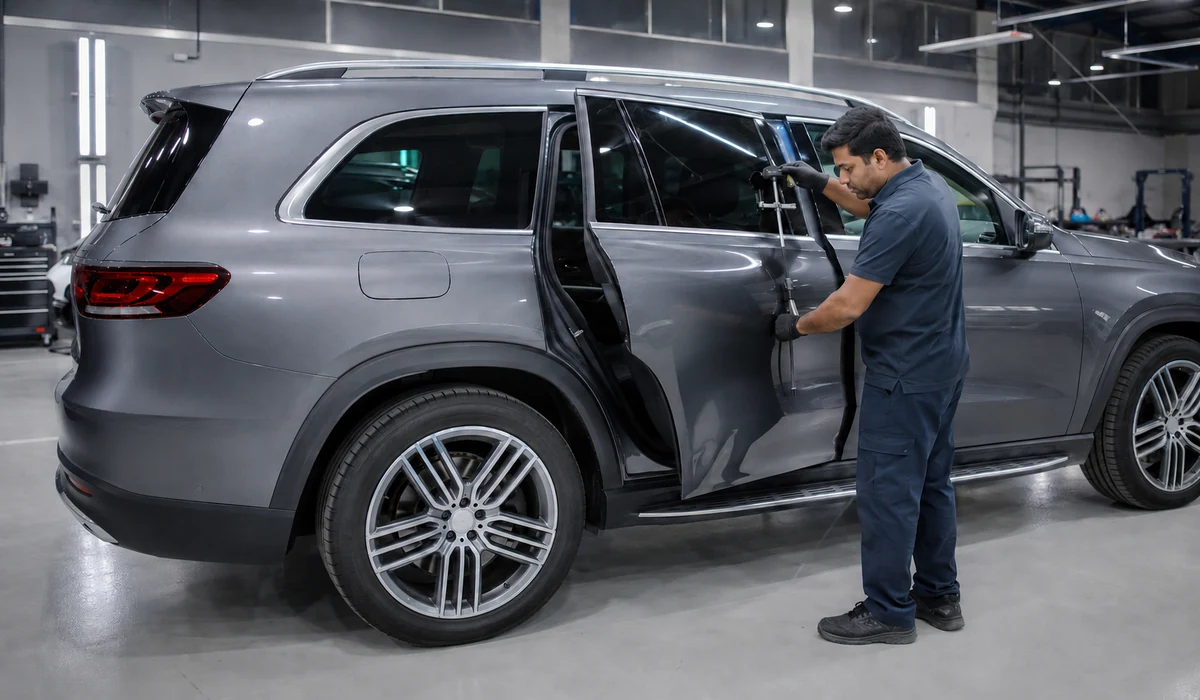
A scrape along a GLS can cross front door, rear door, wheel arch, lower cladding and side-step area. The long reflection makes small disagreements visible. We preserve arrival gaps, check closure effort and use line lighting to determine whether the damage is local or has influenced a wider aperture.
Each door is tested in a controlled order so one adjusted opening does not hide another. Mirror, glass, seal and handle behaviour are included only where contact or removal makes them relevant. Repair versus replacement depends on material, edge loading, access and the current permitted method.
Ride-height and wheel evidence frame the panel check
A large SUV can appear uneven because of load, tyre condition, suspension state or collision damage. Intake records the stance before lifting or unloading changes it. Wheel-arch clearances and bumper height are interpreted only after the reference condition is understood.
A contact near the wheel prompts tyre, rim, liner and suspension screening. Alignment is not ordered as a decorative printout; it is used when it answers the impact question. The final body gaps are reviewed at a repeatable stance so a panel is not approved simply because suspension position temporarily concealed a mismatch.
Sensor coverage begins with the actual specification
The GLS range can include parking cameras, radar and lighting equipment that varies by derivative. The vehicle, VIN and installed hardware define the repair scope. Generic feature lists are not copied into the estimate, and an aperture is not assumed empty because a brochure image looks different.
Physical holder position, surrounding shape and wiring condition precede diagnostics. Applicable calibration follows completed body and wheel references. The result should name the system and operation actually performed rather than use a broad phrase suggesting that every driver-assistance function has been certified.
Turn the visible clue into a controlled inspection
Send the complete damage area, its nearest wheel or opening, and every dashboard warning. BodyShop.AE will use those clues to plan the first safe access point for this Mercedes-Benz GLS repair scope.
Prepare the complete photo set before requesting the inspection route
Large panels make texture control as important as colour
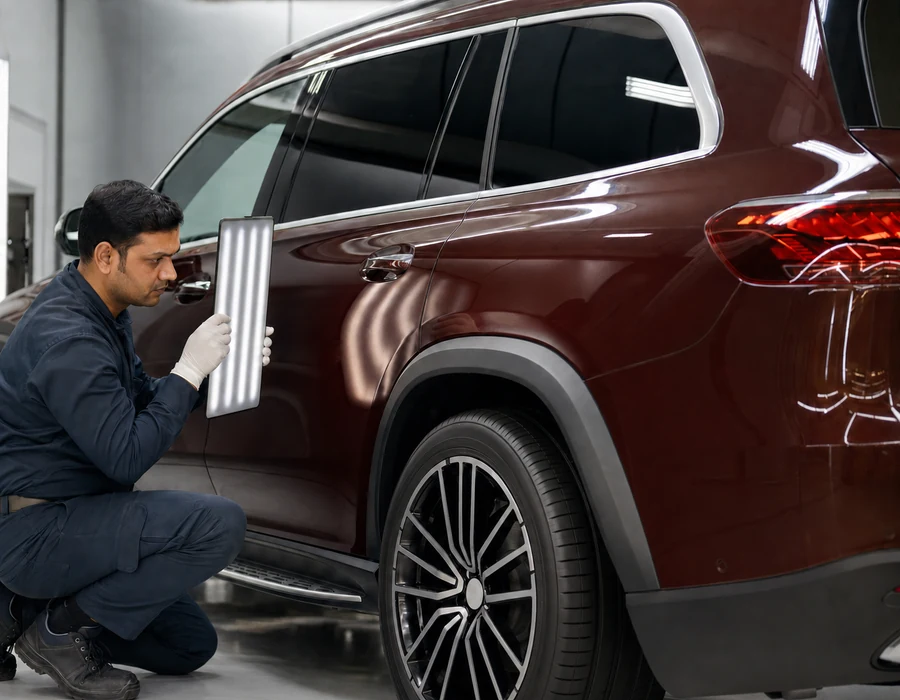
Broad GLS quarter panels and doors carry long reflections. Colour instruments and spray-out cards help select the formula, while line lighting reveals shape and clear-coat texture. The team reviews metallic or pearl travel from several directions because a finish can match face-on and separate visibly along the side.
Blend decisions consider panel boundaries, prior repairs, ground shade and ageing. A polished surface is not approved until edge coverage, dust control, orange peel and the transition into neighbouring panels have been assessed. The customer should receive a repair that reads as one elevation, not a collection of individually shiny parts.
A saloon presents a different reflection and closure problem. Use the S-Class body repair page for long-saloon panels, flush hardware and quiet aperture geometry.
Parts control prevents variant errors from reaching paint
GLS bumpers, grilles, lamps, trims and wheel-related pieces can vary across equipment lines. Part numbers, apertures, connectors and moulded references are compared before refinishing. Supplier descriptions and thumbnails are treated as clues rather than conclusive identification.
New components are inspected for transport damage and dry-fitted where appropriate. Transfer items are stored by zone so seals, clips and wiring do not migrate between departments. If availability changes the production path, the owner receives an updated dependency based on a confirmed part instead of an unsupported completion promise.
The repair estimate follows the five-layer chain
The first quotation can price visible work and planned access while marking deeper layers as inspection-dependent. That structure shows why a rear GLS estimate may change after the bumper or luggage trim is removed. It is clearer than a single figure that pretends hidden carriers, openings and electronics are already known.
Any approved price would need inclusions, exclusions and the required project disclaimer beside it. This page publishes no unapproved AED range. Labour, parts, paint, hardware, diagnostics and outside operations remain distinguishable so the owner can see which newly exposed finding changed the route.
Related pages answer broader questions
The Mercedes-Benz body shop page owns brand-level commercial intent. Deeper accident geometry belongs with BodyShop.AE body repair, and colour preparation is covered by the car painting service.
This GLS page earns separation only through its large-SUV rear chain, powered opening and third-row boundary. The anchors are descriptive but not forced into repeated exact-match form. Each destination is linked once because it serves a different reader decision.
Official evidence supports model configuration differences
The Mercedes-Benz UAE GLS overview lists several variants and configuration-dependent exterior equipment. That supports VIN-led parts and system identification. It does not prove that a particular damaged vehicle carries every feature shown on the page.
Physical inspection and current repair procedures remain controlling. Model-year and option changes can affect lamps, aprons, sensors and trims. Unsupported construction claims are excluded, and no brochure specification is converted into a repair instruction without the required technical source.
Roof and upper-quarter damage needs lengthwise evidence
A tall GLS can contact car-park structures, branches or loading equipment near the roof edge. Photographs should follow the gutter, glass border and rail or panoramic-roof surroundings along their full length. A close view alone can miss a change in crown or sealing reference.
Attachments are removed only when the inspection question requires access. Glass, drainage and bonded areas follow the applicable system. Water testing is planned around an identified route rather than used as a substitute for understanding the damaged boundary.
A recovery plan should include vehicle size and wheel state
The recovery provider needs the GLS location, access height, wheel condition, warning state and whether steering or suspension behaves normally. Those details help select equipment without improvising around a loose bumper or damaged side step. Owners should not crawl under the SUV to find a towing point.
Handover information follows the vehicle into intake so observations made at the scene are preserved. Arrival condition is photographed before unloading changes stance or body contact. This creates a cleaner link between the event and the first workshop evidence.
Post-repair noise is investigated through the repaired layer
A new whistle, knock or vibration can arise from seals, liners, lower covers, steps or wheel contact. The owner should note the speed range and road condition without deliberately reproducing a risky symptom. That description narrows the inspection route.
The workshop returns to the relevant layer and compares handover records. A concern is not dismissed because the paint remains glossy. Unrelated later impact is also documented separately so responsibility is assessed from evidence rather than assumption.
Aftercare covers closures and newly fitted trim
Collection guidance identifies any coating, adhesive, seal or protective component affected by the repair. Washing pressure and early handling depend on those products and their cure conditions. A single waiting period is not imposed on every GLS job.
The owner is asked to report renewed resistance, water entry, loose trim or warning messages promptly with photographs. Powered tailgate movement should not be forced through a new obstruction. Clear instructions make early inspection more useful and reduce avoidable secondary damage.
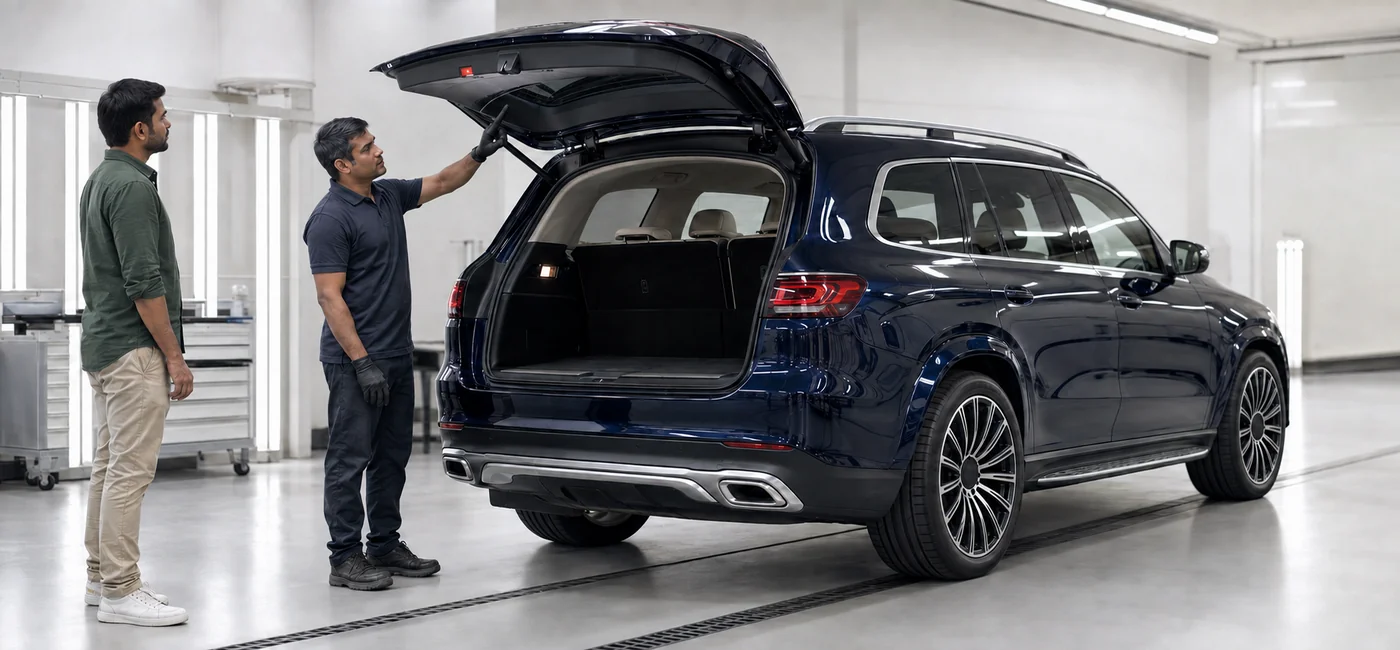
Show the complete rear chain before requesting a scope
Send a square rear view, both rear corners, the tailgate gaps, luggage-floor clues, dashboard warnings and any change in powered movement. We will identify which layer needs controlled access first.