Evidence-led body repair from Downtown Dubai
Car Body Repair Downtown Dubai
Car body repair from Downtown Dubai needs a clean chain from incident evidence to workshop handover. Boulevard traffic, hotel or mall valet custody, basement access and event diversions can all affect movement. BodyShop.AE keeps the repair decision separate from property, police and insurer steps while preparing the vehicle for its Al Quoz 4 workshop.
Incident evidence should be wider than the repair photograph
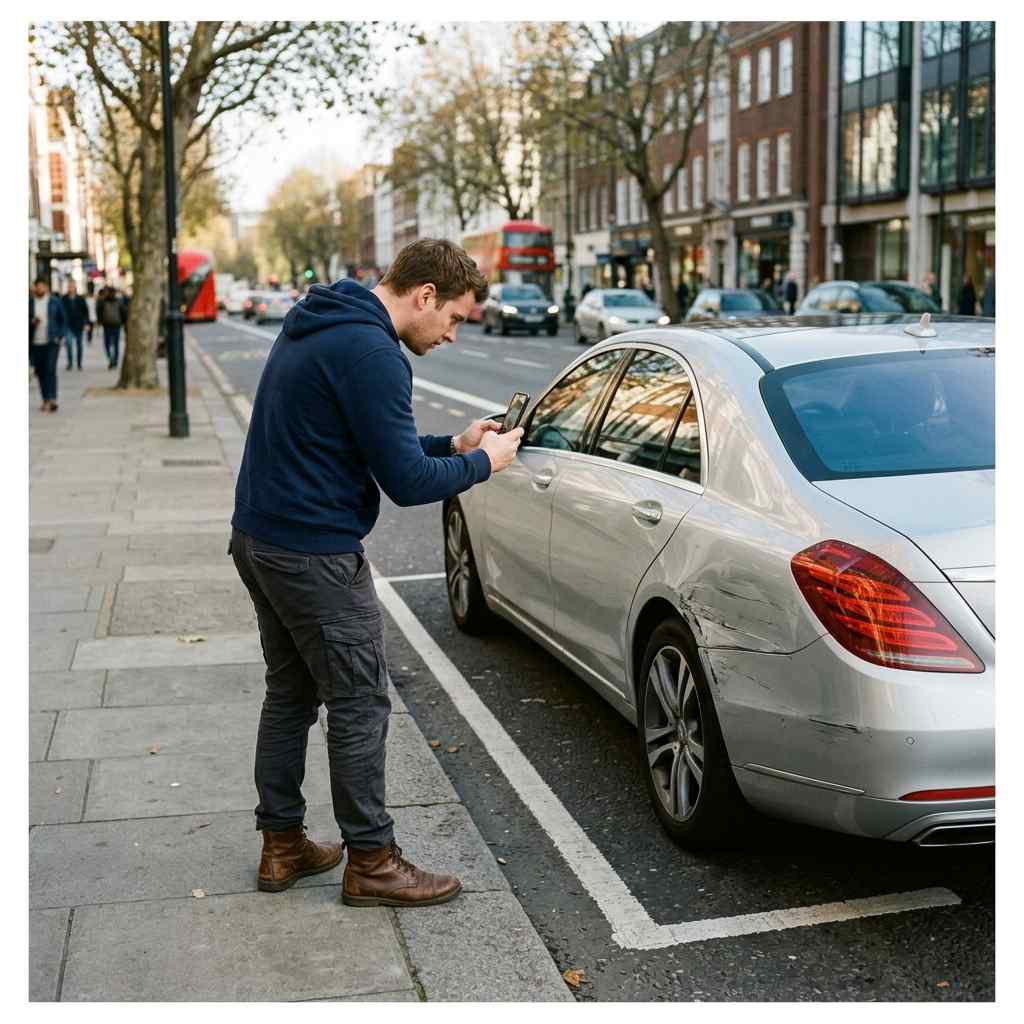
A repair close-up shows paint loss or a crack. An incident image should also show the complete vehicle side, surrounding position and impact relationship when it is safe and lawful to do so. Downtown locations can change quickly as vehicles move, valet teams rotate and traffic is cleared. Preserve the context before focusing on cosmetic detail.
For official accident services and reports, use the current Dubai Police channels. The workshop can use the resulting information but does not decide whether an incident needs reporting or who is responsible.
Downtown evidence custody map
Keep six records connected without mixing their authority
A repair invoice should not become a substitute for police, property or insurer findings.
Select repair work after the evidence is preserved
Downtown repair planning keeps incident evidence, custody authority and technical scope separate.
| Evidence | Repair decision |
|---|---|
| Incident and valet record | When, where and under whose custody damage was noted |
| Wide and close photographs | Impact direction, scale, gaps and protected surfaces |
| Warnings and movement | Driving, recovery or controlled intake decision |
| Workshop estimate | Repair, replacement, paint, electronics and approval |
Tower ramp and low-bumper constraints are examined in the Dubai Marina repair route. For corporate towers and basement custody, the Business Bay handover process keeps authority and access records separate.
After custody evidence is protected, use the accident repair process for impact inspection, repair scope and insurer-related workshop work.
Hotel and mall access can block an unplanned recovery
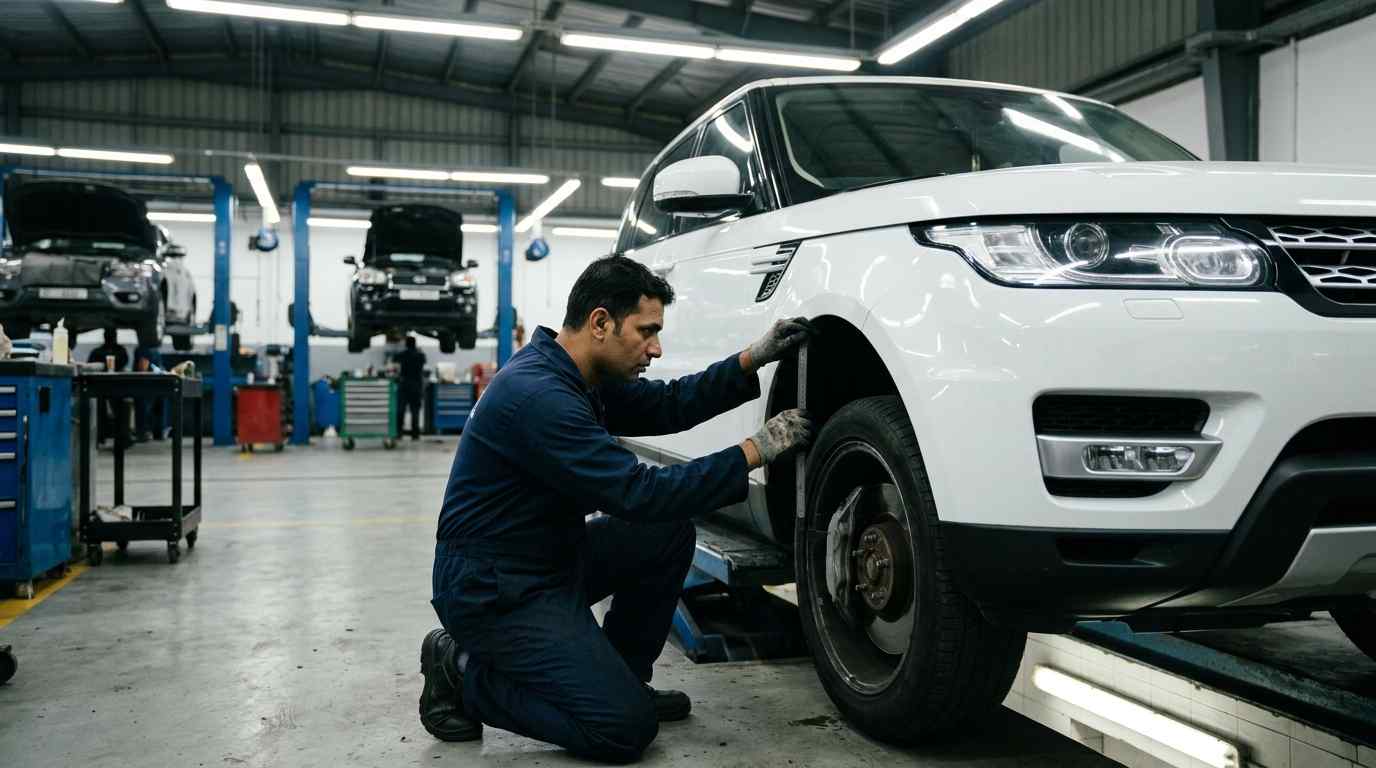
Basement height, loading-bay permission, event security and turning space can determine whether a recovery vehicle reaches the car. Confirm those facts with the property before dispatch. A normal passenger-car route does not prove that a truck can follow it.
If the car can be moved normally, the receiving time should still be coordinated with key custody and workshop intake. If tyre contact, fluid loss, insecure closures, restraint warnings or major distortion appear, recovery becomes a safety decision rather than a convenience option.
Polished luxury paint can still show a poor repair
Downtown vehicles often carry metallic, pearl, matte, satin or protected finishes. The paint code does not approve the match. The existing surface, previous repair, film, ground shade and effect travel all influence the route. Spray-out is compared beside the car under controlled light.
Matte and satin finishes may have different blend and polishing limits from gloss systems. BodyShop.AE identifies the fitted coating before promising a method. Unsupported claims about an invisible spot repair are excluded, and protective film is treated as a separate removal and refit decision.
Downtown handover sequence
Six decisions between the boulevard and Al Quoz
Complete official steps
Do not let repair scheduling replace required accident reporting.
Secure the vehicle
Confirm the car locks, closes and can be released from parking.
Record custody
Name the key holder and person authorised to hand it over.
Check movement risk
Treat wheel, fluid, restraint and structural clues as stop conditions.
Choose current access
Allow for barriers, diversions and building rules without inventing time.
Receive at workshop
Reconcile the incident file with the physical vehicle before work.
Panel gaps preserve collision direction
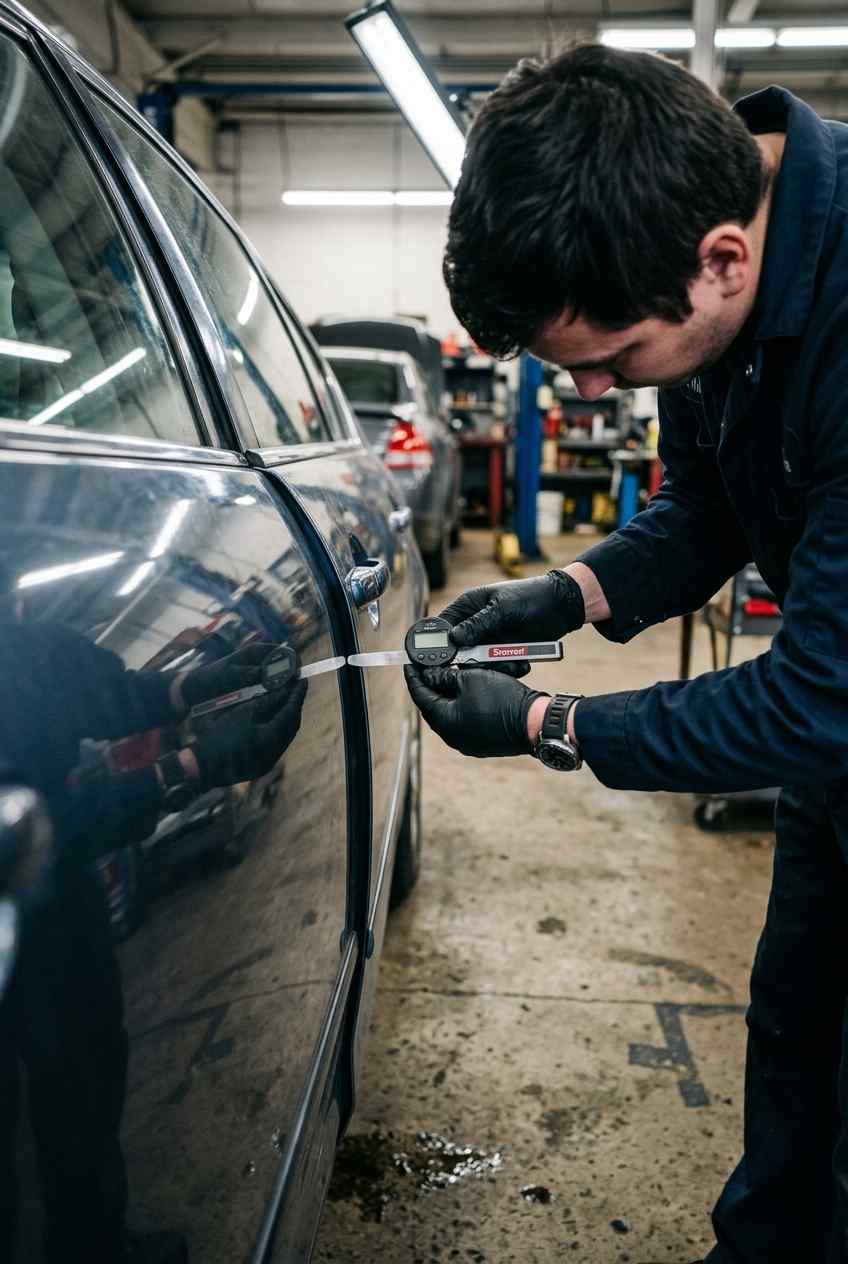
A bonnet, door or tailgate gap that changes from top to bottom can point toward local hinge or latch damage, a moved bolt-on panel or a wider opening change. Photograph the complete aperture before any adjustment. One narrow corner is not enough to diagnose the cause.
The workshop establishes controlling geometry first, then adjusts the closure and neighbouring panels. Repeated slamming can damage paint, glass, seals and latches. If a bonnet or door does not secure normally, the vehicle should not be driven from Downtown merely to obtain a price.
Estimate approval must identify the decision maker
Corporate, hotel, rental or family vehicles can involve several contacts. Intake names who may approve dismantling, supplements and collection. A WhatsApp sender is not assumed to have unlimited authority. This prevents hidden work from being authorised by the wrong person.
The estimate separates visible scope, conditional access and unrelated damage. Insurer approval does not automatically authorise customer-pay work, and a cash decision does not resolve policy coverage. Clear authority makes the technical route faster without relying on pressure or false urgency.
Final handover closes both the repair and custody chain
The collector checks the repaired field, relevant gaps, closures, warnings, lower attachments and finish before signing the vehicle out. Documents state what was repaired and what remains outside scope. Keys, accessories and removed personal property are reconciled.
Returning to Downtown introduces new valet and parking custody. Photograph the finished vehicle at handover if responsibility may change again. A new mark after collection should not be mixed with a workmanship concern; location, timing and evidence help the workshop investigate fairly.
Event access should never become a repair promise
Downtown road controls, hotel functions and major events can change normal approaches. BodyShop.AE therefore confirms workshop receiving without guaranteeing a property pickup time. The property or movement provider must verify current entry and waiting rules. Repair scheduling begins when the vehicle can be handed over lawfully and safely.
This distinction prevents marketing copy from overruling real access conditions. The owner receives a plan built from the current building, parking level and damage condition. If an event later changes the route, the handover can move without changing the technical repair scope.
Premium accessories need their own condition record
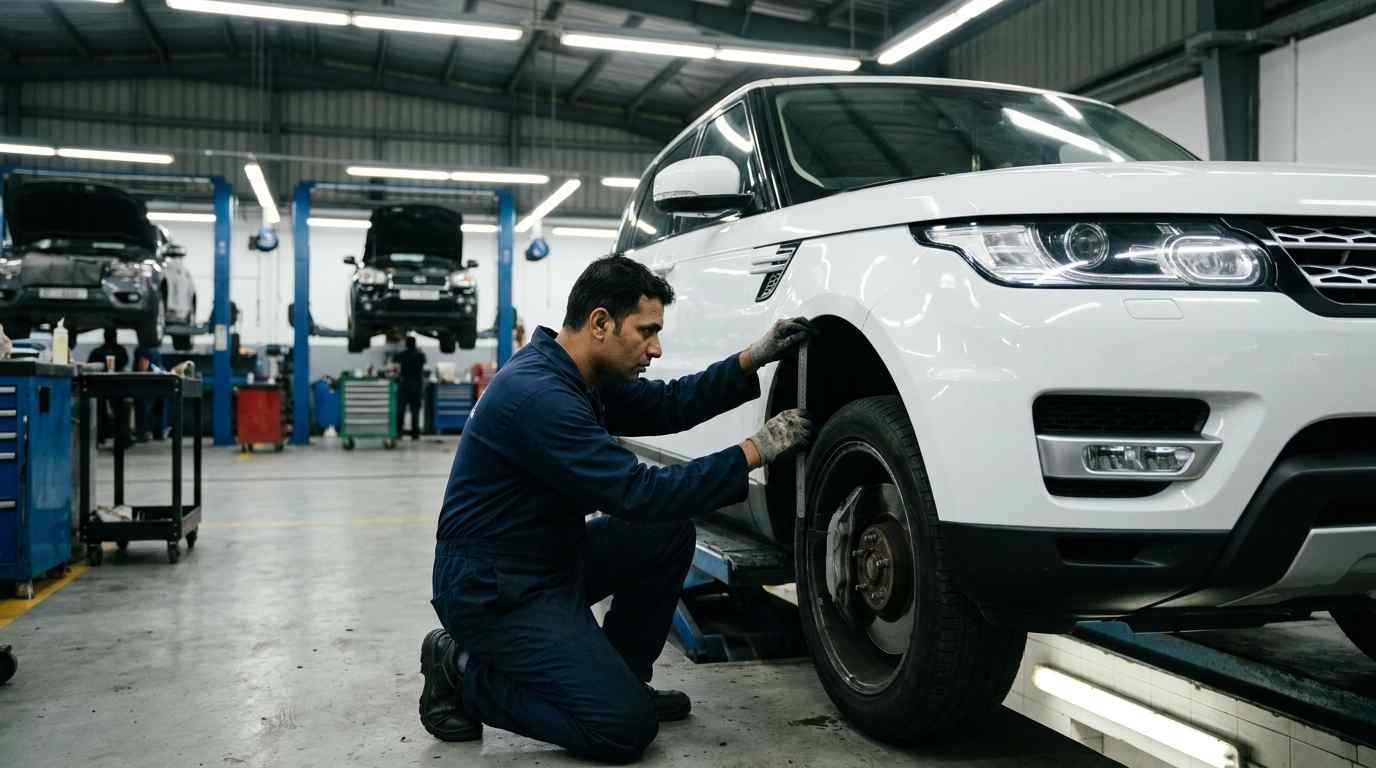
A Downtown vehicle may carry aftermarket wheels, splitters, carbon-look trim, wraps, paint protection film or personalised badges. Intake photographs markings, attachment method and existing condition. The workshop does not assume an accessory belongs to the factory build or can follow the same repair procedure as the original component.
Removal, storage, refit and outside specialist work are written into the estimate. An accessory is not reattached to an unverified mounting point merely to reproduce the arrival appearance. This protects the owner from losing a valuable part and keeps the repair invoice honest about what was restored.
Fixed glass and camera work need a coordinated opening
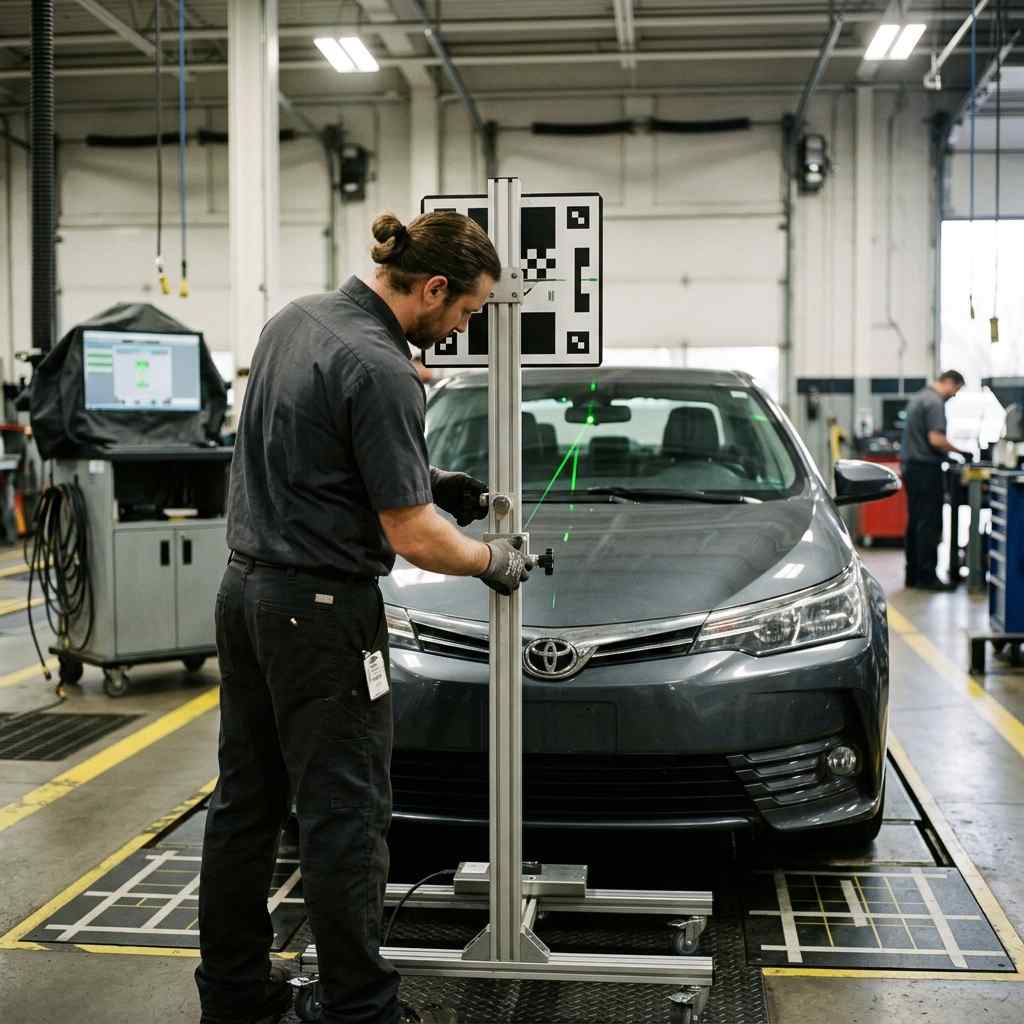
Damage near a windscreen, panoramic roof edge, quarter glass or tailgate glass requires the surrounding opening to be understood first. Bonded glass is not used to pull a distorted aperture into shape. Trim, seals and water paths are recorded before removal, and applicable adhesive conditions are included in the release plan.
Where a camera or driver-assistance function depends on glass position, body geometry and installation precede applicable calibration. The repair record names the operation actually completed. A clean glass edge or cleared warning is not allowed to substitute for opening and system evidence.
The final Downtown record should survive another valet handover
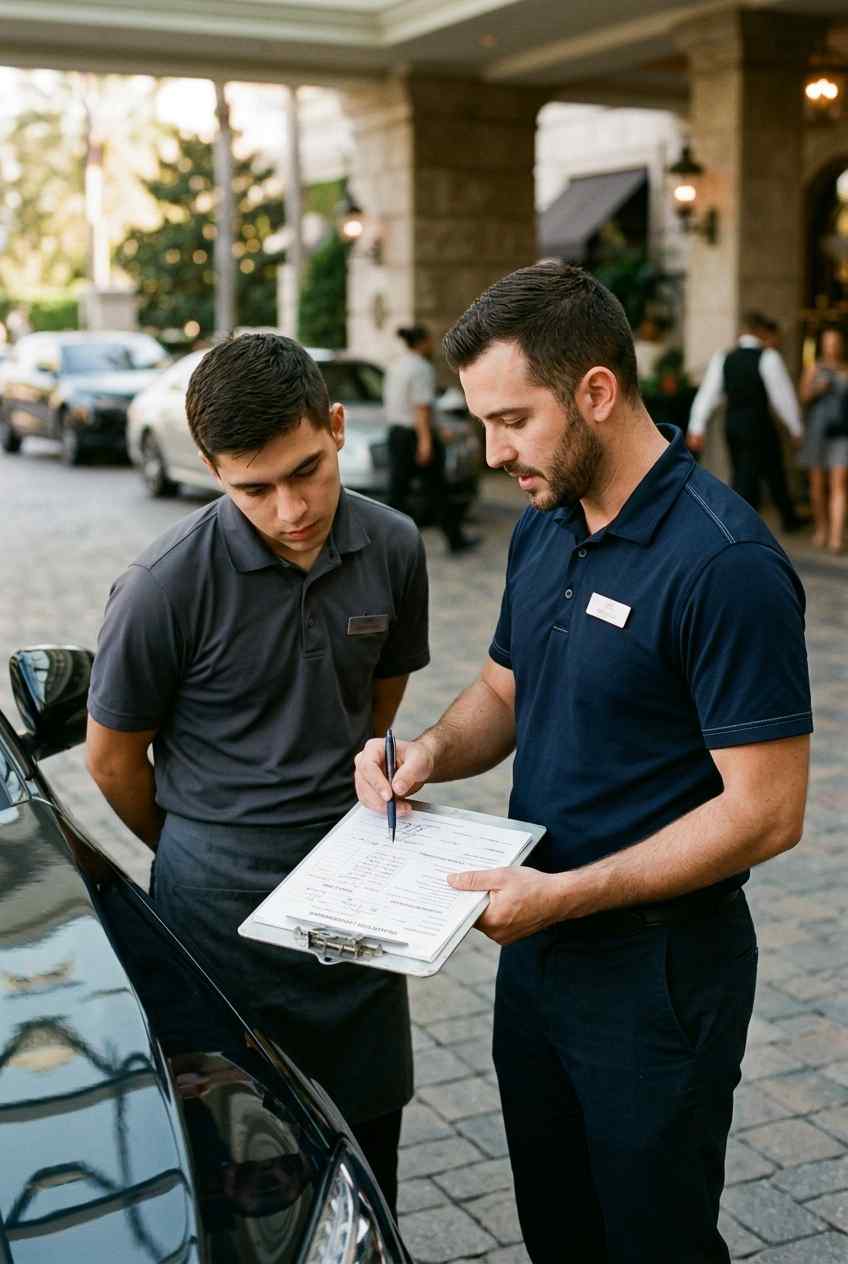
At collection, photographs can show the repaired field under neutral light, with relevant gaps and trims visible. The collector checks operation and receives aftercare. This becomes the baseline if the car immediately changes custody to a residence, hotel or mall valet.
A later claim is easier to investigate when the workshop departure, valet receipt and parking discovery have distinct timestamps. The goal is not to create paperwork for its own sake. It is to keep repair evidence from becoming mixed with a second, unrelated handling event.
Downtown local intent depends on a clean next decision
Searchers may arrive after a valet discovery, basement collision, boulevard incident or paint concern noticed under hotel lighting. The page should help each person decide whether to preserve property evidence, complete official reporting, stop normal vehicle use, arrange access or send a controlled workshop photo set. It should not imply that every Downtown enquiry follows an insurance accident or needs a structural repair.
A concise first response can acknowledge the incident context, request the missing evidence and direct the correct handover. Any technical certainty waits for inspection. This balance matters for AI and traditional search because the page gives a direct answer without turning caveats into filler. It also protects BodyShop.AE from accepting liability questions or property claims that belong to other parties.
Connect the Downtown incident file to the workshop intake
Send the complete impact view, property or valet contact, official report status, parking access, warnings and the person authorised to approve the repair.