
Body repair planned around electric and hybrid systems
BYD Body Shop Dubai
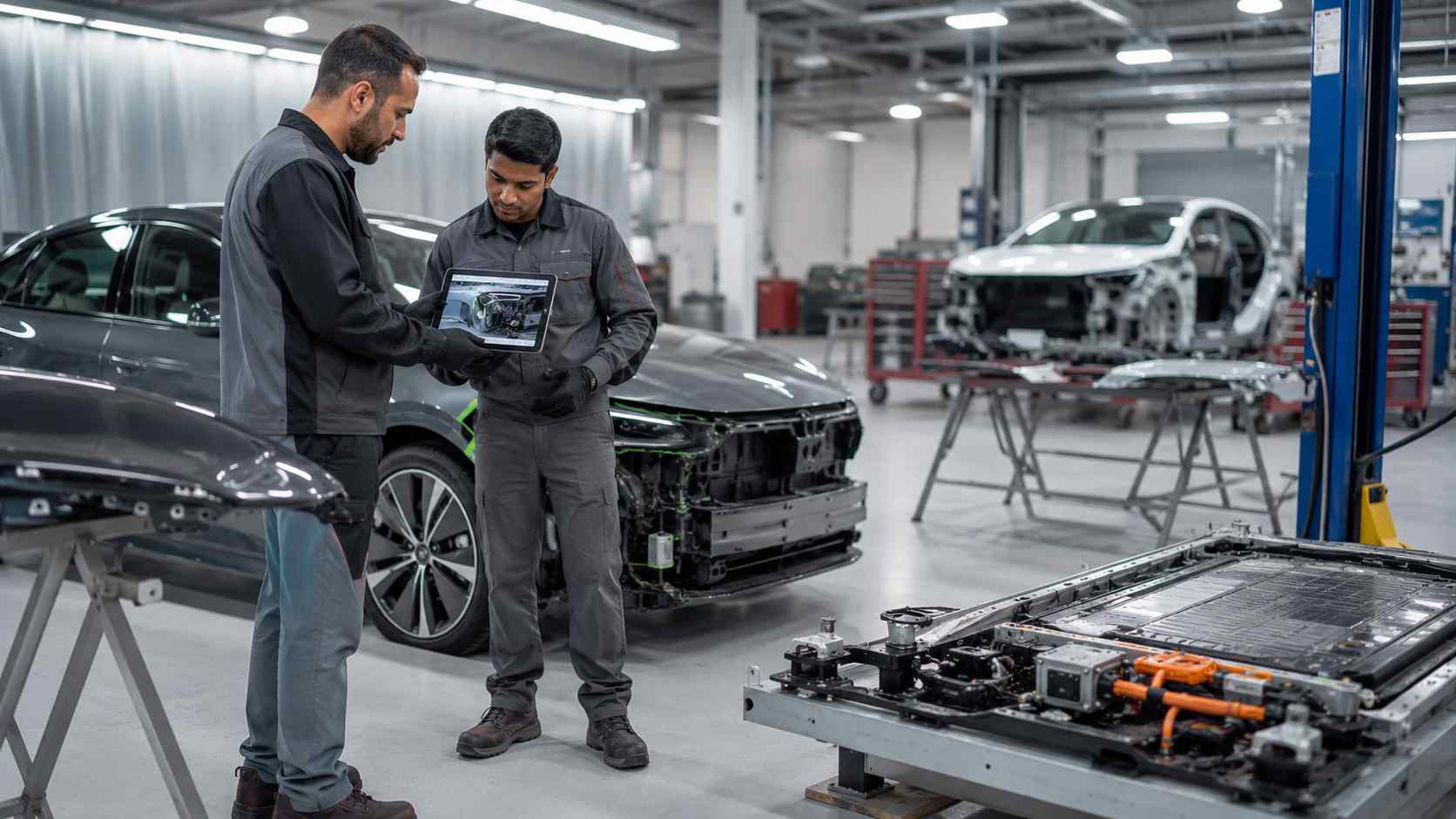
A BYD body shop in Dubai should identify the exact model, propulsion system, body structure, battery relationship, sensors, cameras, paint finish and parts before choosing the repair method. A bumper scuff, door dent and underbody impact do not carry the same risk.
BodyShop.AE assesses visible and hidden collision damage, builds the required EV or hybrid safety steps into the estimate and separates cosmetic work from structural, cooling, high-voltage and driver-assistance concerns.
Start with model identity
BYD construction and equipment vary across the range
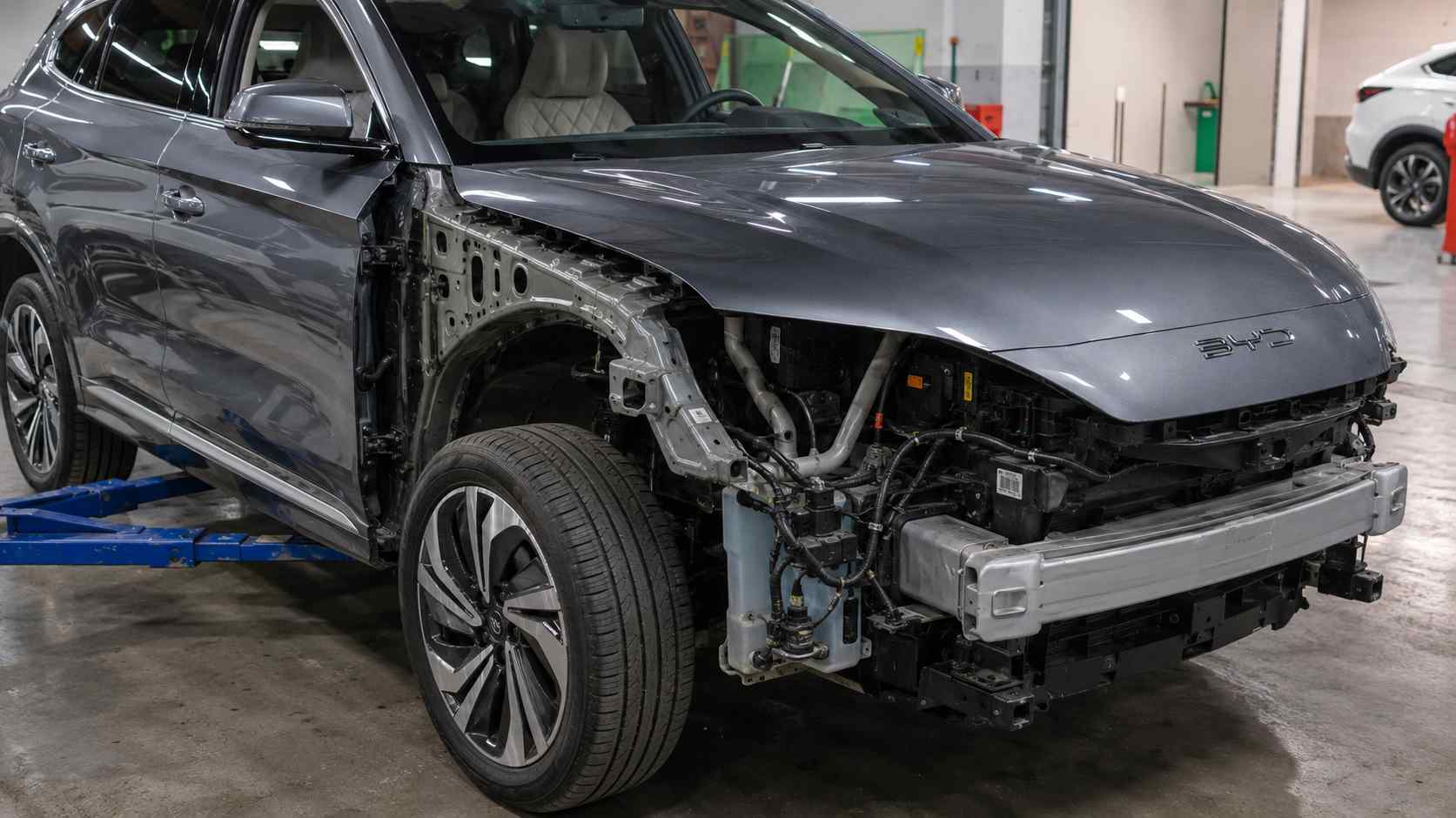
Dubai vehicles can include battery-electric and plug-in hybrid models with different platforms, battery integration, cooling layouts and driver-assistance equipment. The VIN, model, variant and visible option set help identify the correct information before dismantling.
BYD’s official UAE range currently presents models including the ATTO 3, BYD Seal, HAN, SEALION 7, BYD Song Plus DM-i and QIN PLUS DM-i. The linked model guides explain distinct collision considerations such as CTB floor and sill relationships on the Seal and hybrid cooling or fuel-system boundaries on the Song Plus. Availability and specification can change, so a model name alone does not confirm the camera, radar, battery or body configuration on a particular vehicle.
The official BYD UAE model information is a useful identity source, while the repair plan still needs vehicle-specific procedures and physical inspection.
High-voltage safety gate
Battery and orange-cable concerns change the first action
Underbody impact
Kerb, debris or lifting damage may affect shields, enclosures, fasteners or cooling components even when the upper body looks normal.
Front or side collision
Impact can involve power electronics, cooling circuits, charge components, cable routes or structural areas near the battery system.
Warning or abnormal condition
High-voltage warnings, smoke, heat, unusual smell, hissing, damaged charging equipment or leaking fluid require a controlled response and recovery.
Do not touch exposed wiring, damaged battery components or unidentified fluid. Do not crawl under the vehicle or attempt to isolate the high-voltage system yourself. When battery containment, cooling, steering, suspension or structure may be affected, stop using the vehicle and arrange professional assessment.
Damage-zone map
Visible panels connect to systems behind them
| Visible area | Components and risks behind it | Inspection questions |
|---|---|---|
| Front bumper and grille | Reinforcement, absorber, cooling pack, wiring, cameras, radar or ultrasonic sensors depending on model | Are mounts straight, cooling components sealed, warnings present and calibration events identified? |
| Front wing and wheel area | Wheelhouse, liners, suspension, steering, headlamp, charging components or harness routes depending on side and model | Has wheel position changed, does the tyre rub, and are lamp or charge functions affected? |
| Door and sill | Intrusion beam, hinges, latch, pillar, side sensing, wiring and structural sill near the battery zone | Do gaps, closing effort, seals and underbody edges show movement beyond the outer skin? |
| Rear quarter and bumper | Rear body panel, floor, lamps, parking sensors, radar on equipped models and luggage-area structure | Is the boot floor displaced, is water sealing intact and do driver-assistance functions require checks? |
| Roof and glass | Camera view through the windscreen, roof rails, apertures, curtain-airbag area and bonded glass | Was glass removed, did mounting geometry change and is calibration specified? |
| Underbody | Battery enclosure, shields, cooling, fasteners, floor and jacking points | Is there scraping, deformation, leakage, missing protection or a need for specialist battery assessment? |
Platform and body structure
Battery integration must be identified before structural work
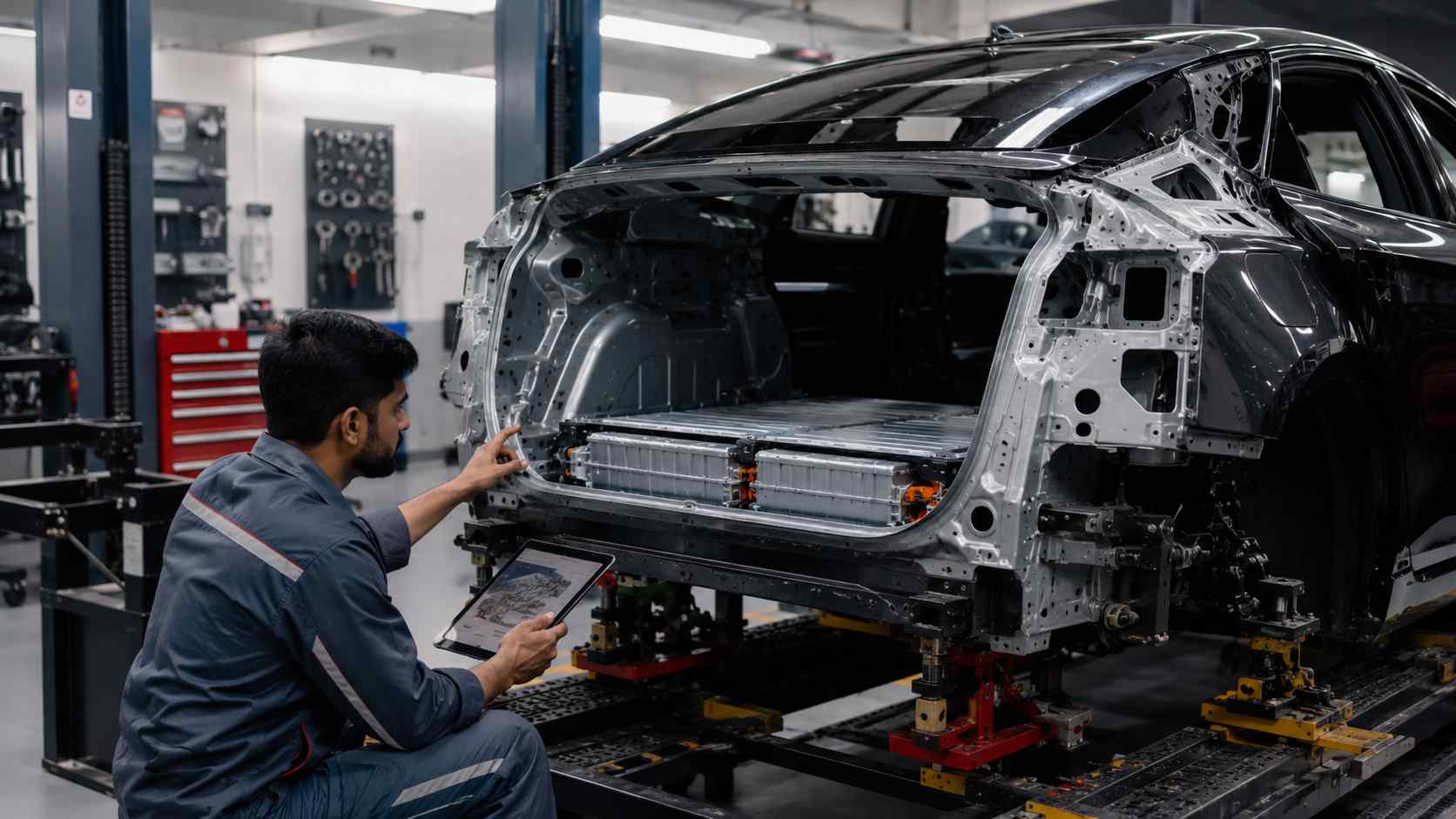
BYD describes its e-Platform 3.0 as integrating electric drive, battery and vehicle architecture, and some vehicles use cell-to-body concepts in which the battery pack contributes to the body relationship. That does not mean every BYD model uses the same construction or permits the same repair.
A technician must identify outer panels, reinforcements, rails, pillars, sills, floors, castings, joining methods and restricted repair areas for the exact vehicle. High-strength materials can have limits on heat, pulling, sectioning and welding. A correct cosmetic gap does not prove that reference points or battery clearances are correct.
The general body repair process applies material and geometry checks, while the BYD page adds battery, cooling and model-equipment decisions.
Sensors and post-repair functions
Calibration follows the repair event and exact equipment
BYD models can use front cameras, surround-view cameras, parking sensors, radar and driver-assistance functions depending on model and specification. Bumper removal, radar or camera disturbance, windscreen replacement, wheel alignment and structural repair can trigger different diagnostic or calibration requirements.
Record current faults and distinguish collision-related warnings from existing conditions where possible.
A sensor can look undamaged while its bracket, bumper aperture or aiming relationship has moved.
Tyres, ride height, wheel alignment, loading, floor level and target setup may need to meet specified conditions.
Required static or dynamic procedures should be documented with result, limitation and unresolved fault.
Clearing a warning light is not the same as calibration. A successful scan is not proof that a moved bracket is geometrically correct. These operations must follow the actual vehicle and repair scope.
Panels, paint and parts
Finish quality begins before colour mixing
Substrate and colour
Previous refinishing, colour code, variant, substrate and viewing angle shape the spray-out and blend plan for solid, metallic, pearl or multi-stage finishes.
VIN-confirmed components
Bumpers, lamps, mouldings, brackets, liners, seals and fasteners can differ by camera, radar, washer, sensor, grille and trim specification.
Supply and supplements
The quotation should separate confirmed parts from inspection-dependent items and avoid promising handover before supply and hidden damage are resolved.
Repair pathway
Move from safety to evidence to finish
Intake and isolation decision
Record vehicle identity, impact, warnings, charging condition and whether recovery or high-voltage controls are required.
Dismantle and measure
Expose hidden mounts, absorbers, structure, cooling, wiring and parts while preserving evidence for customer or insurer approval.
Repair and refinish
Apply the vehicle-specific material method, corrosion protection, panel fit, colour matching, blending and curing plan.
Reassemble and verify
Check functions, sealing, lamps, charging-related concerns, scans, alignment and required calibration before handover.
The accident repair service also coordinates police or insurance documentation where applicable. Any insurer, warranty or finance requirement should be confirmed before work is authorised so the correct approval path is preserved.
Independent service statement
Choose the repair on documented capability
BodyShop.AE does not claim to be a BYD authorised dealer or manufacturer-certified repair centre unless written approval is displayed for the service in question. Our role is to assess the vehicle, explain the proposed scope and identify work that requires specific information, equipment or external support.
Ask which procedures, material controls, battery safety steps, parts sources, scans, calibration evidence and paint checks apply to your model. That conversation is more useful than a generic badge claim.
Start with a complete evidence set
Request a BYD body repair assessment
Send the model, year, impact area, warning messages, wheel position and safe photographs. The first review can then separate cosmetic work from structural, cooling, battery and calibration concerns.
The handover evidence
Collect a repair record that matches the vehicle
Review the final invoice against the approved scope. Confirm repaired and replaced panels, parts status, corrosion protection, paint work, scan results, calibration record and any high-voltage or cooling inspection relevant to the impact. Check panel gaps, doors, boot, lamps, cameras, parking functions and warning display before collection.
A BYD body shop Dubai page is useful only when it helps owners ask model-specific questions. The final decision should be based on vehicle identity, measured damage, battery and sensor risk, material method, parts evidence and a finish that has been inspected under suitable light.
Electric and DM-i differences
Propulsion type changes the safety map
Battery-electric models
High-voltage traction, battery enclosure, cooling, charging and underbody relationships create a different inspection map from a combustion-powered vehicle.
DM-i plug-in hybrids
The high-voltage system works alongside an engine, fuel system, exhaust and additional cooling circuits, widening front, side and underbody checks.
Emergency indicators
Smoke, heat, hissing, charging damage or suspected enclosure deformation require distance, controlled recovery and no charging or casual storage.
Cooling and climate systems
Front-end repair can affect more than the radiator
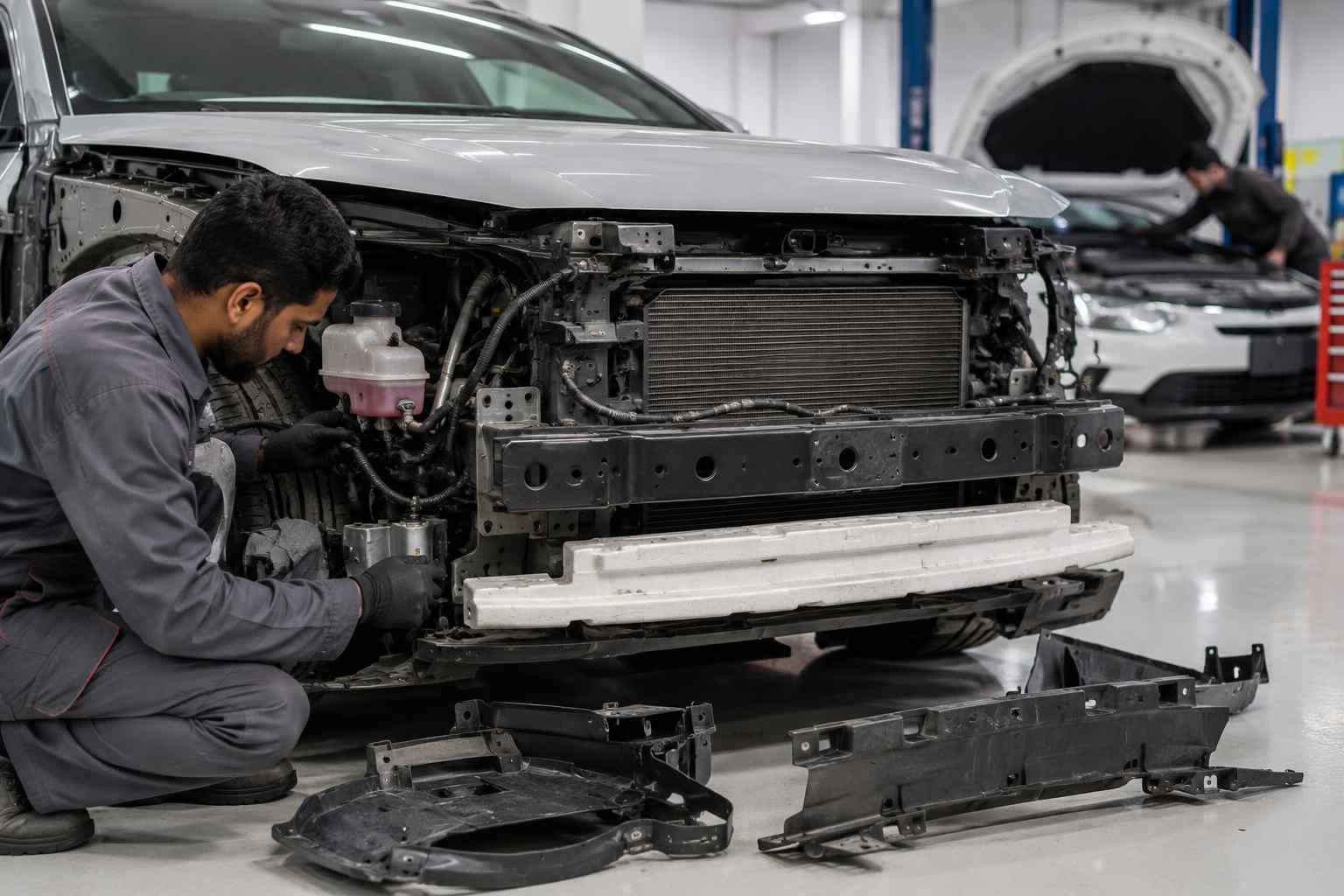
Electric and hybrid vehicles can use several cooling circuits for the battery, power electronics, electric drive, cabin and engine where fitted. Condensers, radiators, chillers, pumps, valves, hoses, fans and shutters may sit behind the bumper and reinforcement.
A cracked grille or displaced bumper can coincide with a slow leak, bent heat exchanger, damaged fan or moved active shutter. The vehicle should not be driven when temperature warnings, fluid leakage, fan contact or cooling damage is present. Pressure, leak and functional checks follow the actual circuit.
Parts stacking and airflow matter after reassembly. A replacement cooling component, bracket or duct must fit without rubbing and the front sensor relationship must remain correct.
Paint and heat planning
Refinishing must respect the complete vehicle
Paint curing is planned around the coating system, substrate and vehicle condition. Heat-sensitive components, adhesives, sealers, plastics and battery-related limits may influence whether parts are removed, refinished separately or cured through another controlled method.
BYD exterior colours can require solid, metallic, pearl or multi-stage matching. The painter verifies the code, variant and adjacent-panel condition, then uses a spray-out to confirm effect and ground shade. Colour blending is justified by the tested transition rather than applied automatically.
The car painting process in Dubai covers preparation, spray-booth application and curing. On an electric or hybrid BYD, the body and systems assessment must be complete before that paint plan is locked.
Estimate questions for BYD owners
Make hidden assumptions visible before approval
Ask which impact evidence or procedure triggers the decision and who records it.
Side, kerb and lifting damage may need more than an exterior walk-around.
Separate ordered parts, reusable parts and items awaiting dismantling.
Name the camera, radar, alignment or sensor event instead of listing calibration generically.
Confirm variant research, spray-out testing, blend area and plastic-to-metal comparison.
Request repaired-area photos, invoice scope, scan or calibration record and aftercare.
These questions keep the BYD body shop Dubai estimate specific to the vehicle. They also prevent battery, cooling, sensor or parts uncertainty from being hidden inside a single body-repair line.
Collection after a BYD repair
Check charging, warnings and body functions without unsafe testing
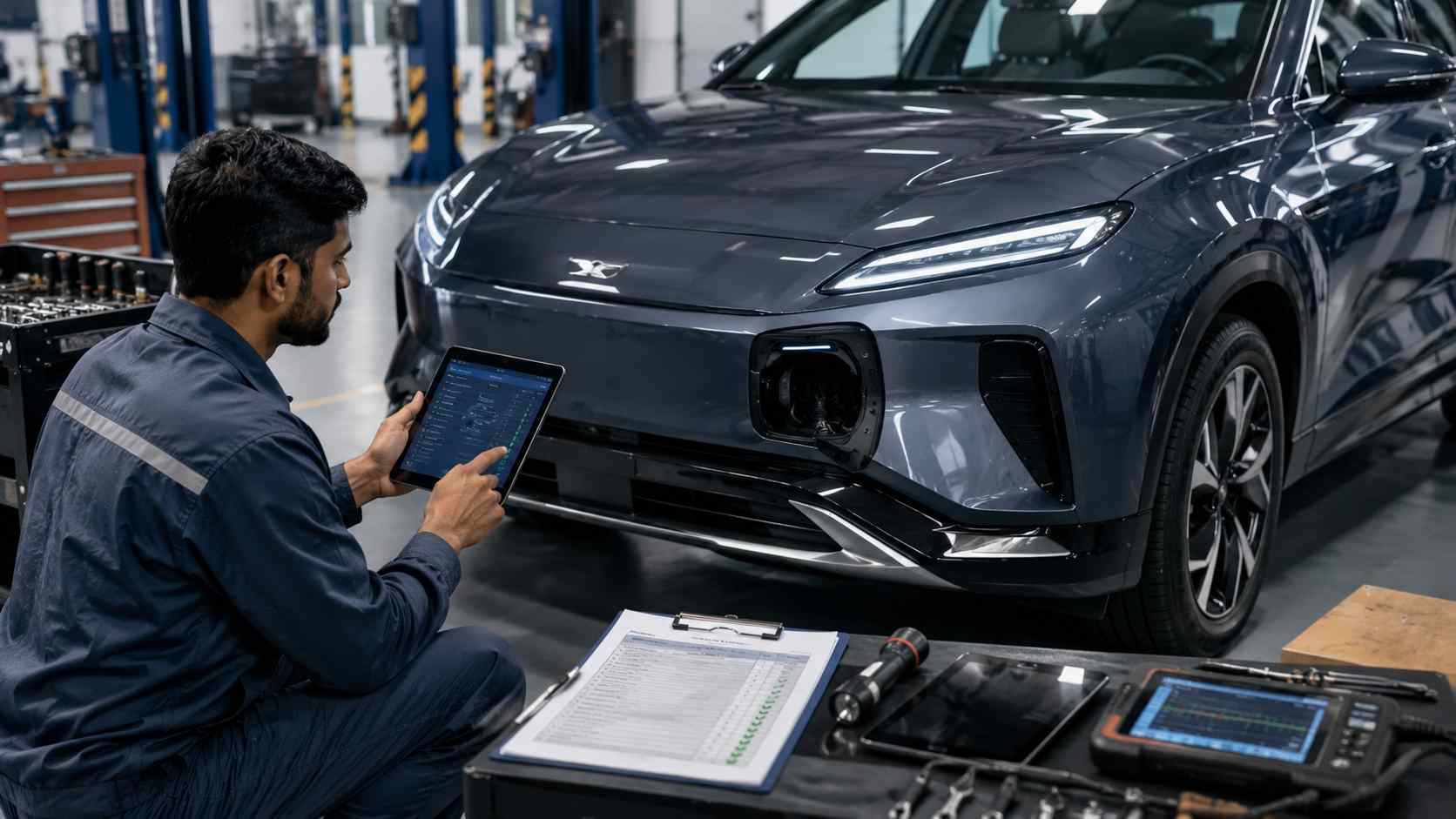
Review the instrument display, charge-port door where relevant, lamps, cameras, parking functions, door and boot operation, panel gaps and repaired underbody protection. Confirm that scan, calibration, alignment or high-voltage records listed in the approved scope are available.
Do not attempt an aggressive road test of automatic braking or steering assistance. Normal function confirmation and documented calibration are safer evidence. Report new noise, warning, charging difficulty, fluid loss or thermal message immediately and stop using the vehicle where the symptom could involve high voltage or cooling.
The invoice should identify repaired panels, parts, paint, diagnostic operations and any remaining limitation. Keep it with the photo record and aftercare instructions.
Visit the workshop
BYD body repair assessment in Al Quoz 4
Bring the vehicle only when it is safe to move. For steering, cooling, battery, restraint or structural concerns, call first and arrange the appropriate recovery route.
- Location
Al Quoz 4, Dubai - Phone
050 233 7180 - Workshop hours
Monday to Saturday, 9:00 AM–6:00 PM