Car body repair for Al Barsha should begin with a useful damage record and a handover plan that fits the vehicle’s condition. BodyShop.AE serves Al Barsha drivers from its Al Quoz 4 workshop, with the route chosen around safety, peak traffic, the damaged wheel or closure, and whether the car can be moved normally.
A full-corner photograph helps separate a paint mark from lamp, wheel and lower-body questions.
Al Quoz 4 workshopCommercial repair work is completed at the workshopPhoto-first triageIdentify missing views before arranging handoverNo invented travel timeTraffic and starting point remain variableCondition-led movementRecovery is considered when normal driving is doubtful
Move from the visible mark to the correct workshop lane
An Al Barsha photo set should identify the likely repair lane while keeping hidden damage visible.
Evidence
Repair decision
Dent with stable paint
Access, metal stretch and PDR suitability
Cracked or displaced bumper
Guides, absorber, lamps, sensors and wheel clearance
Uneven door or tailgate gap
Hinges, latch, aperture and structural screening
Colour or clear-coat damage
Vehicle match, blend boundary and previous repair
Street and villa contact is covered more specifically in the Jumeirah damage path. If the vehicle was involved in a live-road incident, follow the safety-first sequence for Sheikh Zayed Road body repair.
The final method and quotation belong to the Al Quoz body repair service once the Al Barsha intake route is clear.
Al Barsha has several practical routes but no fixed repair time
Drivers may approach Al Quoz from different parts of Al Barsha through Sheikh Zayed Road, Umm Suqeim Street, Hessa Street or Al Khail Road. The sensible route changes with the starting building, traffic direction and the vehicle’s condition. This page does not promise a fixed number of minutes because a useful handover plan must remain accurate outside one map snapshot.
Before departure, share the vehicle location, height or parking restrictions, the damaged corner and whether a wheel, bonnet, door or tailgate behaves differently. BodyShop.AE can then prepare the receiving question. A car with a loose liner near the tyre needs a different plan from one with an isolated door ding, even when both start in the same neighbourhood.
Al Barsha handover matrix
Choose normal arrival, assisted handover or recovery
The matrix prevents convenience from overruling the car’s condition.
Normal workshop arrivalCosmetic damage only, secure panels, normal tyres, steering, cooling and closuresAssisted handoverDriveable vehicle but tower, work or family timing makes coordination usefulRecovery discussionWheel contact, fluid loss, major distortion, restraint warning or insecure closureInsurance routeIncident evidence, report and insurer instructions need to stay with the vehiclePhoto review firstUnclear scope needs a complete elevation, wheel, opening and dashboard set
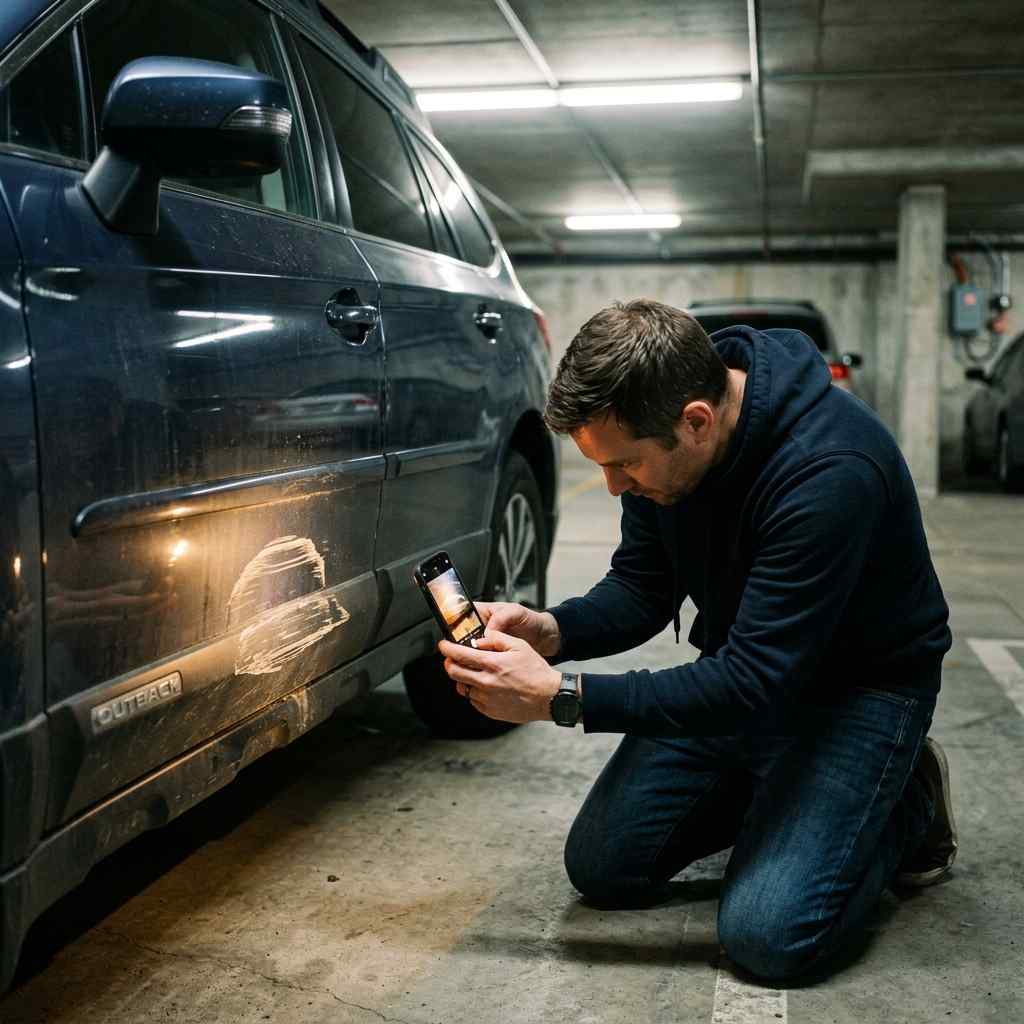
Basement damage should be photographed before the car is moved
The vehicle position and surrounding impact context are preserved before movement.
Al Barsha apartment and mall parking can produce pillar scrapes, low-speed bumper contact and tight-ramp wheel damage. Take a wide view showing the vehicle’s relationship to the obstacle if it is safe and permitted, followed by full-panel and close photographs. Do not push a hanging bumper back for a cleaner picture; remaining guides or wiring may break.
If the driver intends to make an insurance claim, preserve the incident information and follow the relevant reporting process. Building security images, bay numbers and the other party’s details can be easier to obtain before departure. The workshop repairs the vehicle; it does not replace police, insurer or property-management requirements.
Parking dents and painted edges require different repair decisions
A soft door ding with stable original paint may support paintless dent repair when tool access and metal movement allow it. A crease at a door edge, broken coating, stretched crown or reinforcement boundary can need conventional shaping and refinishing. The photograph should show the reflection across the complete panel rather than only the deepest point.
Scraped bumper corners are assessed for plastic condition, tabs, guides, sensor apertures and the neighbouring lamp or wheel opening. A repaint cannot restore a displaced holder. Replacement is not automatic either. Material, location, previous repair and installed fit determine which route is defensible.
Al Barsha preparation sequence
Six actions before leaving the neighbourhood
Preserve the scene
Complete the required accident and safety steps before repair logistics.
Record the damage
Photograph the entire elevation, nearest wheel, openings and warnings.
Remove loose property
Clear the repair and luggage area without disturbing damaged trim.
Confirm access
Check building, parking and key handover requirements.
Choose movement
Use normal driving only when the car’s condition supports it.
Bring the file
Carry report, claim contact, registration details and decision authority.
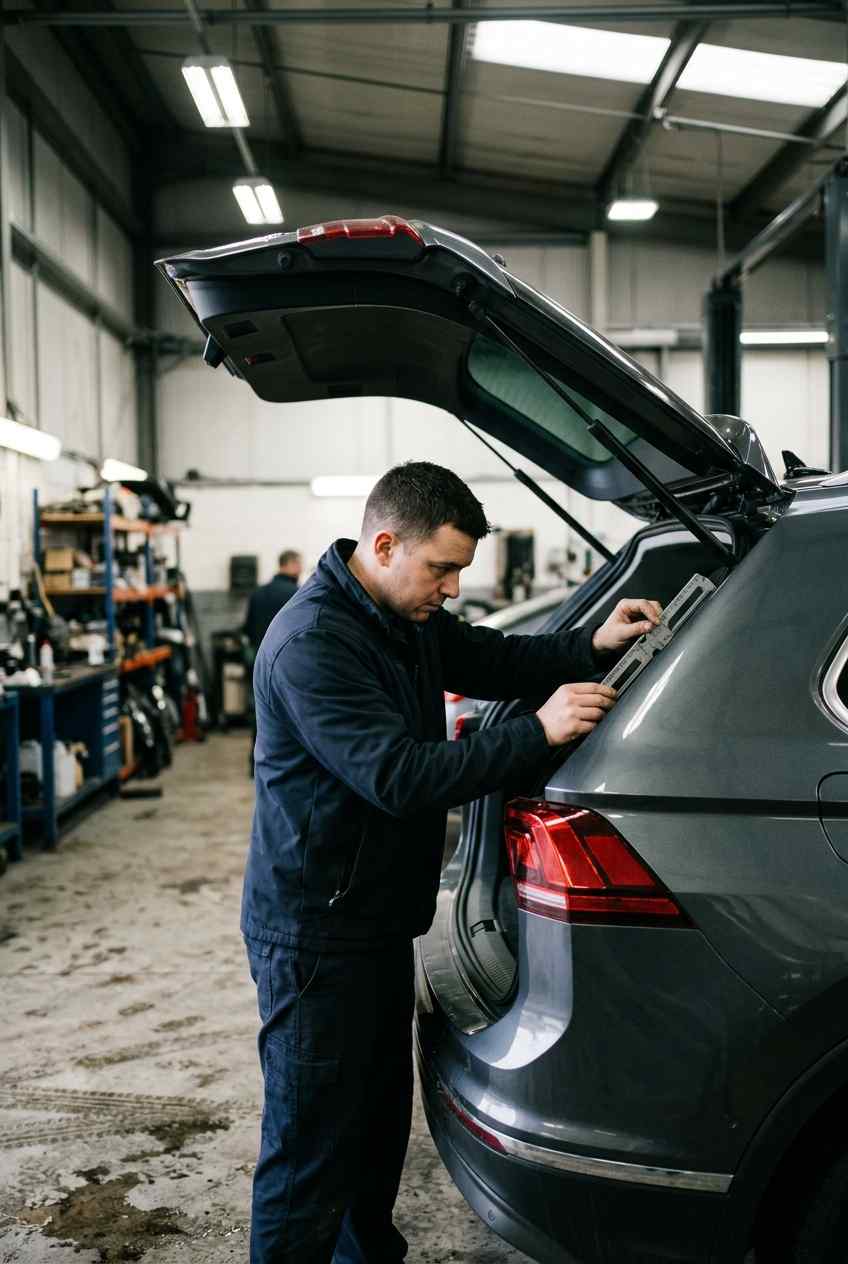
Family SUVs need a rear-opening check after parking contact
Tailgate, bumper, lamp and rear-opening relationships are checked as one repair zone.
CR-V, Patrol, Land Cruiser, Range Rover and other SUVs common around Al Barsha can hide rear-impact transfer behind a bumper that has sprung outward. Compare both corners, lamp seating, tailgate flushness and the lower edge. Do not repeatedly cycle a powered tailgate if it scrapes, hesitates or reverses.
The luggage floor and inner trim are inspected when impact height and transferred marks justify access. A clean carpet does not prove the body beneath it is unchanged. Conversely, one loose trim clip is not proof of structural damage. Findings are photographed before the scope changes.
The quotation begins after access uncertainty is stated
A photo review can identify visible work and the dismantling likely needed, but it cannot reveal every guide, reinforcement, aperture or stored fault. The first scope should mark conditional lines instead of disguising them inside a low starting figure. Newly exposed damage is photographed and authorised before additional work.
No unapproved AED range or completion promise is used here. Make, model, material, parts, paint system, insurer steps, diagnostics and calibration can all move the estimate. The owner receives a clearer decision when each dependency is named rather than compressed into a package.
Collection repeats the original Al Barsha intake map
Handover checks the repaired elevation, panel transitions, relevant closures, wheel-area clearance, lower attachments and warning status recorded at arrival. Paint colour, texture and reflection are reviewed separately from fit. Pre-existing marks and deferred work remain identified.
Aftercare names the coating, adhesive, film or component involved instead of prescribing one waiting period to every repair. If a renewed noise, warning, gap or loose trim appears after the return to Al Barsha, photograph the condition and contact the workshop rather than driving to reproduce it.
A complete photo set prevents a wasted Al Barsha journey
Start with one square view of the damaged side or corner, then photograph the nearest wheel, lamp or opening. Add a low angle only from a safe standing position. Dashboard warnings, fluid traces and loose trim belong in the same message. This sequence helps the workshop identify whether the first booking should be a cosmetic inspection, controlled dismantling, body measurement or recovery receiving.
A single close-up encourages a price guess and hides scale. A complete set lets BodyShop.AE state what remains unknown before the vehicle leaves Al Barsha. The owner can then bring the correct incident file, arrange the right decision maker and avoid discovering at reception that the car cannot safely enter a normal repair lane.
Parts should be identified before Al Barsha transport is timed
A bumper, lamp, mirror or wheel-arch trim can vary by model year, grade and fitted equipment. The VIN and physical component guide identification. Supplier photos and broad fitment descriptions are treated as clues, not proof. Where a part controls several gaps or sensor apertures, trial fitting happens before paint so a wrong component does not hold the vehicle unnecessarily.
The estimate separates part cost, transfer hardware, preparation, paint and electronic work. If availability changes, the revised schedule follows a confirmed component rather than a catalogue promise. This matters to Al Barsha households arranging school, work and replacement transport around a repair that may depend on one model-specific bracket.
Insurance approval and workshop approval solve different problems
An insurer may approve a financial scope, while the workshop still needs to verify that the selected method fits the material, damage and current repair information. A low visible estimate can change after authorised dismantling. BodyShop.AE photographs hidden findings and states whether they affect safety, fit, parts, paint or calibration before requesting a supplement.
The owner should know who can approve claim changes and who can approve customer-pay items. Excess, depreciation and coverage remain policy questions. This separation prevents an Al Barsha handover from becoming stuck between an insurer contact, family member and workshop adviser who each assumed someone else had decision authority.
The replacement journey back to Al Barsha deserves planning
Collection is not only a key exchange. The repaired field is inspected under suitable light, relevant doors or tailgate are operated, warning status is reviewed and aftercare is explained. If a child seat, luggage cover, film or accessory was removed, its return is checked against the recorded handover.
Back at the residence, park where the repaired area can be viewed without forcing a tight wall or pillar manoeuvre. If a fresh scrape, rubbing sound or warning appears, stop and document it. Location and timing help distinguish a repair concern from new parking contact and allow the workshop to choose the correct follow-up lane.
Paint and panel decisions are confirmed at the workshop
A photo can show location and scale, but the repair method still depends on panel material, paint condition, dent access, broken edges, previous repair and the surrounding finish. Where factory paint can be preserved, paintless dent repair may be considered; where coating or shape repair is required, colour comparison and refinishing are planned on the actual vehicle. Replacement is reserved for damage or economics that make a stable repair unsuitable.
Prepare the Al Barsha handover before moving the car
Send the full damage area, the nearest wheel or closure, dashboard warnings, building access limits and your claim status. We will identify the safest receiving route.