
Material, crack route, reinforcement and finish
Plastic Bumper Welding Dubai
Plastic Bumper Welding Dubai repairs suitable bumper cracks, splits and selected torn tabs after the plastic type, crack route, deformation and attachment condition are assessed. We inspect the complete cover, attachment points and finish before recommending welding, another repair method or replacement.
Repair the substrate, not only the surface
Plastic Bumper Welding Dubai Repair Assessment
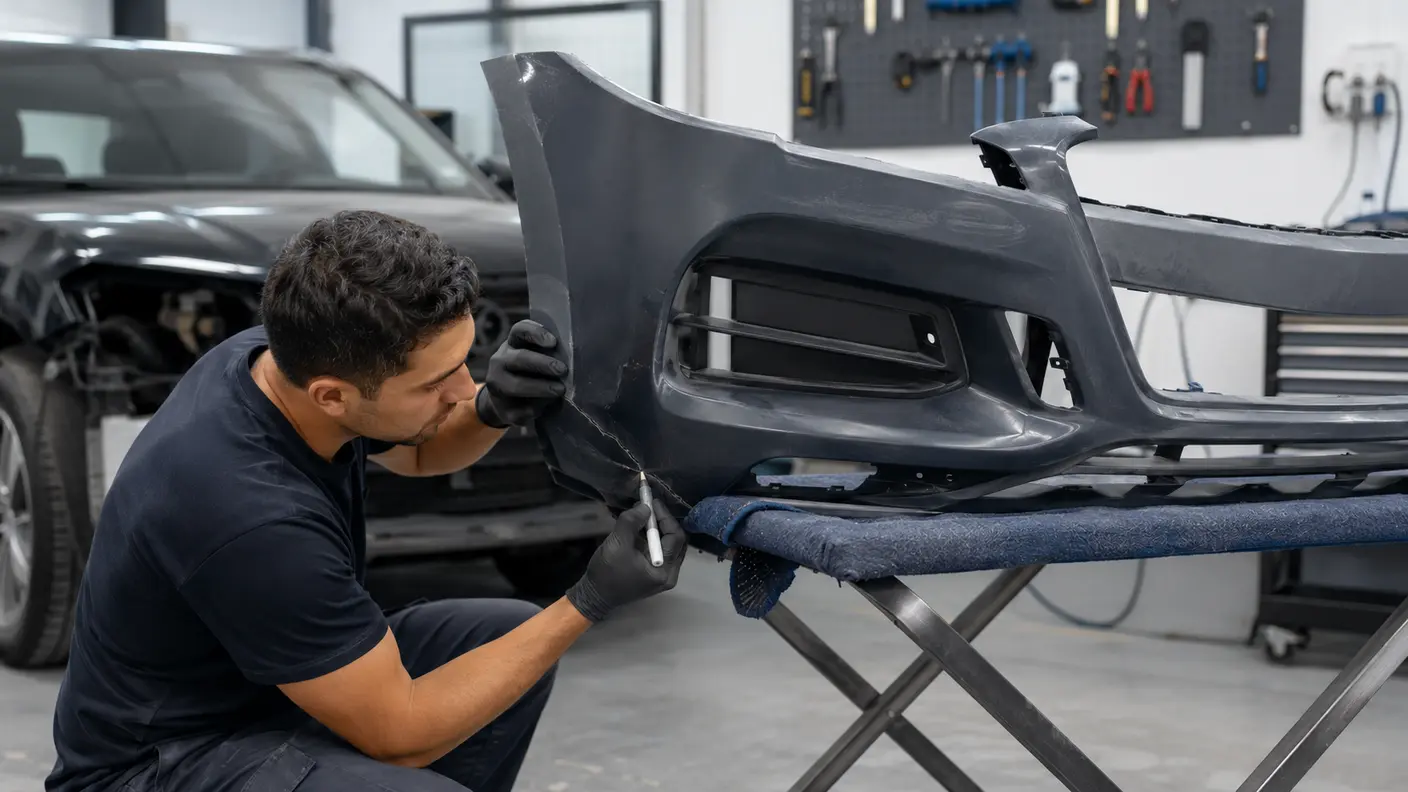
Plastic bumper welding is not metal welding performed on a different part. A bumper cover is a moulded thermoplastic component, and the repair must suit the actual substrate. Material markings on the reverse face, the behaviour of the damaged edge, previous coating, contamination and the position of the split all influence the method. Using a filler rod or heat setting that does not suit the cover can create a seam that looks closed but has poor compatibility or excessive distortion.
We first inspect the complete bumper, not only the crack. The cover may have changed shape around a corner, mounting point, grille opening or lower edge. A split created by impact can continue towards a tab or styled crease. The visible face may also carry paint fracture, gouging or stress whitening beyond the obvious opening. These relationships determine whether welding is one part of a sound repair or whether replacement is the more defensible route. If impact damage continues beyond the bumper cover into adjoining panels or structure, the scope moves into our car body repair service rather than being treated as plastic welding alone.
Plastic identification is therefore a decision gate. Common bumper materials can include polypropylene based blends and other marked thermoplastics, but the stamped code and physical condition should guide the repair rather than a generic assumption. The goal is compatible fusion, controlled shape and a stable base for refinishing.
When the damage also includes paint or contour work, the scope can connect naturally with our front bumper repair service rather than forcing every problem into a generic paint package.
Evidence before heat
Three decisions define the repair route
Repairable crack or replacement candidate?
Many local bumper cracks can be repair candidates when the material can be identified, the edges can be aligned, the surrounding plastic remains stable and key attachment areas are serviceable. A clean split across an accessible face can be very different from shattered plastic, missing material or a fracture through several loaded mounting points.
Replacement deserves serious consideration when the cover is extensively fragmented, badly stretched, heat damaged, chemically contaminated or already carrying an unstable repair. A crack running through a critical tab may still be repairable in some cases, but its load, access and remaining material must be assessed. The same applies to narrow grille bridges, sensor openings and lower edges that repeatedly flex during fitting.
Cost alone should not decide. An inexpensive repair that cannot hold the intended shape or support the required finish is poor value. Equally, replacing a complete bumper for a suitable local crack can add unnecessary part cost and waiting time. We explain the evidence for the proposed route and identify any conditional finding that depends on authorised removal.
What we inspect before heat touches the cover
The intake check records the full bumper, the damaged face, the reverse side where accessible, adjoining panel relationships and existing marks. We look for paint transfer, coating fracture, exposed plastic, deformation, stress whitening, previous filler and signs that the crack has branched. The bumper to fender joint, lamp or grille surround, lower trim and wheel arch edge help show whether the impact travelled beyond the local split.
Tabs, retainers and fasteners matter because the cover must return to a secure position after repair. Welding the face while leaving a failed side guide unresolved can produce a neat surface and a poor fit. Where the vehicle has parking sensors, cameras, lamps or other fitted items in or near the bumper, their visible condition and mounting context are recorded. Cosmetic repair does not itself diagnose or certify electronic systems.
Contamination also matters. Road film, silicone, dressing products, oil and previous repair material can interfere with preparation. Cleaning is staged so contamination is not simply driven deeper into the weld zone. Only after the repair path, access, material and intended finish are understood should the crack be prepared.
A staged workshop process
The controlled plastic welding sequence
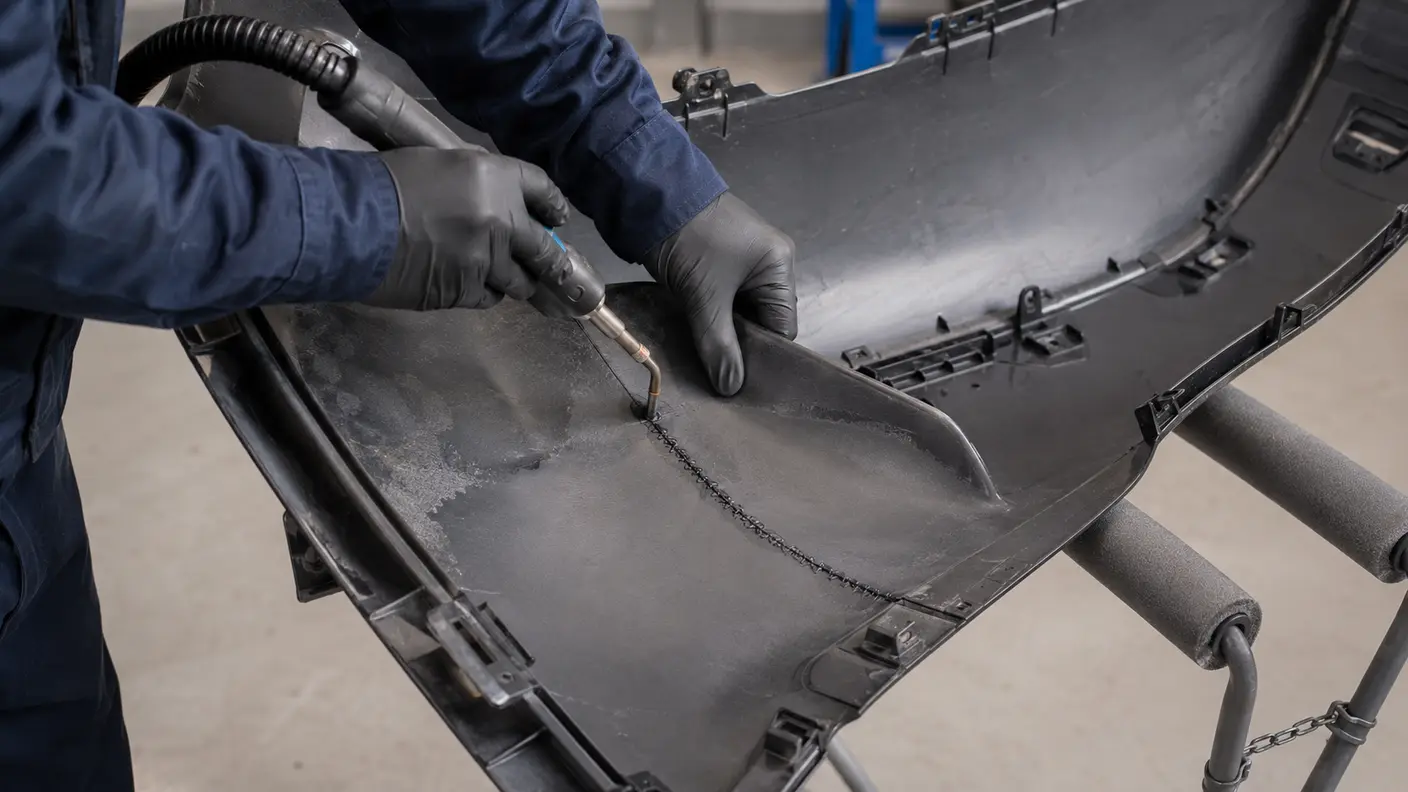
The bumper is removed when access, attachment condition or the repair location requires it, then supported so its natural shape is not distorted. The crack ends are identified and controlled where appropriate. The edges are aligned before reinforcement because welding a displaced seam merely locks in the wrong contour.
Preparation can include cleaning, removing unstable coating near the repair and forming a controlled groove that provides working area without unnecessarily thinning the cover. The exact groove, heat and compatible repair material depend on the substrate and damage. Heat is applied progressively. Excessive temperature can burn the plastic, create porosity, distort styled surfaces or weaken adjacent material.
The reverse face usually provides the main opportunity for structural reinforcement while the visible face is restored with restrained preparation. The repair is allowed to stabilise before contour work. Sanding should refine the repair, not erase so much base plastic that the seam loses support. Any suitable finishing material is used as part of a system, not as a substitute for joining the crack.
Before paint, the cover is checked again for shape, flexibility and mounting relationship. Preparation, adhesion steps, primer, colour and clear coat must suit the substrate and paint system. The finished cover is cured before forceful reassembly.
Repair method and visible result
Cracks, torn tabs and missing plastic are different jobs
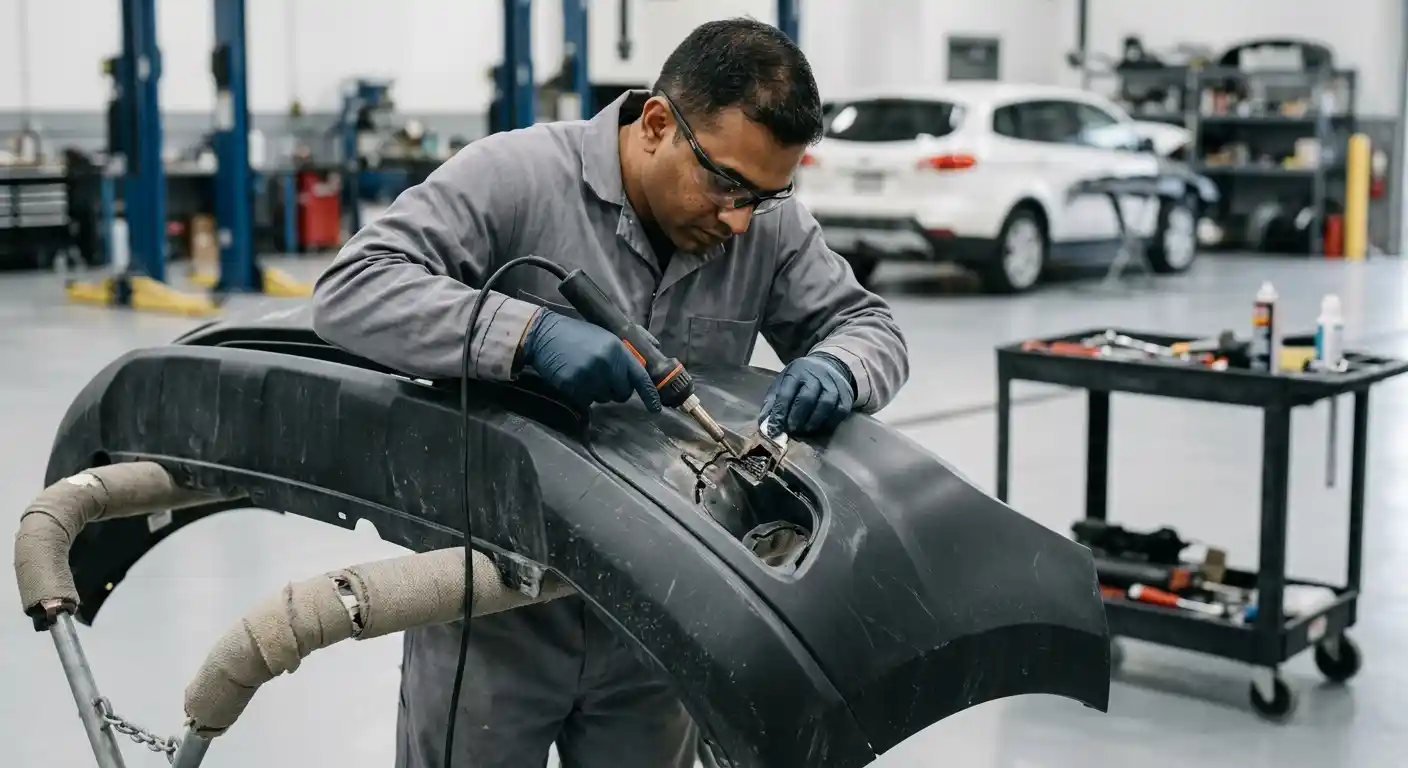
A straight face crack asks for edge alignment, compatible fusion and contour control. A torn tab asks whether enough original material remains, how the tab is loaded and whether its position can be reproduced accurately. A gouge with missing plastic needs a different reconstruction decision because there may be no clean edge to bring together.
Corner splits often combine surface deformation with attachment stress. Lower bumper cracks can be contaminated and may sit beside separate valances or air deflectors. Cracks around grille or sensor openings pass through narrow shapes where heat control and final dimensional accuracy are especially important. Each condition changes labour and risk.
We do not describe every repair as welding. Paint transfer may need only controlled correction. A dented thermoplastic area may need reshaping and refinishing without a split. A broken retainer may be a separate part. A shattered cover may be a replacement case. Accurate naming keeps the estimate useful.
Repair method and visible result
Paint finish after plastic repair
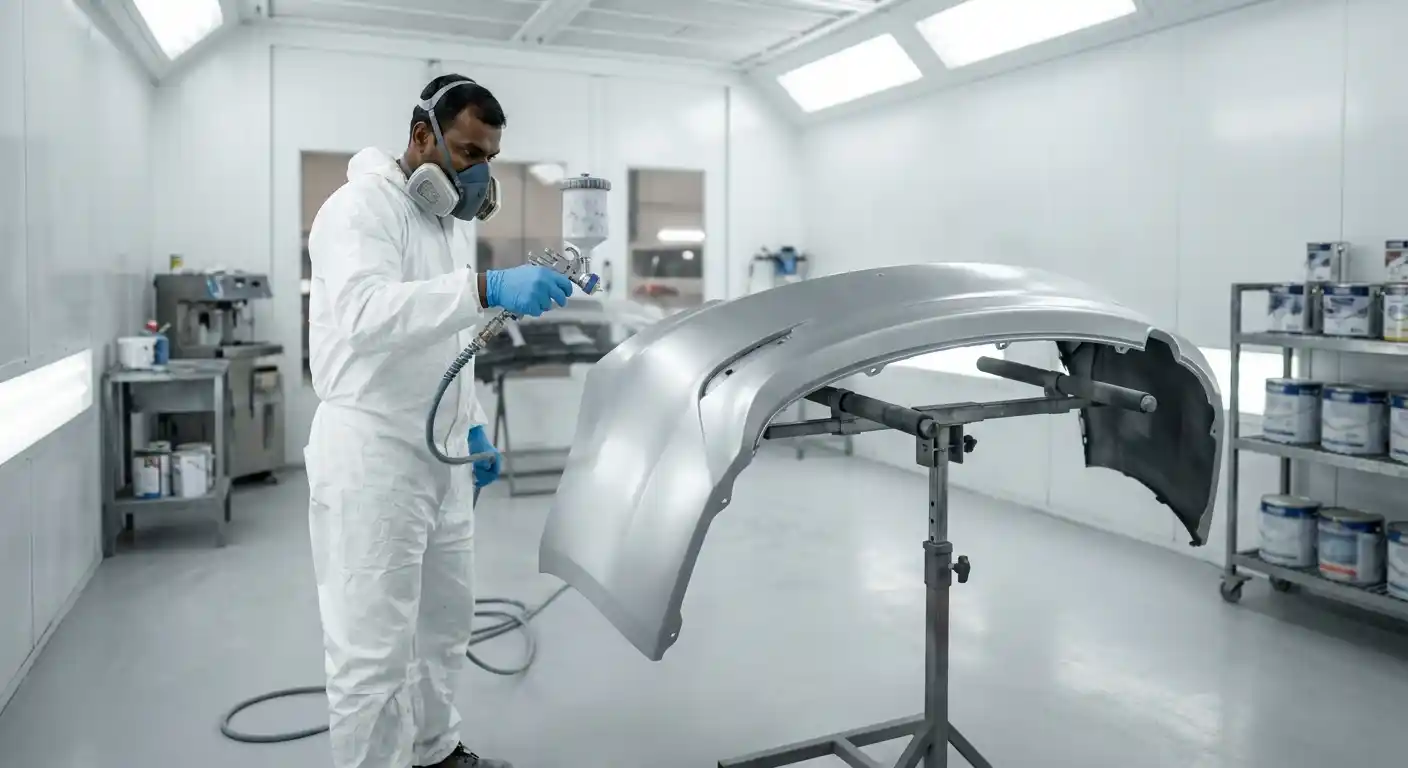
Closing the crack is only the hidden foundation of a visible result. On the painted face, the repair must follow the bumper contour under moving reflections. Heavy filler, flat spots, sanding waves and thick edges can make the area visible even when colour is close.
Colour planning considers the vehicle finish, the repair position, existing paint condition and practical refinishing area. Metallic and pearl colours depend on application orientation as well as formula. Clear coat texture and gloss must relate to the surrounding vehicle. A small crack does not always mean an invisible pin sized paint area, because sound preparation and a controlled finish need space. For broader coating-only damage without a structural plastic crack, see our bumper painting service.
Previous bumper repairs can change the route. Unknown coating, excessive film thickness, trapped contamination or old filler may need to be removed beyond the new crack. We explain that before refinishing rather than hiding unstable layers beneath fresh paint.
Eight controlled stages
From intake record to final fit
Record the full bumper and adjoining fit
Photographs preserve pre-existing marks and the condition before work.
Identify material and map the crack
Damage context prevents a surface-only decision.
Confirm repair or replacement route
The estimate separates confirmed work from conditional findings.
Remove and support when access requires it
Stable support protects shape during heat and preparation.
Align, prepare and fuse compatible plastic
Heat and repair material are controlled for the substrate.
Refine contour and prepare the coating system
Sanding restores shape without unnecessarily thinning the cover.
Paint, cure and reassemble securely
Fresh coating is protected before the bumper is placed under fitting stress.
Inspect finish, gaps and disturbed items
The complete bumper is checked from face, corner and lower edge.
Indicative planning bands
Useful Dubai cost guidance
Plastic bumper welding in Dubai is priced by damage and scope, not by crack length alone. A suitable local crack repair without complex attachments may begin around AED 350. Plastic welding with contour preparation and local refinishing commonly plans from AED 500 to AED 1,200. A complete bumper repaint can fall around AED 600 to AED 1,500. Replacement scopes can begin around AED 1,200 and rise beyond AED 6,000 depending on the verified part, trim, paint and vehicle specification.
These are indicative planning bands, not a quotation. Material, crack position, number of branches, deformation, torn tabs, missing plastic, previous repair, dismantling, grille or trim work, finish type and current parts availability can change the amount. Some scopes already include preparation and paint, so the figures should not be added together automatically.
A good estimate separates the cover repair, tab or retainer work, refinishing, confirmed trim, replacement parts and any conditional findings after access. For a wider comparison of bumper, paint and collision costs, our Dubai accident repair cost guide provides broader planning context.
Suitable local crack repair
From AED 350
For an accessible local split with usable surrounding plastic and no complex finishing or attachment scope.
Welding plus refinishing
AED 500 to AED 1,200
For suitable crack repair, contour preparation and paint. Complexity and finish can change the band.
Complete bumper repaint
AED 600 to AED 1,500
For a complete cover refinish where inspection supports that paint scope.
Replacement scope
AED 1,200 to AED 6,000+
Verified part, openings, trim, preparation, paint and availability determine the actual amount.
Important: these ranges are not fixed quotations and should not be added automatically. Physical inspection determines the repair method and current price.
Schedule and documentation
Timing and insurance scope
A straightforward local repair may move through inspection, removal, cleaning, welding, contour preparation, paint and reassembly without a long parts wait. More complex cracks add alignment, reinforcement, tab work and curing. Replacement adds part verification, sourcing, trial fitting, preparation and paint.
Insurance timing is separate from active workshop time. The file may require incident documents, photographs, an estimate, approval and supplementary evidence if authorised dismantling reveals related damage. Coverage, liability, excess and approval remain decisions for the insurer and policy. We can document visible damage and the repair scope without promising a claim outcome.
Owners should disclose whether the bumper was previously repaired and whether a warning appeared after the impact. That information can change inspection and scheduling. A realistic completion estimate is given after the physical condition, parts position and approval route are known.
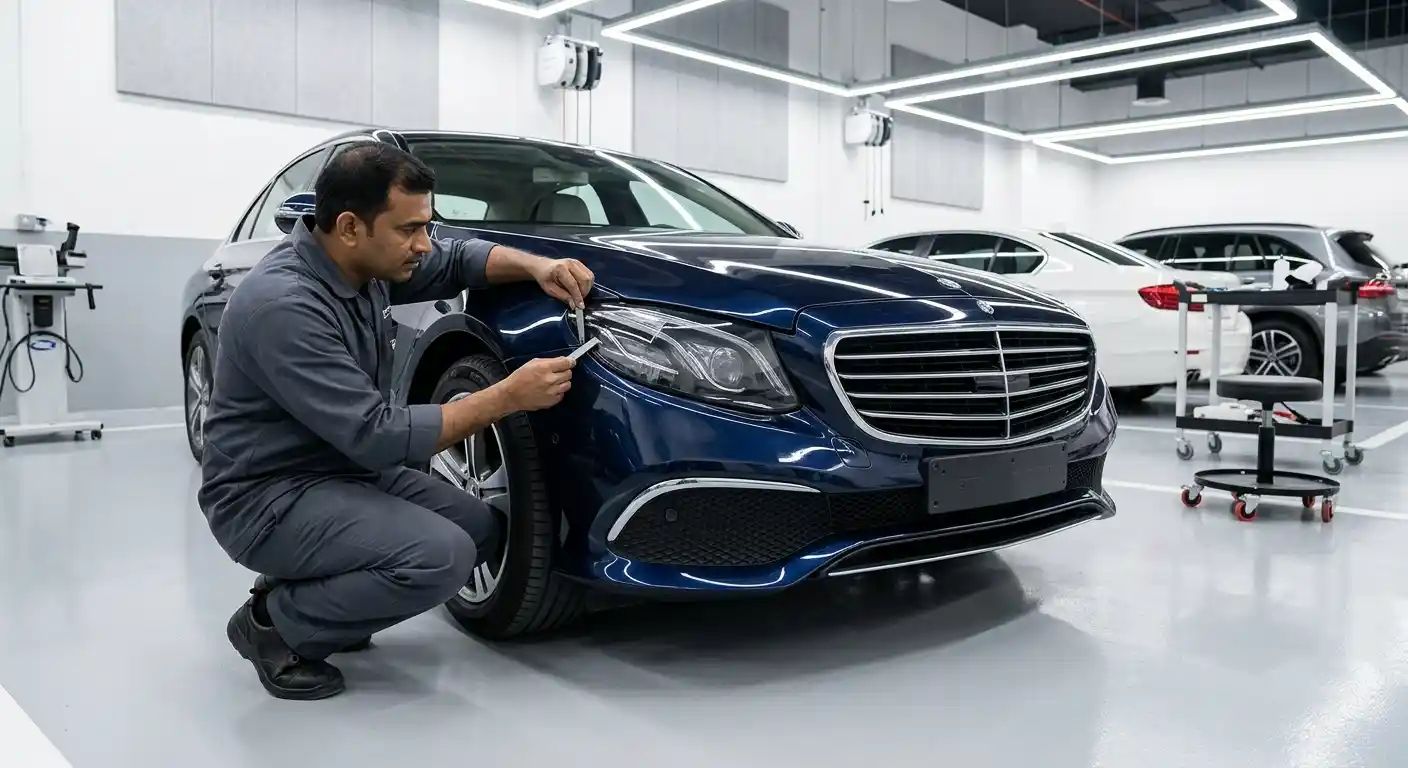
Complete bumper review
Handover checks that matter
The repaired bumper is reviewed clean and dry under broad and directional light. The visible face should follow the intended contour without a pronounced flat spot, ridge or sanding wave. Colour, gloss and texture are checked from several angles, including the corner return and lower edge.
Fit is reviewed at the bumper to fender joint, lamps, grille, wheel arch liner and lower trim within the agreed scope. Tabs, retainers and fasteners disturbed during repair should be secure. The underside deserves inspection because a bumper can look complete at standing height while a lower attachment remains loose.
The handover should identify what was welded, reshaped, painted, repaired or replaced. It should also distinguish cosmetic completion from any separate technical recommendation. Fresh paint aftercare is explained so aggressive polishing, pressure washing or harsh chemicals do not disturb the new finish.
Common owner questions
Plastic bumper welding FAQs
Can every cracked plastic bumper be welded?
No. Repairability depends on the plastic, crack position, contamination, deformation, missing material, previous repair and the condition of mounting areas. Extensive fragmentation or unstable key attachments can make replacement more appropriate.
How much does plastic bumper welding cost in Dubai?
A suitable local crack repair may begin around AED 350. Welding with preparation and refinishing commonly plans from AED 500 to AED 1,200. Inspection is required because tabs, deformation, paint, trim and previous repairs can change the quote.
Is plastic bumper welding the same as metal welding?
No. A bumper cover is a thermoplastic component. The process uses material identification, compatible plastic repair material and controlled heat. Metal welding methods are not applied to the plastic cover.
Will the crack show after painting?
A well planned repair aims to restore contour, colour, gloss and texture so the area does not present an obvious repair boundary. The result depends on stable fusion, restrained contour work, sound surrounding coating and appropriate refinishing.
Can a broken bumper tab be repaired?
Sometimes. The remaining material, tab load, access and positional accuracy must be assessed. A repaired tab must support correct fit, not merely look complete while the bumper is off the car.
Is replacement stronger than plastic welding?
That comparison cannot be universal. A sound compatible repair can be appropriate for suitable local damage. Extensive, contaminated or highly loaded damage may justify replacement. Part quality and installation also matter.
Can you quote from a photograph?
Photographs help with triage, especially when they show the full bumper, crack, corner fit and lower edge. They cannot reliably confirm reverse side damage, material, previous filler or every attachment. A final quote requires inspection.
How long does the repair take?
Timing depends on removal, cleaning, crack complexity, alignment, tab work, contour preparation, paint, curing and reassembly. Parts or insurance approval can add waiting time beyond active workshop work.
Can painted parking sensor areas be repaired?
The bumper area can be assessed, but fitted sensors and their mountings require careful recording and handling. Cosmetic body work does not automatically diagnose, calibrate or validate electronic systems.
What causes a repaired bumper crack to return?
Possible causes include incompatible material, contamination, poor edge preparation, insufficient reinforcement, excessive thinning, unresolved deformation, attachment stress or a new impact. A stable repair addresses the full damage context.
Does the bumper need to come off the car?
Often it does when reverse side access, attachment inspection, safe support, grille or trim removal, or refinishing quality requires it. Very limited work may not always need full removal, but access should not be compromised to save a step.
What should I check at handover?
Check contour, colour, gloss, texture, bumper gaps, corner seating, grilles, lower trim, liner edges and disturbed fasteners. Ask what was welded, painted and replaced, and whether any separate recommendation remains.
Start with the actual crack
Arrange a plastic bumper welding assessment in Dubai
Send clear photographs of the full bumper and damaged area. We will inspect material, crack route, deformation, attachments and finish, then explain whether welding, another repair method or replacement is the responsible route.