
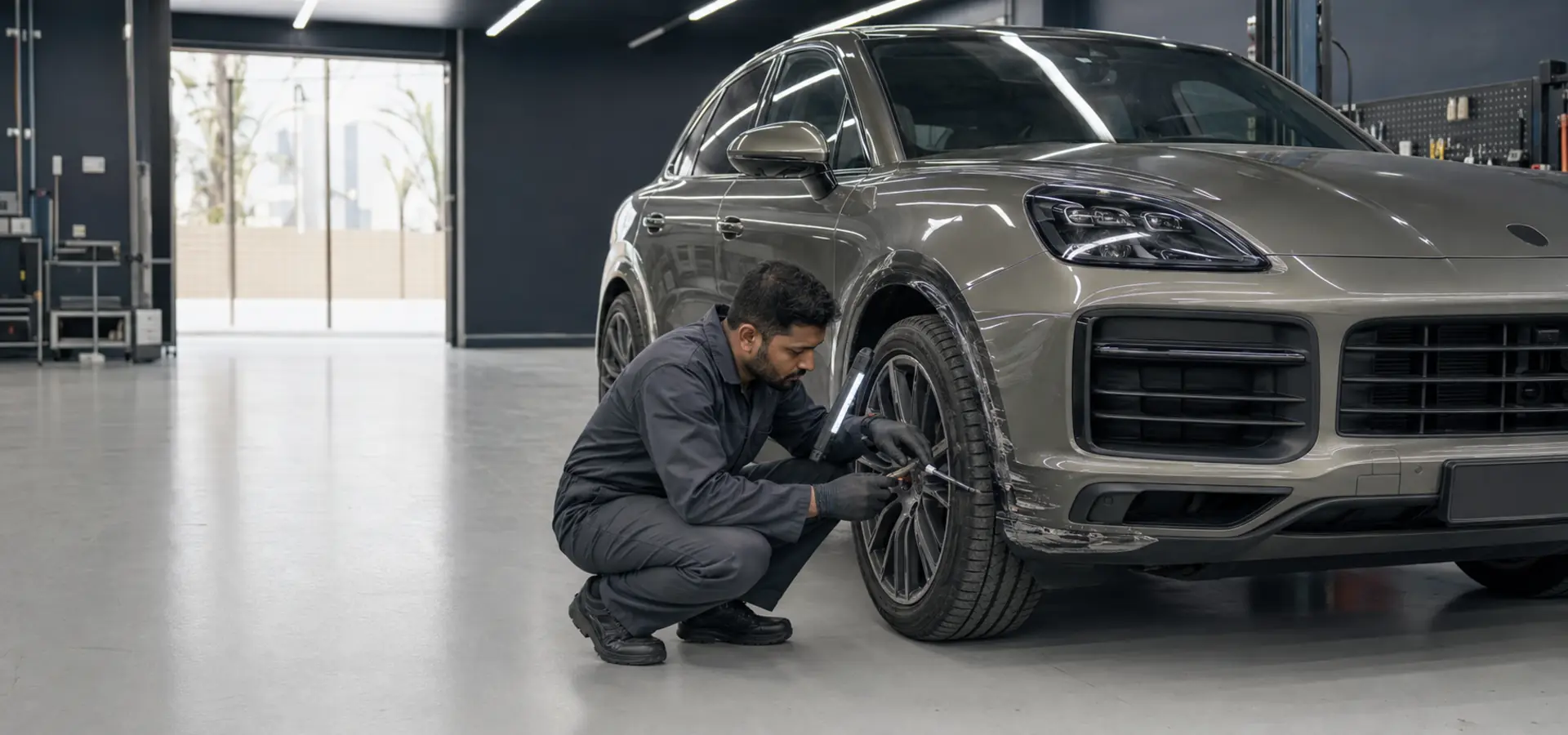
Cayenne collision assessment by installed powertrain and body
Porsche Cayenne Body Repair Dubai
Porsche Cayenne body repair in Dubai cannot begin from the model name alone. The current family spans SUV and Coupé shapes and petrol, hybrid and electric powertrains, so a similar-looking corner can sit beside different underbody, charging, cooling and closure boundaries. Intake identifies the exact vehicle first, then follows the force through its fitted systems.
The derivative is recorded before a part is discussed
The Cayenne name covers bodies and powertrains with different exterior and underbody details. Intake records VIN, model year, body form, charging equipment, warnings and fitted assistance hardware. A supplier photograph cannot identify the correct bumper, lamp, grille, undertray or sensor holder.
The removed component, connectors, apertures and moulded references are compared with the proposed part. Trial fit happens before paint when one piece controls several gaps. If the derivative remains uncertain, ordering pauses rather than allowing a likely-looking component to dictate the repair.
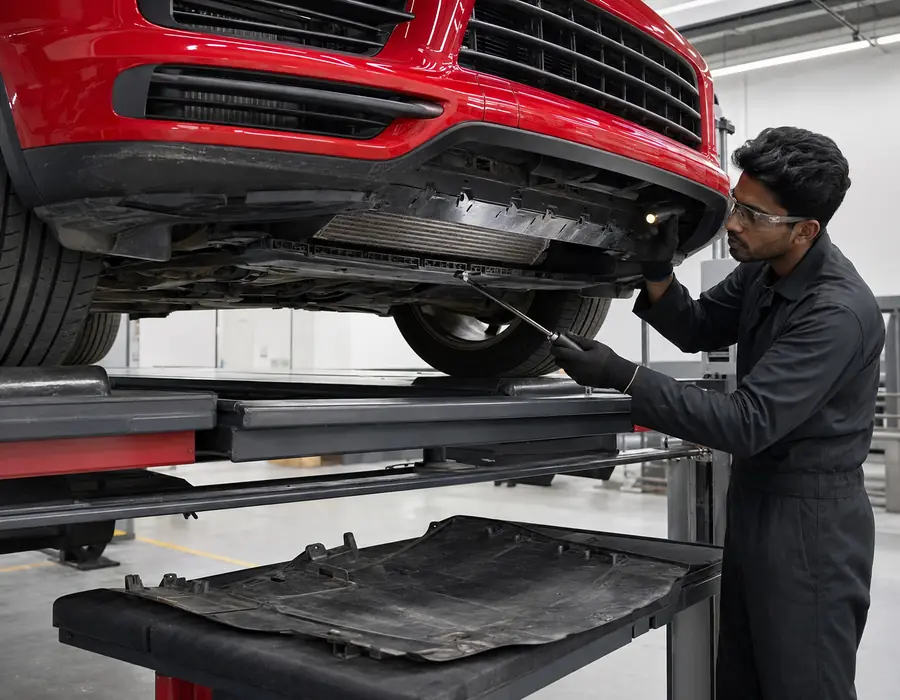
A low front strike can travel beneath the painted face
Kerbs, ramp edges and road debris may contact the Cayenne below normal eye level. The photograph set starts with the whole front and both wheels, followed by a safe low view. On the lift, transferred marks, shields, fasteners, air guides and fluid evidence are traced in impact order.
A loose cover, temperature warning, fluid trace or changed steering is not tested through further driving. Controlled inspection or recovery protects the vehicle from secondary damage. The finished bumper cannot prove that hidden ducts and lower attachments were restored, so closure evidence is retained.
Cayenne configuration fork
Choose the vehicle branch before the repair lane
Five branches prevent a petrol SUV repair assumption from being applied to a hybrid, electric or Coupé body. The VIN and physical car settle the branch.
Hybrid and electric intake boundary
Hybrid and electric questions begin at intake
When a charging port, electrified powertrain or high-voltage warning is present, the vehicle state and visible damage are recorded before body production begins. Staff do not improvise electrical work or treat a clean scan as proof that the battery enclosure is undamaged.
Body repair, electrical observations and specialist requirements remain separate in the written scope, so completion in one discipline cannot imply approval in another.
Include the charging area, underbody contact, visible warnings and the full damaged side.
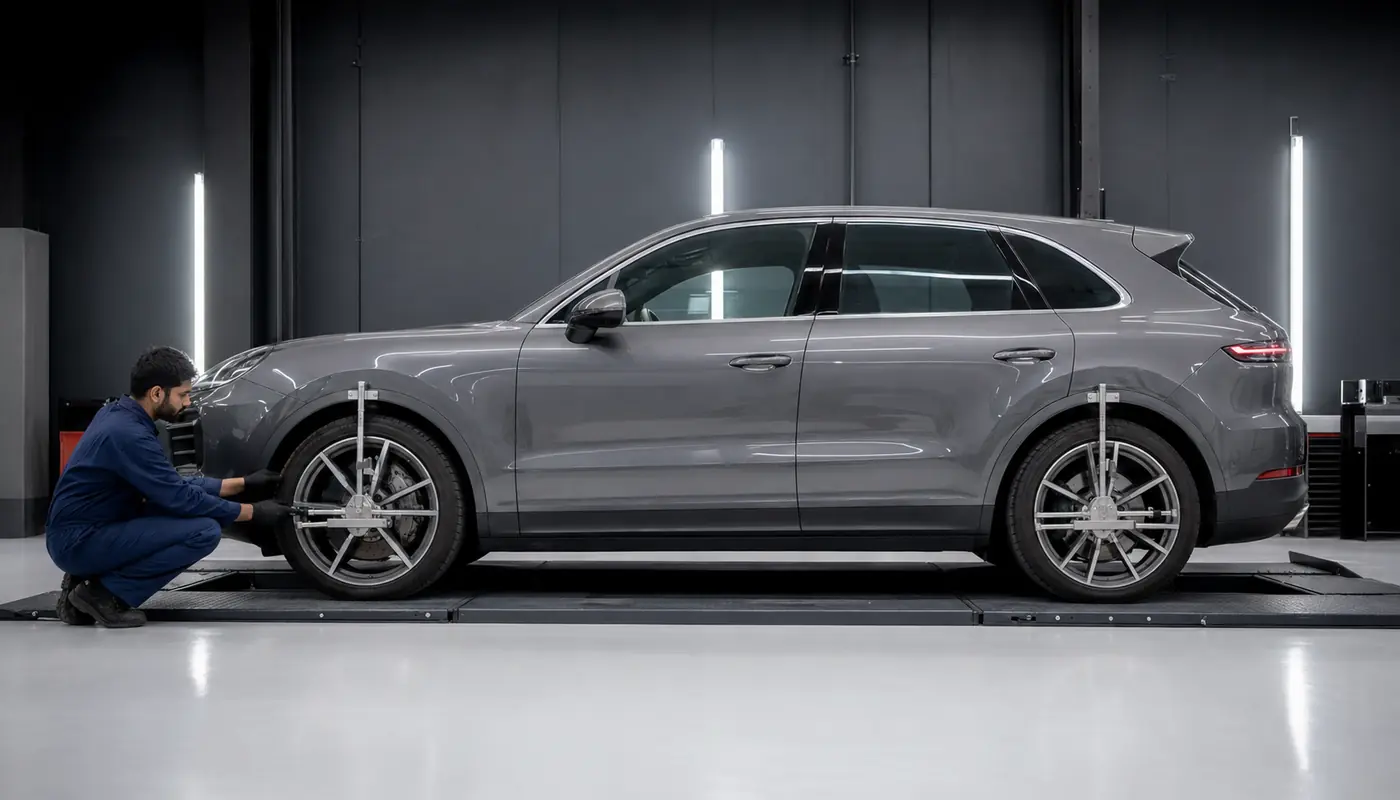
Suspension stance frames every wheel-arch judgement
A Cayenne can sit unevenly because of load, tyre condition, suspension state, collision damage or a pre-existing fault. Arrival height and warnings are photographed before lifting or unloading changes them. Arch clearances and bumper height are interpreted only under a repeatable reference condition.
A contact near the wheel adds tyre, rim, liner and suspension screening. Alignment is used when the impact question warrants it, not as a decorative certificate. Numbers are related to ride state and repair stage before panel gaps or camera prerequisites are approved.
Front cooling routes remain visible until checked
Grilles and apron openings can border ducts, shutters, seals and heat exchangers that vary with derivative. Removed guides are labelled, and torn mounts or distorted carriers are recorded before reassembly. Decorative appearance is never used to decide whether an opening has a functional role.
Leakage, unusual temperature or damaged cooling hardware calls for the appropriate mechanical release. Internal routes are photographed before covers conceal them. If a required part is unavailable, the limitation is stated rather than hidden by completing the colour work around it.
Side-impact trim assessment
Side blades and lower trim need their own evidence
A side scrape can cross the doors, wheel arches, lower covers and model-specific trim. Line lighting follows the complete character line, while controlled removal shows whether the outer cover absorbed the contact or transferred it into brackets and sill-adjacent points.
Door movement, glass, seals and handles are checked when the impact reaches their zones. Adjustment waits until the aperture and mounting points are understood.
- Character line and panel shape
- Blade clips, brackets and sill-adjacent points
- Door movement, glass, seals and handles
- Mount security and drainage after refitting
Trim cannot hide movement underneath. A renewed side piece must sit on sound mounts, preserve drainage and follow the corrected body shape without being forced into position.
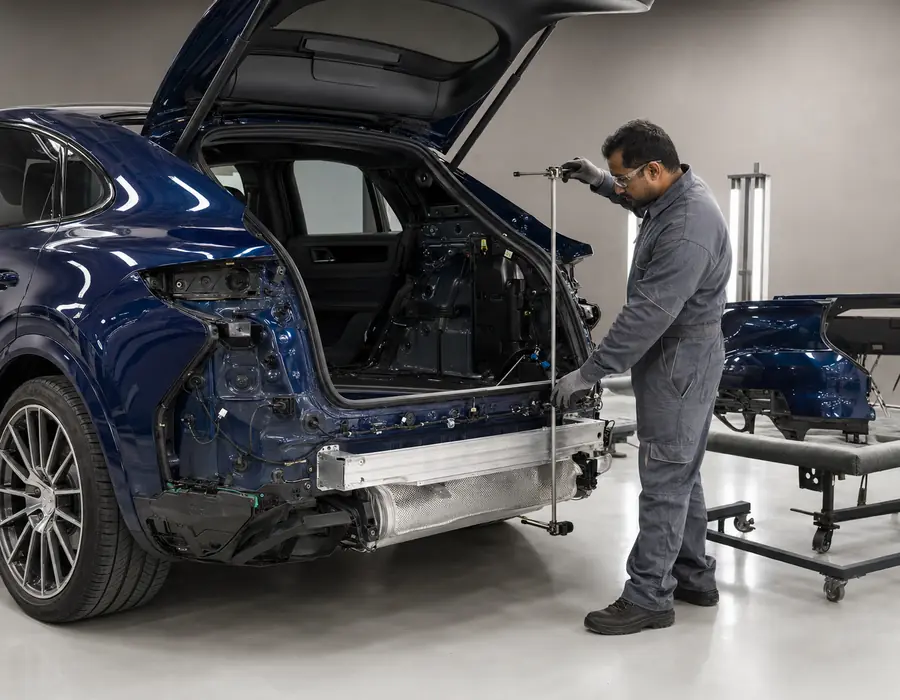
Rear geometry changes between SUV and Coupé forms
The roofline, rear glass and tailgate relationships differ between Cayenne body forms. Rear intake therefore records the complete silhouette, lamp seating, tailgate gaps and powered movement before trim is removed. Resistance or scraping stops repeated cycling.
Bumper guides, vents, seals, luggage-floor evidence and operating hardware remain accessible until their checks pass. Water testing follows an identified path rather than a broad application of sealant. Final approval combines opening geometry with the applicable function.
Tow and off-road equipment can redirect force
A tow system, protection piece or non-standard accessory may change the rear or lower impact path. Intake photographs labels, fasteners and existing condition. The workshop does not assume an accessory is original, correctly installed or suitable for reuse after contact.
Removal, refit and outside specialist work are identified in the scope. An accessory cannot be bolted back onto an unverified mount merely to recreate the arrival appearance. Load-bearing suitability remains separate from cosmetic restoration.
Follow the Cayenne configuration before body work
The physical Cayenne and VIN settle the repair boundary.
| Evidence | Repair decision |
|---|---|
| SUV or Coupé | Roof line, rear opening, glass and tailgate |
| Petrol | Cooling, lower front hardware and assistance systems |
| Hybrid or electric | Charging, high voltage, underbody and lift points |
| Any derivative | Ride height, wheel corner, lamps and exact parts |
The next repair decision depends on the exact model. See 911 repair planning for front-versus-rear impact boundaries, and Taycan repair planning for EV state and low-body boundaries.
Paint approval beside the vehicle
Porsche paint is matched beside the actual vehicle
Code and instrument readings narrow the formula, but the existing finish, previous work, ground shade and effect orientation still shape the result. Spray-out cards are compared beside the repaired panel and its likely blend boundary under controlled light.
Curved Cayenne panels are checked from standing and low angles so colour, texture and surface shape remain consistent across the repair.
Repair route and installed outcome
Repair and replacement include the installed scope
The decision is based on the condition of the panel, its mounting geometry and the complete installed result—not only the visible surface.
Stable deformation may support repair when the permitted method protects the substrate, edges and mounting points.
Replacement is considered when tabs are torn, the panel is kinked beyond limits or an opening cannot hold its correct shape.
Transfers, clips, preparation, diagnostics, alignment, calibration and parts delays are identified where relevant. Visible damage and inspection-dependent risk remain separate, and supplements are supported by photographs.
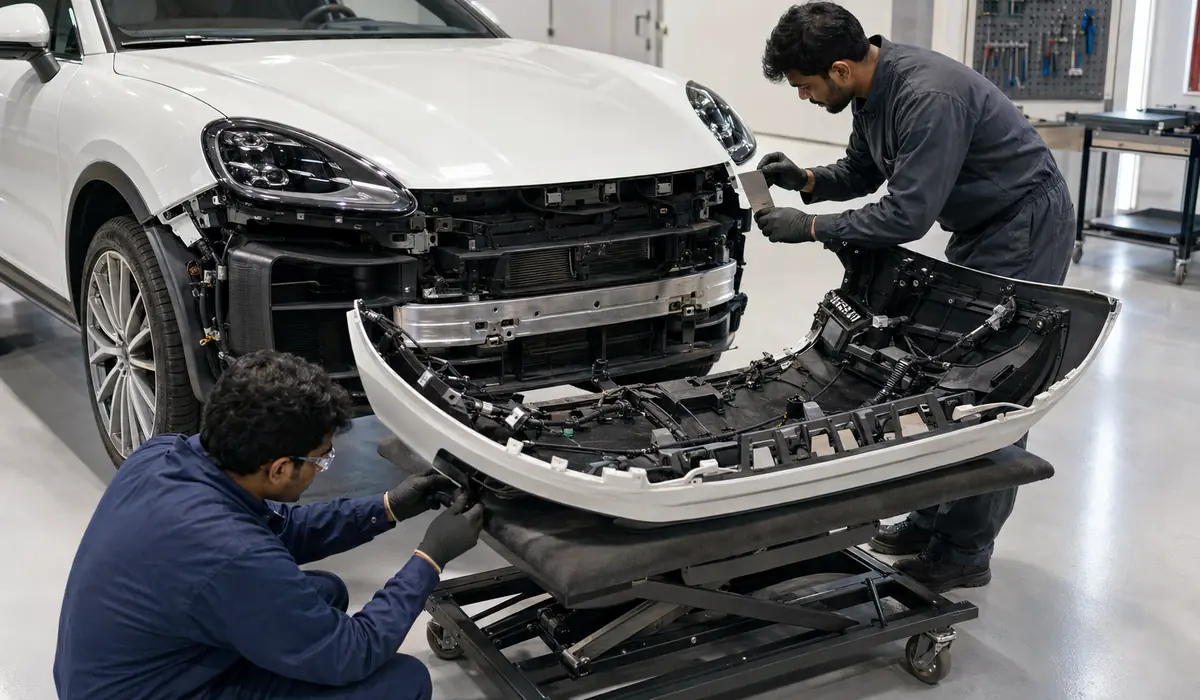
Production gates connect body and electronic work
Geometry is accepted before refinishing. Parts controlling several openings are dry-fitted. Sensor brackets, cooling guides and lower shielding are visible at their sign-off points. Applicable calibration follows completed body and wheel references.
Polishing cannot correct a moved carrier, and fault-code clearing cannot centre a bracket. Each team signs the condition it controls. This catches disagreement while access remains available and prevents a final wash from becoming the main quality proof.
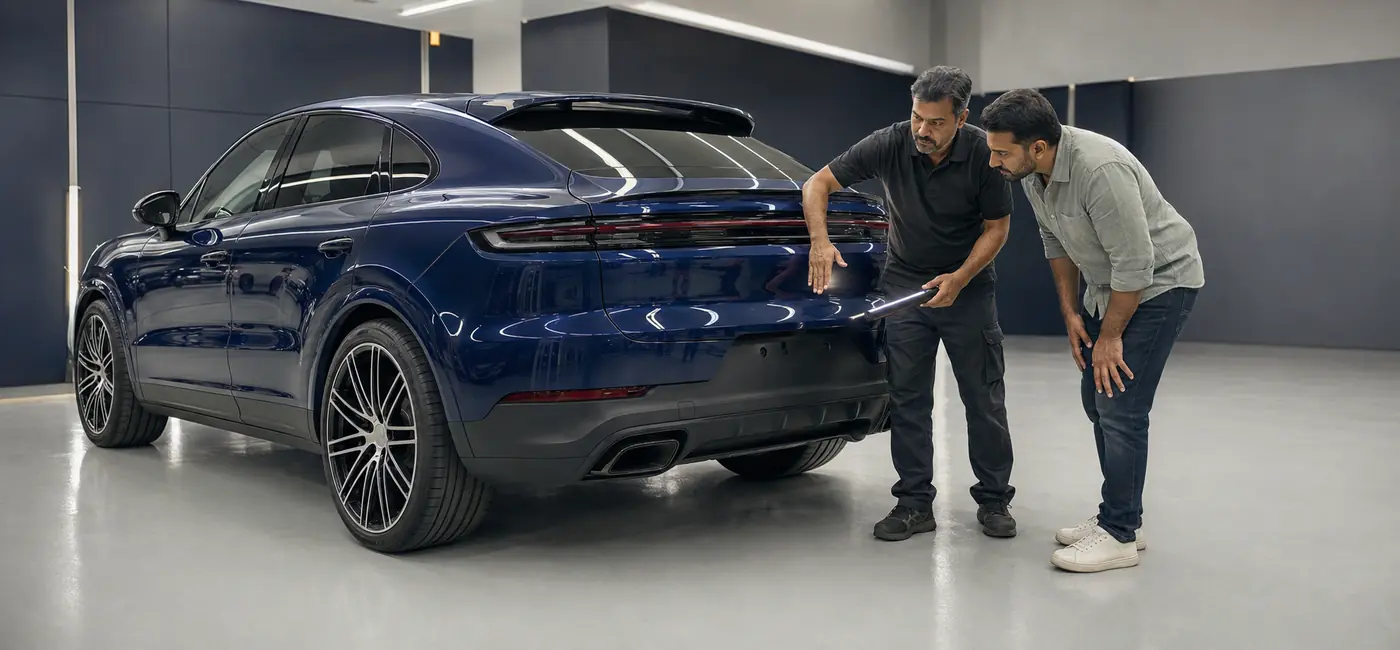
Handover returns to the configuration fork
The reviewer checks body form, energy boundary, impact end, ride state and installed equipment against intake. Only functions affected by the damage or repair enter the scope. Deferred faults and pre-existing marks remain separately recorded.
Available evidence can include hidden-damage images, parts identity, measurements, spray-outs, scans, alignment data and calibration output. Aftercare names the coating and fitted parts instead of giving a universal waiting period.
Related Porsche and repair pathways
Internal routes keep the Porsche cluster organised
The Cayenne page stays focused on body form, powertrain and model-specific repair boundaries. Broader questions continue through the appropriate service page.
Porsche body repair
Use the make-level page for Porsche-wide repair principles, model navigation and brand-related bodywork context.
Professional body repair
Continue here for structural assessment, panel repair, replacement decisions and the wider accident-repair pathway.
Car painting service
Use the painting page for colour matching, refinishing, blend boundaries, clear-coat quality and finish aftercare.
Cayenne scope: this page remains dedicated to SUV or Coupé form, petrol, hybrid or electric configuration, and the repair boundary of the vehicle in the bay.
Official Porsche information confirms a varied family
The Porsche Cayenne model range shows SUV and Coupé bodies and petrol, hybrid and electric variants. That supports exact configuration identification before repair planning.
The sales page is not repair authority. Current procedures, VIN data and physical evidence control materials, joining and electrical boundaries. This independent page does not imply Porsche authorisation.
Recovery intake before movement
Recovery information should include vehicle state
The recovery provider needs the vehicle location, wheel condition, suspension position, warning messages and any charging connection or loose lower component before transport is planned.
Useful recovery record: one full vehicle view, the nearest wheel, a safe low-angle image, dashboard warnings and the charging area where relevant.
Previous repairs may change the permitted path
Paint readings and removed trim can reveal filler, replaced pieces or non-standard fasteners. These findings are documented before the new operation changes them. A second repair can behave differently from an original panel.
The estimate distinguishes accident work from earlier defects. If previous work prevents a durable local correction, the owner receives the reason and available alternatives instead of unexplained preparation hours.
Lamp pocket and body references
Front lamps are judged with the surrounding pocket
A lamp that still illuminates may still have a cracked support or sit inside a moved body pocket. The bonnet, wing, grille and bumper references are established before the unit is adjusted.
Electrical response and physical position remain separate acceptance items. Applicable aiming or initialisation follows completed body work and exact equipment identification.
The handover records the operation that was actually completed instead of implying that every lamp function was certified.
- Check lamp mounts and seating
- Confirm bonnet, wing and bumper references
- Complete aiming or initialisation only when applicable
Door seals should not be asked to hide an aperture error
A changed closing sound or wind noise can be the first clue after a side impact. We preserve arrival adjustment, inspect hinges, latch and seal contact, then decide whether the symptom comes from the closure or the body opening.
New seals are not fitted merely to increase compression around incorrect geometry. Glass travel and handle operation join the check where the impact reached them. Final movement should be repeatable without extra force.
A cash repair keeps the same technical limits
Direct payment changes the approval route, not material behaviour, electric-vehicle boundaries or calibration prerequisites. Intake evidence, written scope and hidden-damage authorisation remain necessary.
Insurance approval also cannot permit an unsupported repair. When dismantling reveals another dependency, the supplement explains the engineering and cost before production continues.
Photo estimates should name what remains unknown
Clear images can identify the contacted area, likely parts and access needs, but they cannot reveal every carrier, duct, charging connection or underbody condition. The first response separates visible observations from items that still need confirmation.
Bay inspection tests those uncertainties. Newly exposed findings are photographed before the work expands, so a remote enquiry becomes a practical plan rather than an unsupported final quotation.
Aftercare names the repaired configuration
Collection advice identifies the coating, film, charging area, lower shield or powered closure actually involved. Washing and early handling follow the products and curing conditions used instead of a universal schedule.
A renewed warning, loose lower part, changed tailgate movement or finish concern should be reported with photographs. Any later impact remains separately documented so the review begins with clear evidence.
Identify the Cayenne branch before booking body work
Send the VIN year and derivative if known, the full damaged elevation, the nearest wheel, charging or warning status and a safe low view. We will select the first inspection boundary.