
Macan repair scope separated by generation and energy type
Porsche Macan Body Repair Dubai
Porsche Macan body repair in Dubai now requires an early generation check because petrol and fully electric Macan models can share a family name while carrying different lower-body, charging and component boundaries. The vehicle in the bay, not a generic search result, decides the parts path and safety route.
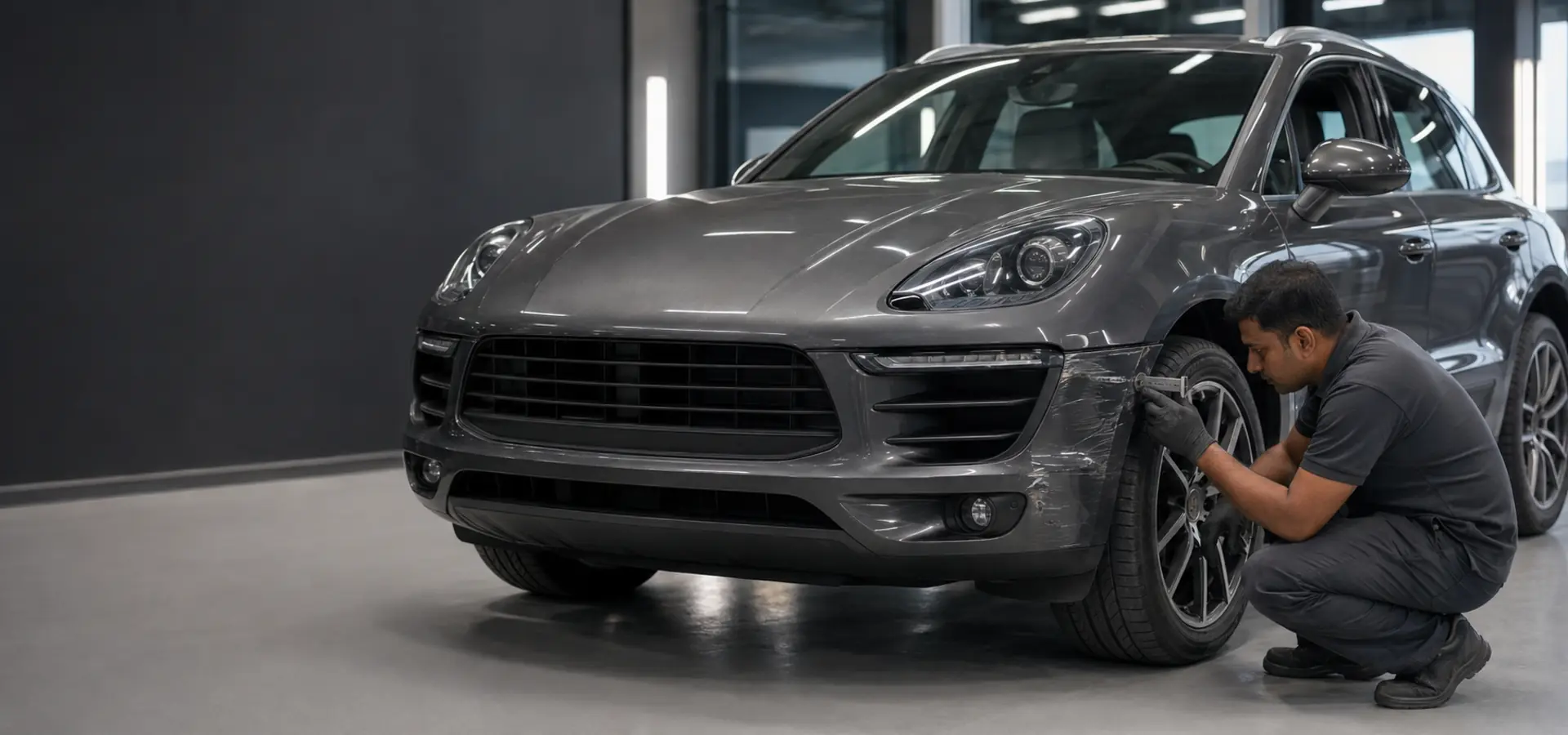
Identity gate before parts ordering
Generation is confirmed before estimating
A Macan badge does not identify the body shell or powertrain. The estimate begins only after the vehicle, fitted equipment and removed components agree.
Confirm the exact generation, derivative and body configuration before selecting repair information.
Record whether the vehicle is petrol or fully electric and note the charging-port location.
Use the model year to narrow bumper, lamp, bracket and lower-cover variations.
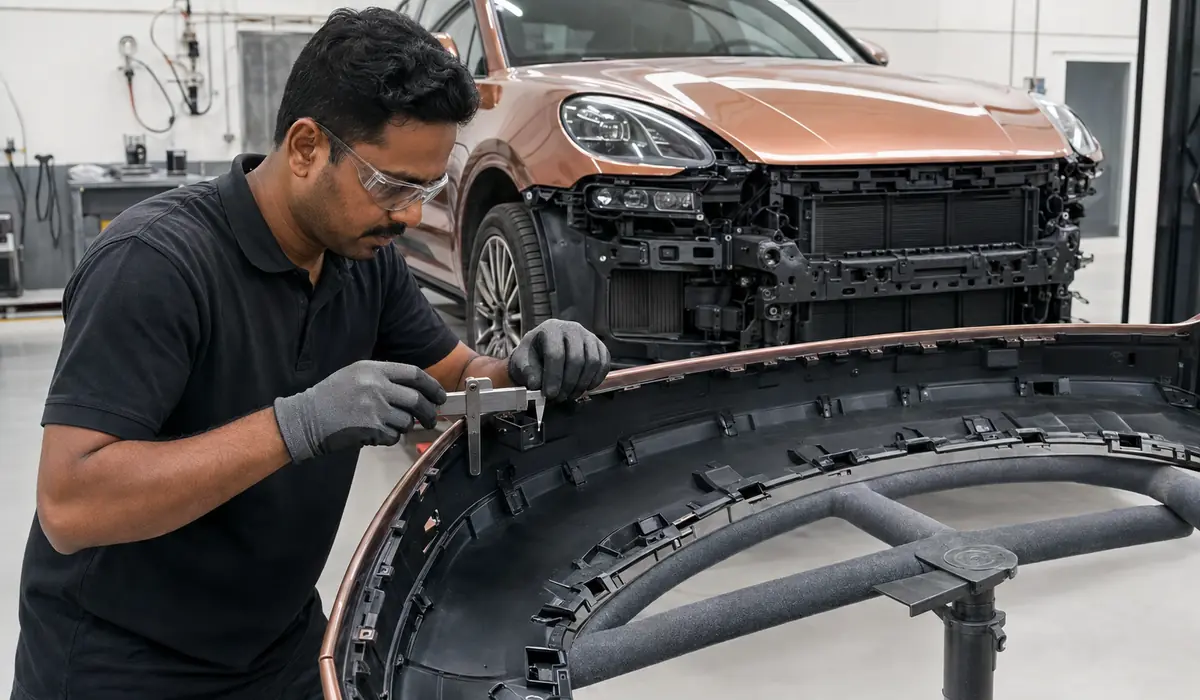
Document cameras, sensors, connectors and visible dashboard warnings before dismantling.
- Compare the removed part and connector layout with the proposed replacement.
- Trial-fit the bumper or lamp while brackets and adjustment points remain visible.
- Confirm aperture, trim and lower-cover alignment before paint begins.
- Stop the order when identity or fitment remains uncertain.
Useful details: VIN, model year, charging-port status and full damaged-corner photographs.
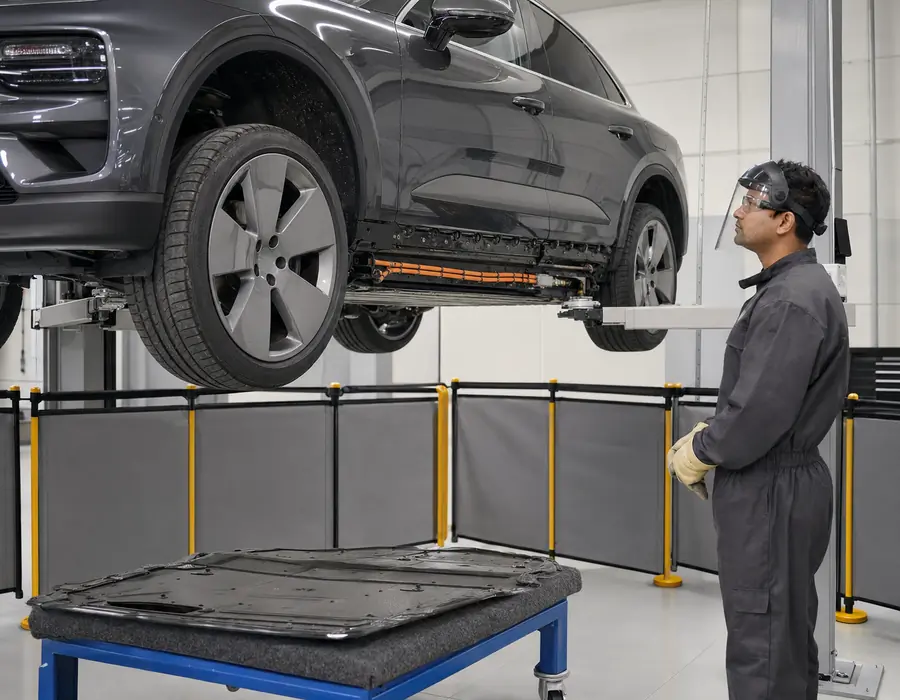
Electric Macan safety gate
Energy boundary before body refinishing
On an electric Macan, body work does not begin by treating the warning state as a cosmetic issue. Trained personnel first control the relevant energy and underbody boundary.
- Underbody strike or visible enclosure concern
- Unusual heat, odour, vapour or fluid evidence
- High-voltage or charging-system warning
- Uncertain condition after recovery or impact
The owner is not asked to charge, reset or drive the vehicle to test a symptom. A scan cannot certify an enclosure, and exterior completion cannot imply electrical approval. Each discipline records its own finding before release.
Petrol Macan front-impact check
Petrol-model cooling routes still need inspection
A low front impact can disturb more than the visible bumper skin. Cooling and airflow components remain open for inspection until their position, condition and orientation are recorded.
Inspect displaced, cracked or missing guides and label removed pieces so reassembly direction is not guessed.
Check movement, seating and surrounding seals where the impact path reaches the front cooling package.
Use safe low photographs and lift evidence to follow damaged fasteners, undertrays and hidden contact points.
- Record fluid loss, temperature warnings and visible airflow damage before production.
- Do not use a short drive to investigate an unresolved cooling warning.
- Keep hidden airflow pieces accessible until inspection and photographs are complete.
- Do not allow colour work to close an unresolved cooling dependency.
Include a full front view, a low-angle image and any temperature or fluid warning shown.
The compact wheel corner concentrates several references
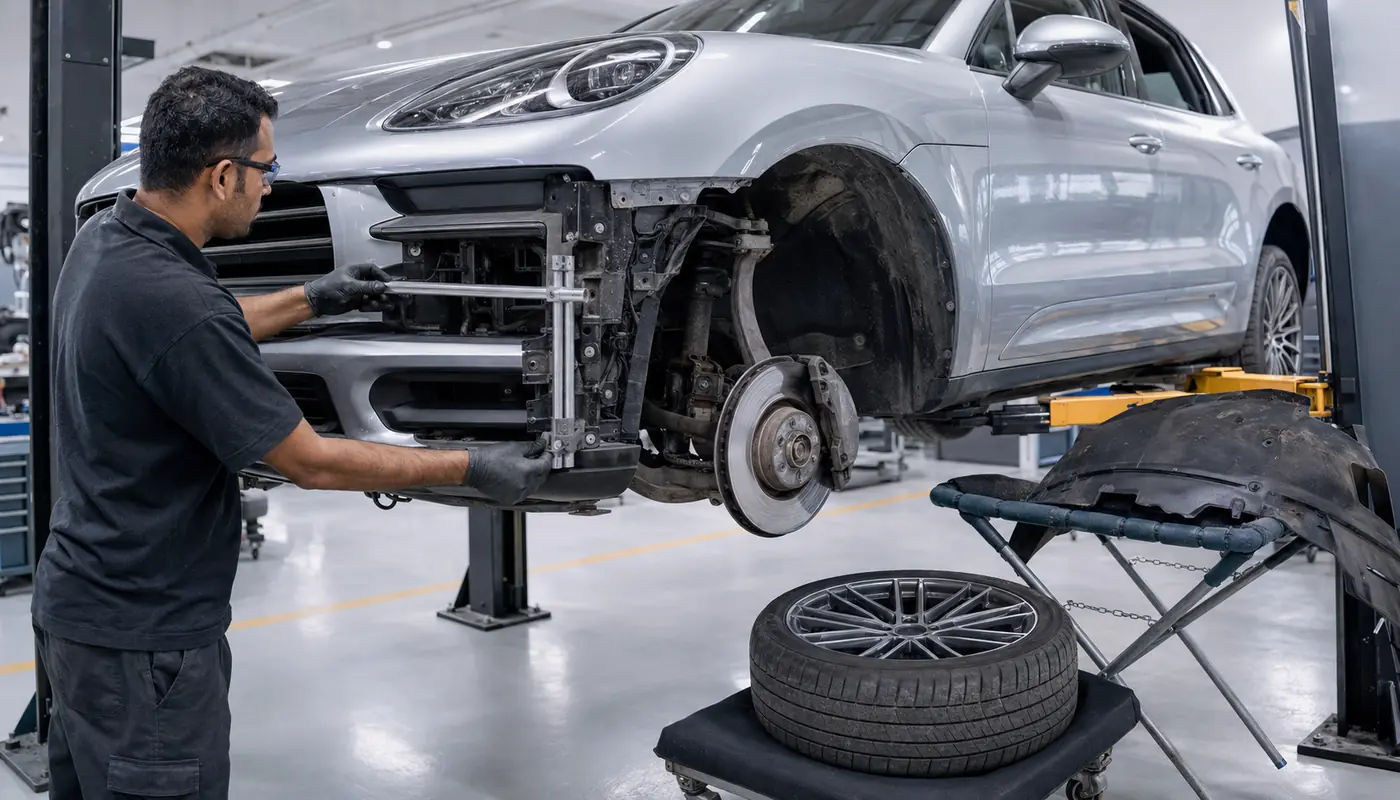
A Macan bumper, arch, liner, tyre and lamp can share one parking impact. We photograph the complete corner before removal and record changed steering, rubbing or vibration. The wheel and tyre are screened before cosmetic production.
Alignment is used when evidence supports it. Results are interpreted with ride state and tyre condition. A clean scan does not reveal a displaced liner, while an even arch gap cannot certify suspension.
Macan identity ladder
Move from identity to finish without skipping the energy boundary
The ladder starts with VIN and installed features, then narrows the contacted zone. Each level must be stable before the next one can be approved.
Side blades are not treated as ordinary door paint
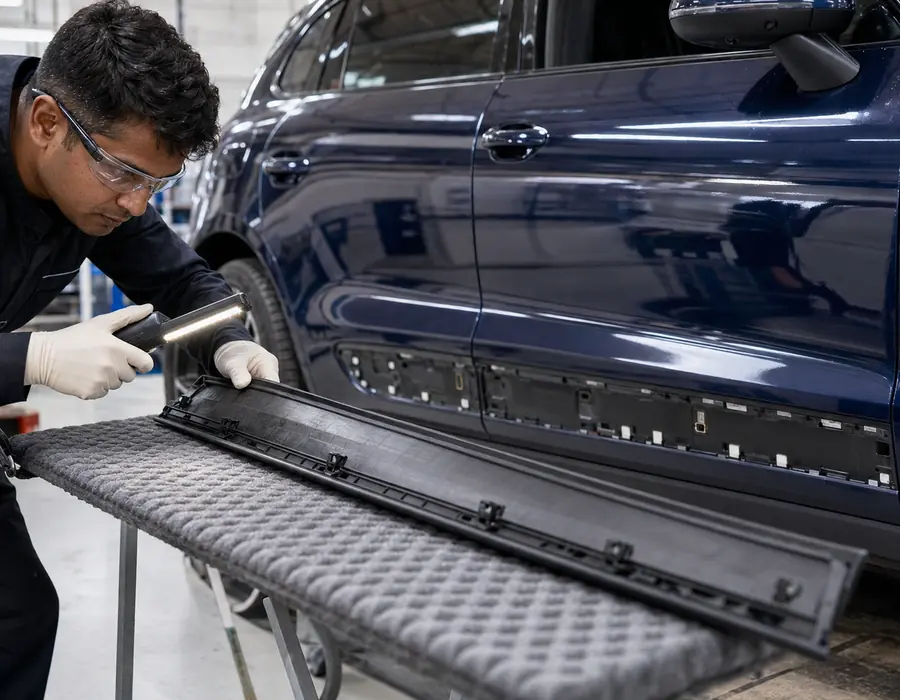
Macan side blades form a distinct visual and attachment layer. Contact can mark the blade, door surface, clips and lower sill area differently. Controlled removal distinguishes replaceable trim damage from deformation underneath.
Finish type, texture and part identity are confirmed before ordering. The new blade must sit on sound mounts without forcing the door reflection. Decorative restoration cannot conceal a disturbed sill-adjacent point.
Electric Macan charging-area assessment
Charging-area contact remains a separate stream
Quarter-panel damage near the charging flap is assessed as more than a surface-repair question. The surrounding closure, sealing, wiring proximity and charging status each need their own evidence.
Check distortion, hinge movement, panel gaps and the sealing path before correcting the quarter-panel surface.
Keep electrical routing and nearby components visible until the body-repair boundary and specialist boundary are clearly separated.
Record warnings, heat, moisture and charging behaviour without asking the owner to reset or repeatedly test the system.
Charging should stop if the area is distorted, wet, hot or showing a warning. Panel correction and electrical verification are named separately, because a smooth quarter surface is not proof of charging integrity.
Include the full quarter panel, charging flap, nearby wheel and any warning shown.
Rear opening and closure control
Tailgate fit begins with the aperture
Rear damage is first observed with the tailgate at rest. Lamp relationships, gaps, latch sound and bumper-to-quarter transitions are recorded before powered movement.
Surface geometry under line lighting
Coupé-like reflections expose crown errors
The Macan roofline and rising side shape create long oblique reflections. Line lighting can reveal deformation beyond the centre of a visible dent and show whether the shoulder line still travels correctly.
- Low viewing height
- Standing viewing height
- Long oblique reflection
- Quarter transition
The repair route follows the complete shape
Consider access, material, edge loading and previous work before treating the mark as a simple dent.
Use when controlled metal correction and refinishing can restore the crown and shoulder relationship.
Escalate when material rules, edge condition or deformation make correction unsupported.
Protected and exposed finish control
Paint matching includes protected and exposed areas
Paint protection film and contrasting trim can change how ageing appears around a repair. The matching process therefore records both protected and exposed surfaces before deciding how colour and texture should be compared.
Photograph the film edge, ageing and surface condition before removal so the original contrast remains documented.
Use paint measurements to understand the existing finish and identify differences between repaired, protected and exposed areas.
Compare spray-outs beside the actual panel under controlled light rather than approving colour from a detached sample alone.
Review face tone, flop, texture and edge finish as separate quality points before replacement film is considered.
Coating quality comes first. Replacement film waits for the coating’s required cure and inspection. Film installation never substitutes for paint quality control.
Geometry before electronic confirmation
Sensor position is checked before diagnostics
Parking sensors and cameras depend on their physical holders, cover apertures and surrounding body geometry. A system can communicate normally while its view has been altered by excess coating, adhesive or a distorted skin.
Confirm the sensor or camera sits squarely on an undamaged, correctly positioned mounting point.
Check shape, coating thickness, adhesive and clearance around the visible opening before diagnostics.
Complete applicable calibration only after body and wheel prerequisites, then name the exact system and operation.
Generation-specific repair routing
Use the Macan generation to choose the repair boundary
Confirm the exact Macan before applying a familiar bumper, wheel-corner or underbody route. Petrol and electric models can share a family name while requiring different evidence and safety controls.
Cooling and lower airflow route
- Cooling ducts and shutters
- Lower covers and fasteners
- Installed parking sensors and cameras
Energy and charging route
- High-voltage and warning state
- Underbody condition and lift points
- Charging area and electrical dependencies
Shared body-repair route
- Wheel corner and tailgate aperture
- Side blades, lamps and cameras
- Surface geometry and paint finish
If the vehicle is not a Macan, keep its own boundary intact. The Cayenne assessment covers SUV, Coupé and powertrain configuration, while the 911 assessment separates front- and rear-impact priorities.
The complete workshop pathway is set out under professional body repair in Dubai, while this page remains specific to the Porsche Macan.
Parts and quotation controls
Parts planning respects two Macan eras
Exterior pieces can vary across body generation, powertrain, styling line and installed equipment. VIN, moulded references, connectors and the removed part settle identity; supplier thumbnails remain clues only.
- Check transport damage before paint or installation
- Catalogue clips, sensors, seals and transfer pieces
- Identify one-use hardware before reassembly
- Revise the dependency when confirmed supply changes the plan
The estimate marks hidden boundaries
Visible panel and paint work can be scoped from clear images, while underbody, bracket, charging and electronic conditions remain inspection-dependent. That distinction makes later supplements understandable.
- Labour, parts, materials and verification stay itemised
- No unsupported price or turnaround is published
- New findings are photographed before authorisation
- Inspection-dependent work remains visibly separate
Final evidence and release
Handover repeats the identity ladder
Final review repeats the same A–E checks used at intake. Deferred faults stay separate from the completed repair.
Identity
Generation and fitted equipment match the repair scope.
Boundary
Charging, cooling and underbody items are closed or deferred.
Corner
Wheel, bumper, lamp and liner clearances are accepted.
Surface
Shape, paint, film and trim finish are approved.
Release
Required records, functions and aftercare are named.
Source, intake and aftercare guidance
Official Porsche pages show two powertrain families
The Porsche Macan range presents petrol and electric models. That supports an identity gate before repair planning.
Sales information does not authorise a repair method. Current procedures and the physical vehicle control safety, material and calibration decisions. This independent page makes no approval claim.
A useful photo set starts wide
- Full damaged side or vehicle end
- Nearest wheel and low-angle view
- Charging area where relevant
- Every warning shown on the vehicle
Close-ups follow context. Do not push trim back into place for appearance; the images guide bay planning rather than create a final repair promise.
Aftercare follows powertrain and coating boundaries
Electric charging concerns, newly fitted lower pieces and fresh paint require different instructions. Handover names the restriction that actually applies instead of issuing one generic warning.
- Report a renewed warning with photographs
- Report tyre rubbing or a loose side blade
- Report a finish defect before attempting correction
- Keep later impact documented separately
Contact geometry and sealing references
Small contact areas can influence larger body relationships
A narrow impact mark can affect several connected references. The inspection follows the surrounding opening, mounting points and sealing path instead of judging only the visible centre of the damage.
Front lamps need body references before electronics
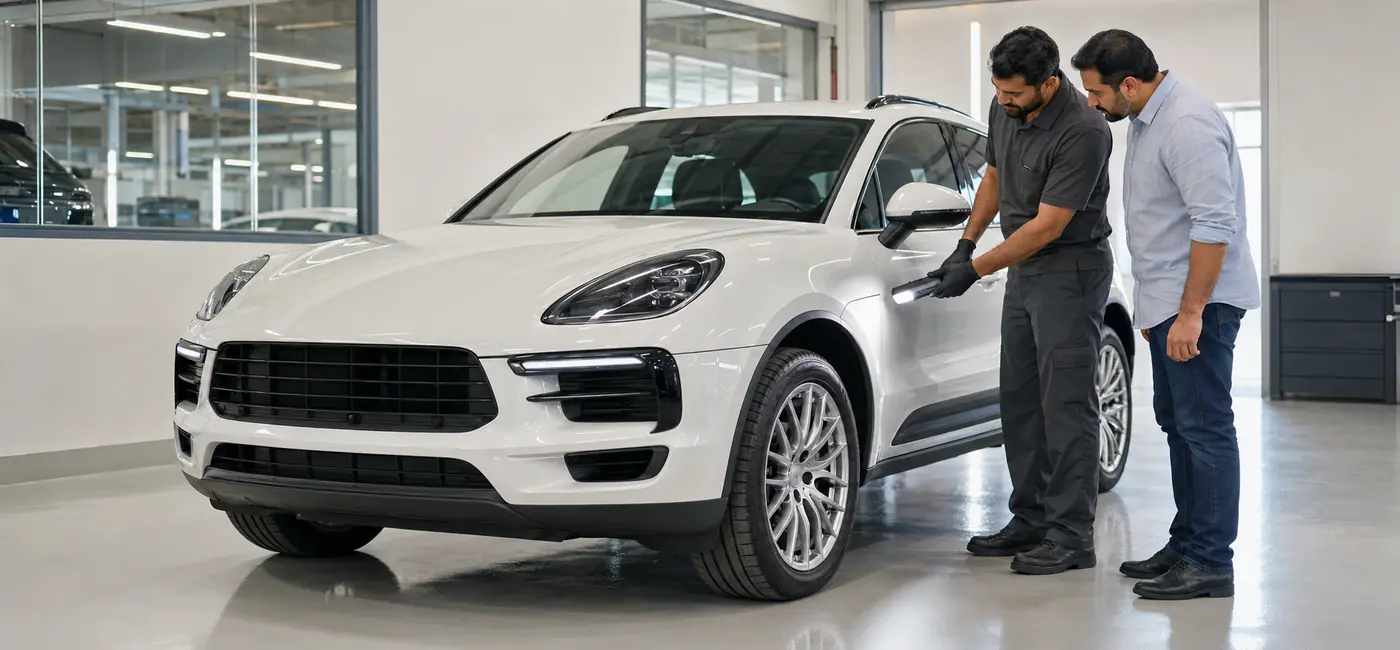
A functioning lamp can still have a fractured mount or changed aim after a compact corner strike. The physical pocket is checked before adjustment because light output alone does not establish correct fit.
Seating, wiring condition and applicable aiming remain separate checks. The lamp is not forced into a distorted opening, and the installed configuration controls the final operation.
- Wing edge
- Bonnet edge
- Bumper aperture
- Lamp pocket
- Mounting tabs
Door-edge contact can influence glass and seals
A narrow parking strike may load the door edge while the centre panel still looks acceptable. Arrival gaps, closing effort, glass travel and seal contact are recorded before hinge movement.
The repair route follows material, access and edge condition. Final closure must remain consistent without transferring pressure into wind noise.
- Record gaps
- Check glass travel
- Confirm seal contact
Roof-line damage is not treated as a simple dent
Upper contact can approach roof rails, glass borders, drains or bonded areas. The complete edge is photographed before trim removal because a local mark can alter a longer reflection or sealing reference.
Glass and water work follows the fitted system. Extra sealant does not replace diagnosis, and structural or restraint-adjacent findings receive technical review.
- Trace rails, glass borders and drains
- Protect bonded and restraint-adjacent zones
Workshop control and approval gates
Repair validation remains tied to a stated purpose
Workshop handling protects the compact cabin
Seats, screens, trim and gloss surfaces are photographed and covered before long access work. Removed parts are stored by zone so connectors, clips and seals remain traceable, while dust control is coordinated with paint operations.
After reassembly, neutral light exposes residue and handling marks so pre-existing condition remains distinguishable from workshop-created damage.
Road testing has a stated purpose
A drive occurs only when safety prerequisites are met and a defined function cannot be checked statically. Route and observation are selected for that question; performance demonstration has no place in body-repair validation.
Gaps, lamp seating, underbody security and sensor mounting are often better proved in the bay. The file records why a road check was necessary and what it showed.
Insurance and technical approvals remain separate
Financial authorisation cannot decide whether a component is repairable, a restricted zone is clear or calibration can be omitted. Those decisions come from current information and physical evidence.
When another dependency appears, the technical reason is issued with photographs and work pauses at the affected gate. Schedule pressure does not change the repair limit.
Lower-edge evidence, coverage and release
The visible repair stays connected to hidden work and final records
Three short checks keep the lower repair, written scope and handover evidence clear without crowding the page.
Lower parking contact can disturb hidden parts
A kerb strike below the bumper may continue into the liner, undertray or air guide. The nearest wheel and contact height are recorded before lifting, and access stays open until fasteners, shields and clearances are accepted.
The written scope names the actual operation
Any workmanship warranty identifies the repaired area, completed operation and exclusions. It is not presented as a Porsche manufacturer warranty, and unrelated electronics, old paint or later impact remain outside the original repair.
The final corner photograph includes the wheel
Handover imagery keeps the repaired bumper or arch, nearest wheel, lamp relationship and lower edge in one frame. Alignment or calibration records are referenced separately where they formed part of the work.
Include the full corner, nearest wheel and one safe low-angle image.
Confirm which Macan is in front of the damage
Send the model year, charging-port status, full damaged corner, wheel and warnings. We will separate generation, energy and surface questions before proposing access.