
Fresh paint protection decision in Dubai
PPF After Repaint Dubai When Fresh Paint Is Ready for Film
Paint protection film can go over a properly repaired and sufficiently cured repaint, but a fixed waiting period cannot prove readiness by itself. The body repair, primer, basecoat, clear coat, curing conditions, panel edges and film adhesive all affect whether the surface should be wrapped.
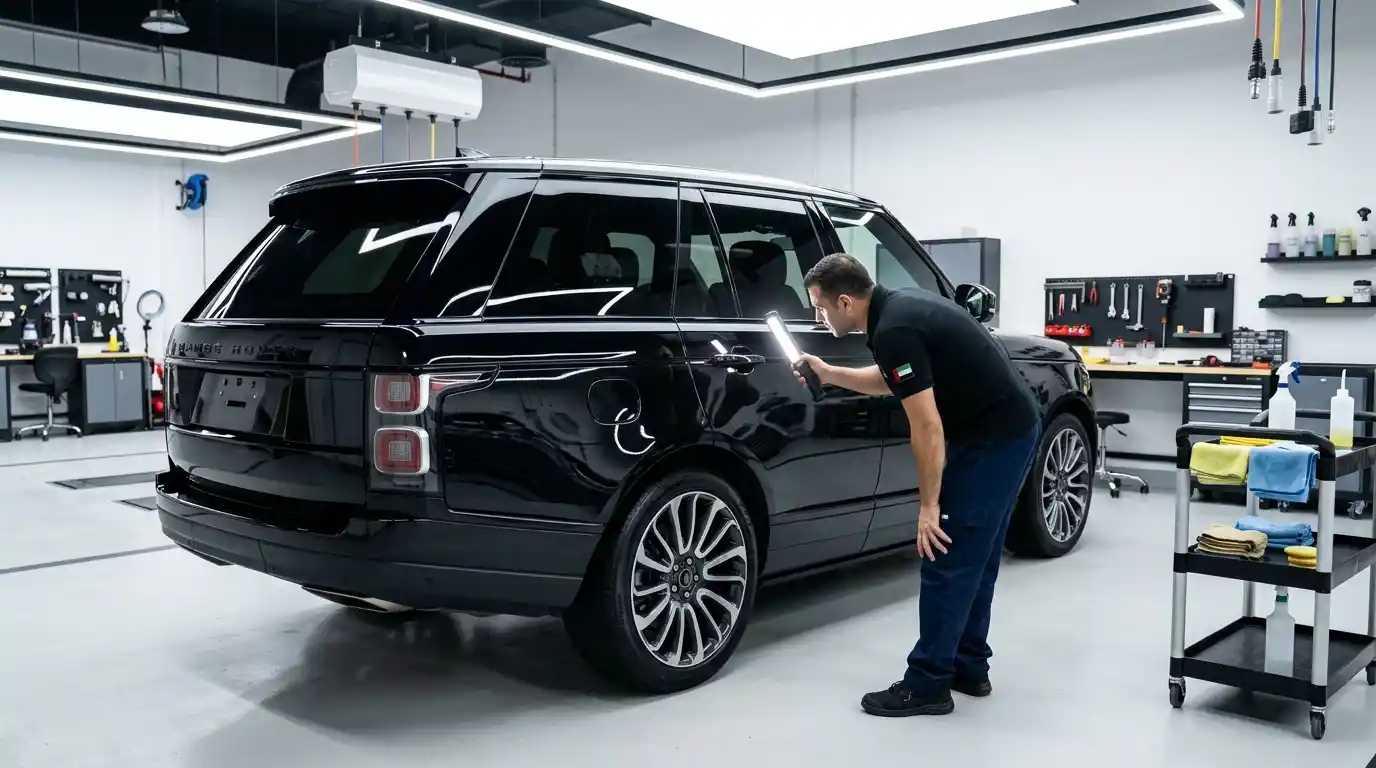
How long should you wait
There is no single correct number of days for every repaint
You will find one-week, 30-day, 60-day and 90-day advice online. That variation is the reason this page does not turn one calendar number into a workshop rule. A bumper that received local repair and a bonnet restored through several old coating layers do not present the same substrate, film tension or future removal risk.
The safest sequence is condition based. The refinisher confirms what was painted and when the coating system is released for protection. The PPF installer then checks the actual surface, planned edges, installation method and film requirements before accepting the job.
Fresh paint release matrix
Use evidence to decide whether the panel is ready, on hold or back with the refinisher
This matrix is the main decision tool for PPF after repaint. It separates elapsed time from the physical conditions that matter when adhesive film is fitted over a repaired coating.
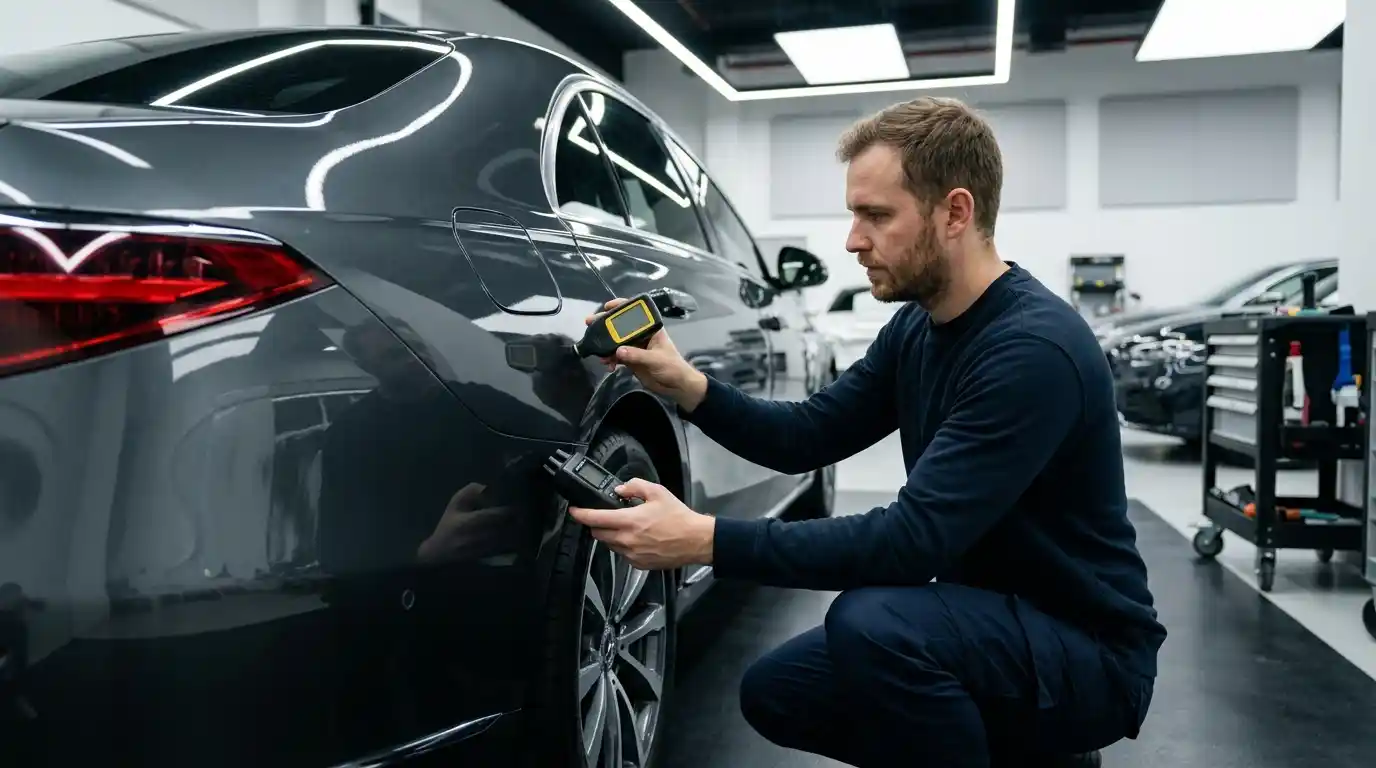
Why waiting advice conflicts
Paint curing is a process, not a switch that flips on day 30
Automotive refinish systems vary by primer, basecoat, clear coat, hardener, reducer, film build and repair depth. Booth bake, air movement, infrared assistance, humidity and panel temperature can change how quickly a coating develops the condition expected for later adhesive work.
A freshly painted surface may become dust-free and safe to reassemble while chemical reactions and solvent release continue. That is why the date on the invoice is useful context but not enough evidence on its own.
OEM coatings are applied and cured within the vehicle manufacturing process before the car reaches the customer. A local refinish is a new coating stack over an existing panel or replacement part.
A small bumper scuff, a filled dent, a repaired stone-chip bonnet and a panel with several old repaint layers create different uncertainty beneath the new clear coat.
A booth bake can shorten handling time, but it does not make every paint system, repair depth and film product equivalent.
Film warranty language can treat original paint and repainted surfaces differently. The exact film product should be identified before the appointment.
What sits under the film
PPF only sees the top surface, but removal loads the whole coating stack
A repainted panel is not just colour. The film adhesive bonds to the clear coat, while the clear coat depends on the layers below it. If an older layer, filler edge, primer interface or previous repair is weak, film removal can expose that weakness even when the surface looked acceptable at installation.
This is why a professional discussion should cover paint history as well as film brand. A thickness gauge can help identify coating variation on suitable metal panels, but it cannot reveal every hidden repair and it does not work the same way on plastic bumper covers.
Panel-specific risk
A repainted bumper, bonnet and blended panel should not inherit the same PPF plan
Plastic bumper cover
Complex curves, sensor openings, grilles, flexible substrate preparation and tight returns can increase film stretch and edge decisions. A replacement bumper may still be a repainted component even when the part itself is new.
Bonnet or hood
Leading edges see both road impact and film tension. Previous stone-chip repair, filler, corrosion work or several old paint layers can make the hidden coating history more important than the visible gloss.
Blended adjacent panel
Colour or clear coat can extend beyond the visibly damaged panel. The PPF installer needs the full refinished-panel list so an apparently untouched neighbouring panel is not treated as factory paint by mistake.
Matte or satin repaint
Local polishing is not a normal correction route for many low-gloss finishes. A gloss, satin or matte film can also change sheen, so the finish should be approved with a sample before broad coverage.
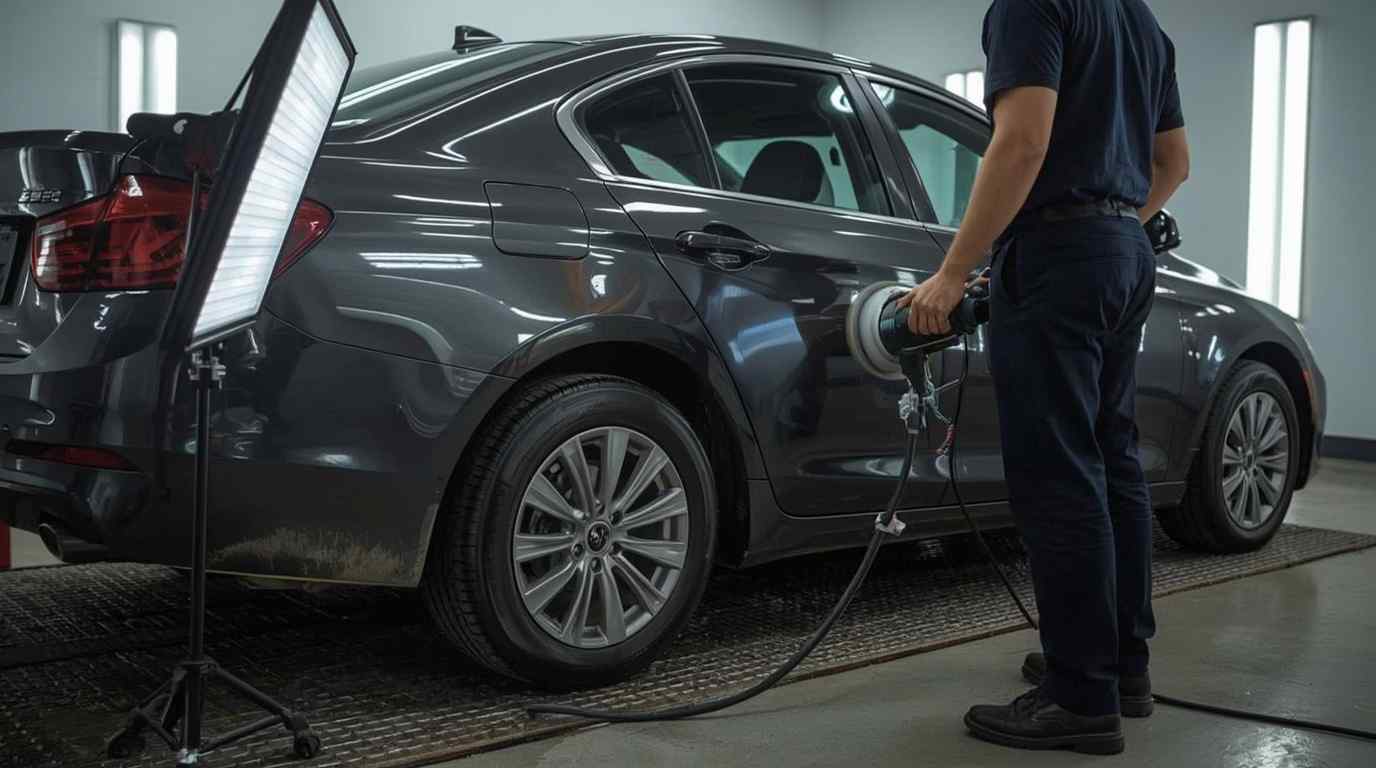
Pre-film inspection
Inspect the repaint in the conditions where a mismatch or weak edge becomes obvious
Clean and dry the panel using the refinisher-approved method. View the repair in direct workshop light and a second useful lighting condition. Metallic and pearl paint should be checked from more than one viewing angle because effect orientation can change as the observer moves.
For how the colour itself is developed and verified, see our car paint matching process. For the broader repair sequence, see car painting in Dubai.
Adhesion and removal risk
Film removal can reveal a weak repaint without proving the film caused the weakness
During installation, the adhesive develops contact with the clear coat. During removal, the film is pulled away using controlled heat, angle and tension. A sound factory coating and a weak refinished coating do not necessarily respond the same way to that load.
This does not mean every repaint will lift, and it does not justify a blanket promise that removal is risk free. The responsible approach is to declare repaint history, record the bare panel before film, identify the film product, and agree how a future removal concern will be inspected.
If a defect appears later, do not pull a corner to investigate it yourself. Photograph the area and let the paint and film sides agree on a controlled inspection route before evidence is disturbed.
From repaint to protected handover
Keep paint rectification and PPF installation as two separate sign-offs
PPF should preserve an accepted refinish, not become the last step of paint correction. A clear handover sequence protects the customer, refinisher and installer from mixing responsibilities.
Finish the body repair
Complete substrate repair, primer, colour, clear coat, reassembly and paint quality control.
Record the repaint
List refinished panels, completion date, paint concerns and any restrictions before protection.
Release the coating
The refinisher confirms when the paint system can receive the planned film or other protection.
Plan the film
The installer accepts the surface, product, pattern, seams, edge treatment and removal risk.
Inspect the protected result
Check film clarity, contamination, edges, seams, trim and the written aftercare handover.
Warranty and responsibility
Ask who owns the paint, the film and the interface between them
Competitor pages often stop at a film warranty duration. On a repainted vehicle, the more useful question is what each warranty actually covers and what happens if paint lift, edge failure or a hidden coating defect appears.
Paint workshop
Should be able to identify the repaired panels, refinish completion, paint-specific release guidance and any workmanship or material terms it provides.
- Repair and repaint record
- Paint finish acceptance
- Protection release date or condition
- Paint warranty exclusions
PPF installer
Should identify the film product, coverage, preparation, pattern or bulk-fit method, seams, edge strategy, installation quality and film-specific warranty terms.
- Film brand and product line
- Coverage map
- Declared repainted panels
- Film warranty exclusions
Vehicle owner
Should disclose known paint history, keep both invoices, follow the aftercare instructions and report a concern before attempting DIY removal or repair.
- Accurate repaint history
- Pre-film photos
- Paint and film documents
- Prompt defect reporting
If the coating is soft, smells strongly of solvent, shows pinholes or solvent pop, has unresolved colour or texture, chips at a repaired edge, or the installer will not accept the repaint history in writing, pause the PPF job and resolve the paint question first.
After PPF goes onto repainted paint
Early aftercare should follow the exact film product, not a generic internet routine
Film makers publish different instructions for washing, heat, pressure and care products. Use the installer handover for the film actually fitted. Dubai heat and dust make edge checks and clean washing especially useful during the first days after installation.
If you are deciding between protection methods on a recent repaint, our ceramic coating after repaint guide explains the different surface-readiness question for coatings. For booking film once the paint is accepted, see paint protection film in Dubai.
Questions that still matter
PPF After Repaint Dubai FAQ
Do I always need to wait 30 days after repaint before PPF?
No. Thirty days is a common figure in some manufacturer guidance, but it is not a universal release rule for every paint system, repair depth or film product. The paint workshop and PPF installer should both accept the surface before installation.
Can PPF be installed the same day a panel is painted?
That should not be assumed. A freshly sprayed coating can be safe to handle before it is suitable for adhesive film. Same-day protection needs product-specific approval from the refinisher and acceptance by the film installer, not just a dry surface.
Does booth baking mean the repaint is immediately ready for PPF?
No. Booth baking can accelerate parts of the refinish process, but paint chemistry, film build, repair depth, panel temperature and product instructions still matter. A baked panel still needs a release decision.
Can PPF trap solvents in fresh paint?
Applying film before the refinish system is ready can interfere with the intended cure or outgassing process. This is one reason fresh-paint timing should come from the paint system and installer rather than an arbitrary appointment date.
Can removing PPF lift repainted paint?
It can if the underlying coating is weak, poorly cured or otherwise vulnerable. That does not happen to every repaint, but repainted surfaces deserve a separate removal-risk discussion and professional technique.
What should I send for a PPF readiness assessment?
Send the vehicle make, model and year, the panels repainted, repaint completion date, any paint or body repair invoice, clear photos in good light, and the PPF coverage you want. Mention previous film, ceramic coating, paint correction or known earlier repairs.
Reviewed against BodyShop.AE repaint workflow and current manufacturer guidance from SunTek and 3M. Last updated 20 August 2026. This guide does not replace the technical data for the paint system used on the vehicle or the product-specific instructions and warranty of the PPF being installed.

Confirm the paint before adhesive touches it
Ask for a repaint readiness check before booking PPF
Send the repainted panels, completion date, repair invoice if available, current finish concern and the PPF coverage you want. We can separate paint rectification from film planning before the vehicle is committed to an installation slot.