
Range Rover Body Shop Dubai
A Range Rover body repair needs a vehicle-specific inspection before anyone promises a dent pull, bumper repair or panel replacement. Large painted surfaces, aluminium-intensive construction on many models, layered lower trim, powered closures, cameras, radar and premium effect colours can connect a small visible mark to a much wider repair decision.
Bodyshop.ae is an independent workshop and does not claim Range Rover dealer authorisation. The correct route depends on the VIN, model, model year, equipment, damage position, repair information, parts and the condition found after access.
Do not price the scratch before tracing the impact
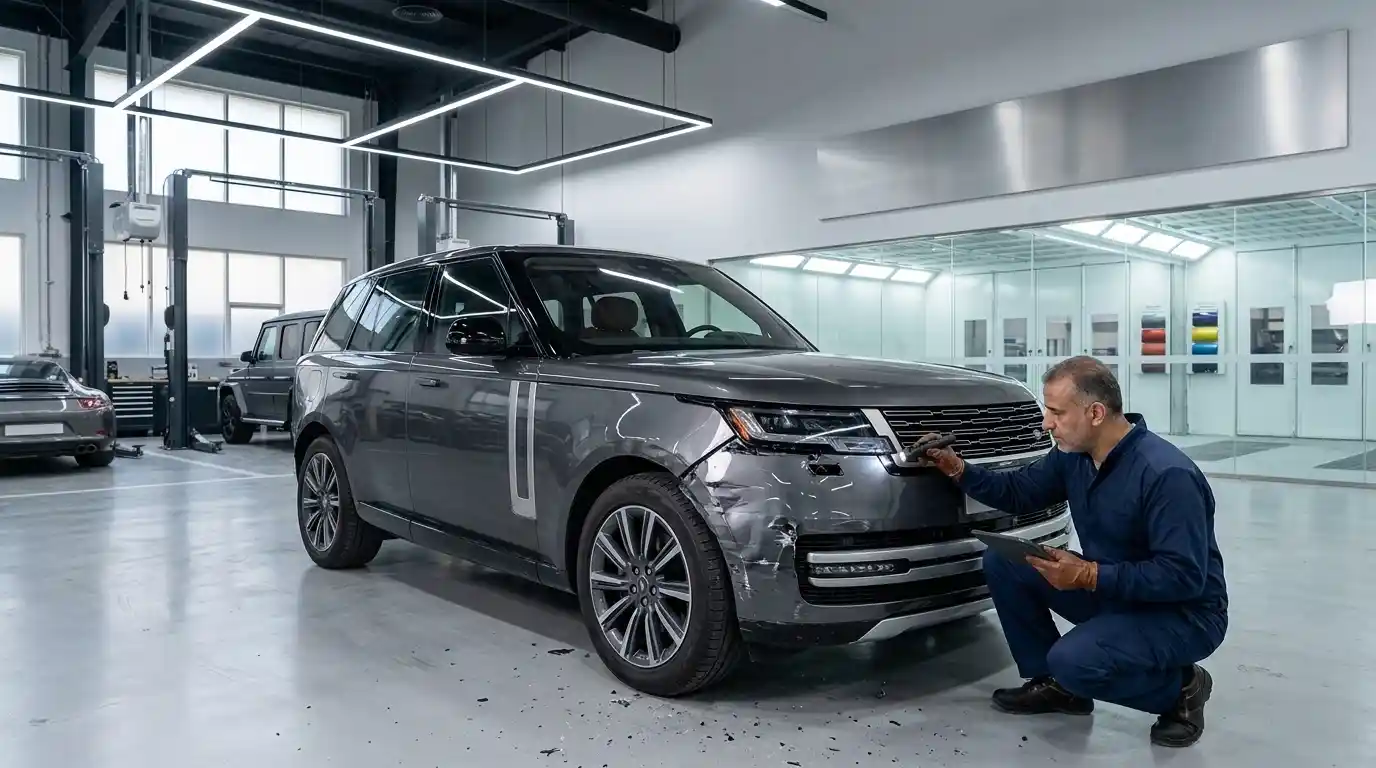
Consider a scrape across a front bumper corner. The visible work may involve plastic repair and refinishing. The same contact can also disturb a side guide, wheel-arch moulding, grille insert or sensor bracket. If a camera or radar unit is removed, shifted or replaced, the repair plan must check the applicable diagnostic and calibration instructions rather than assuming that a warning light will appear.
A long door dent presents a different problem. A shallow deformation in an accessible area may be repairable, sometimes without paint when the original coating is intact and the metal has not stretched beyond a sensible limit. A sharp crease near an edge, intrusion beam, handle aperture or bonded reinforcement can change access and repairability. The decision belongs to the actual panel and construction, not to a generic promise about luxury SUVs.
The broader car body repair service explains our workshop scope. This page owns the Range Rover-specific commercial decision, including model family, mixed materials, sensor relationships, finish expectations and a documented handover.

A useful Range Rover body shop Dubai assessment answers four questions. Which surface is visibly damaged, what sits behind or beside it, whether the material and joining method permit repair, and what must be checked after reassembly. Photographs can start the conversation, but they cannot confirm hidden mounts, structural dimensions or electronic calibration needs.
Four zones control most repair conversations
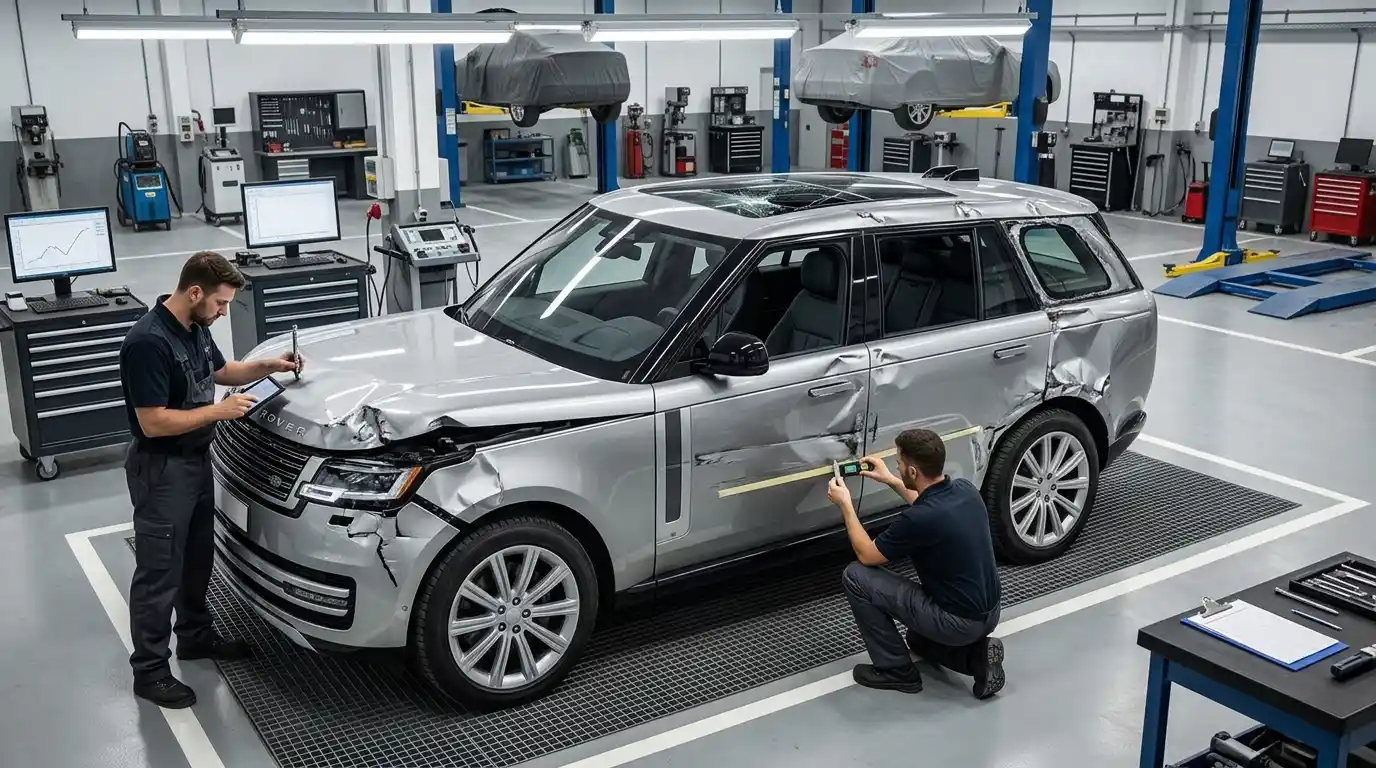
The dominant inspection device for this page is a vehicle-zone map. It keeps the customer focused on connected systems instead of treating every visible mark as an isolated paint job.
Front corners and sensor field
Bumper covers, grilles, lower spoilers, lamp edges, washer equipment, cameras, radar areas and parking sensors may share a small space. We inspect surface damage, gaps, retainers and the position of adjacent equipment. A cosmetic cover repair is not allowed to conceal a broken mount or block a sensor view.
- Record warning messages before disassembly.
- Check whether the bumper sits evenly at the wing and lamp.
- Confirm scan or calibration requirements from the fitted equipment and repair operation.
Doors, sills and long reflections
Range Rover side panels make shape and texture easy to compare across a large area. We follow the reflection through the complete dent, check lower cladding and inspect gaps at the front and rear edges. Door operation, seals, handles and soft-close or powered functions where fitted are part of the record.
- Separate a removable outer trim problem from panel distortion.
- Check the lower edge and sill relationship after kerb contact.
- Do not force an opening that has changed position after an impact.
Rear opening and powered tailgate
A rear impact can involve the bumper, tailgate skin, hinges, latch, lamps, quarter-panel edges, boot floor and sealing surfaces. The powered tailgate can continue moving even when the perimeter relationship has changed. We check the complete opening and do not diagnose one uneven gap in isolation.
- Record water entry, dust trails and closing changes.
- Inspect the bumper top line and lamp seating.
- Escalate boot-floor or rear-structure concerns for measurement.
Roof, pillars and upper glazing
Roof-edge damage, a displaced panoramic-roof trim, pillar contact or a severe door-opening change can raise structural and sealing questions. These areas are not suitable for casual pulling or filler-led correction. Repair information, material identification and safe access determine whether specialist structural work or replacement is required.
- Report glass noises or water entry after impact.
- Protect labels, seals and bonded-glass interfaces.
- Arrange recovery when roof, pillar or door security is uncertain.
The badge does not define one universal body
Range Rover
Large closures, broad body sides, complex trim and premium paint options make panel shape, edge access, colour effect and reassembly evidence central to the job.
Range Rover Sport
Lower bumpers, sculpted corners, wheel-arch areas and performance variants can change trim, sensor, wheel-adjacent and finish decisions.
Range Rover Velar
Flush handles, clean side surfaces and closely integrated exterior details make gap control, handle operation and reflection quality especially visible.
Range Rover Evoque
Compact proportions do not make a repair simple. Shorter panel relationships, contrasting roof treatments and corner equipment still need VIN-led checking.
Model names help identify likely questions, but the VIN and the actual vehicle decide parts, paint variant, equipment and procedures. The official Range Rover material should be used to confirm features for the specific market and model rather than transferring a specification from another vehicle. Range Rover also shows that some current finishes use advanced pigments and real metal aluminium flake, which is one reason effect orientation and multi-angle colour review matter on certain repairs. See the official Range Rover SV finish information as an example, not as a specification for every model.
Material, location and access set the limit
A repairable dent is not defined by diameter alone. Depth, sharpness, stretched material, cracked coating, edge involvement and the structure behind the outer surface all matter. Aluminium and steel respond differently to shaping and heat. High-strength areas, reinforcements, seams and prescribed sectioning zones require the applicable repair information.
Panel replacement is considered when the material is torn, badly stretched, corroded beyond a stable repair, inaccessible without unacceptable risk, or located where the manufacturer procedure limits straightening. Replacement also creates work. Adjacent trim and glass may need removal, joining surfaces must be prepared, corrosion protection and sealing must be restored, and the new panel must be aligned before painting.
Cost alone should not decide the method. A low labour estimate can omit dismantling, adhesives, rivets, one-time fasteners, cavity protection, seam sealing, blending, scans or calibration. A high parts price does not automatically make an aggressive repair technically sensible. The estimate should state the chosen method and the evidence still needed after access.
For a broader comparison of the decision itself, use our guide on repair vs replace car panel.
Repair is favoured when
The deformation is accessible, material condition is stable, required shape can be recovered within a suitable method, mounting points remain sound and the repair does not conflict with structural or manufacturer limits.
Replacement is favoured when
There is tearing, severe stretch, unstable corrosion, damaged joining flanges, restricted structural material, compromised mounting geometry or a repair would require excessive heat or filler.
Inspection remains conditional when
Cladding, bumper covers, interior trim, lamps or closures prevent a direct view. The quotation should name the possible hidden items instead of pretending they do not exist.
A premium finish is a sequence of measurements and visual checks
Variant and spray-out
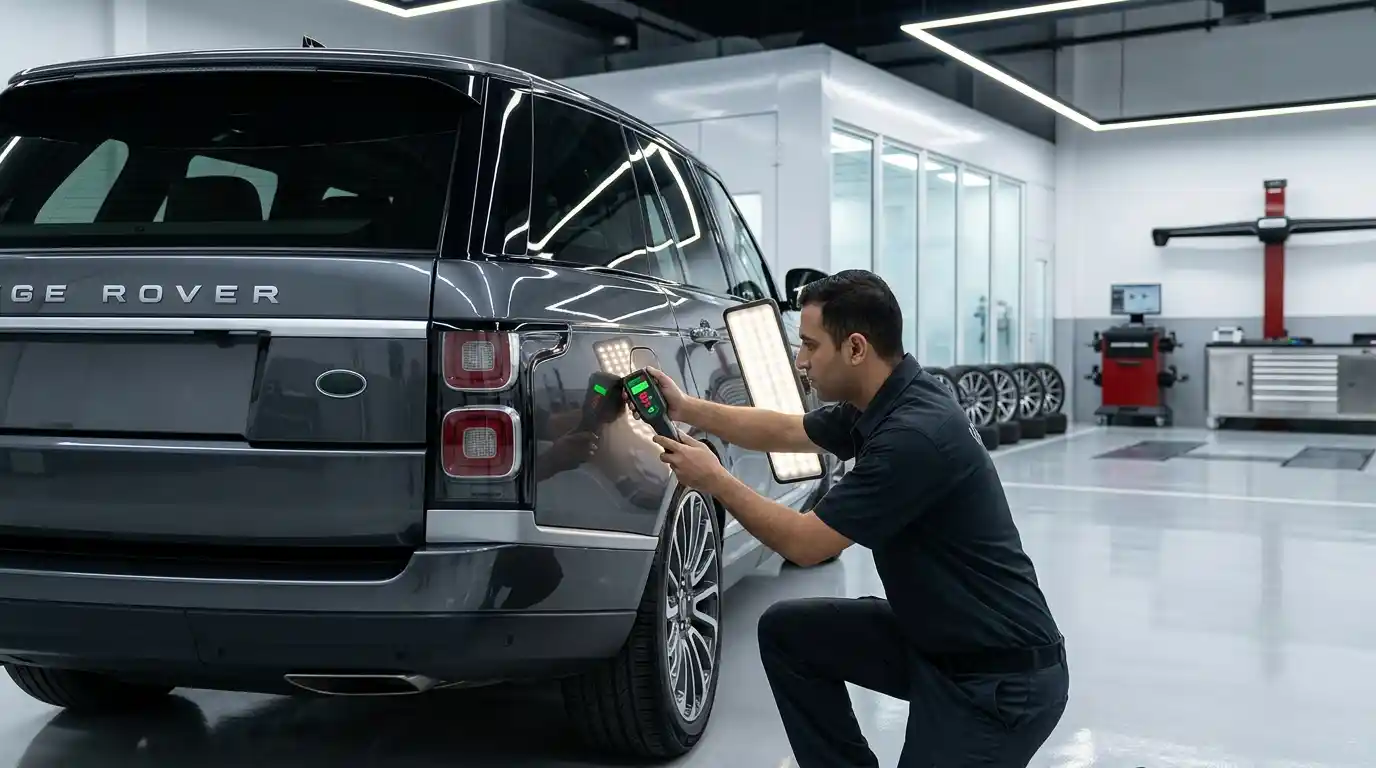
The paint code is a starting point. Age, production variants, previous repairs and application change the visible colour. A spray-out card can verify hue, value, metallic orientation or pearl effect before the vehicle is committed.
Blend planning
A precise formula can still look different at a hard edge. The painter decides whether colour should be blended into an adjacent panel, while clear-coat boundaries and panel condition remain explicit in the estimate.
Texture and sheen
Gloss, orange-peel relationship, clarity and effect must be reviewed together. Matte, satin or special-effect finishes need their own repair plan and cannot be corrected with routine polishing.
Do not add PPF or ceramic coating to hide a new-paint concern
Fresh refinishing should first pass colour, texture, edge and curing checks. Film or coating can protect a sound result, but it can complicate evidence and later rectification when applied over dust, solvent-pop, mismatch, sinking repair edges or incomplete cure. Ask for written aftercare and protection timing at handover.
A clear dashboard does not prove that every system is correctly positioned
Modern driver-assistance equipment can depend on the physical relationship between a camera or radar unit and the vehicle body. Removing a bumper, grille, windscreen-related trim, mirror assembly or bracket can create a procedure requirement even when the unit was not visibly broken. The correct question is not only whether a fault code exists. The repairer must identify what was disturbed and check the applicable instructions for that vehicle.
Pre-repair scanning records present faults and helps separate collision-related concerns from older stored information. It does not replace visual inspection or measurement. A post-repair scan confirms the electronic state after reassembly, while static or dynamic calibration may still be required for particular equipment and operations. Road conditions, target setup, tyre pressure, ride height, alignment and workshop space can influence how calibration is performed.
Air suspension adds another reason to document the vehicle condition. Ride height can change the visual relationship between the body, wheel arches and sensor field. Body measurement and calibration setup should use the conditions prescribed for the job. A vehicle leaning because of a suspension concern should not be treated as a panel-gap problem or sent directly to paint.
Parking sensors also require more than a colour match. Excessive coating thickness, incorrect installation, damaged retainers or unsuitable repair around a sensor opening can affect fit or operation. The sensor and its mounting surface should be handled as a functional assembly, not simply painted with the bumper cover.
VIN-led parts checking prevents expensive assumptions
One model name can include different bumpers, grilles, lamps, cameras, mouldings, wheel-arch pieces, badges and sensor arrangements. Special editions and appearance packs can change visible components again. The VIN, build information and the damaged part itself should be compared before a quotation treats a component as available or interchangeable.
A new outer part is not the complete replacement scope. Guides, brackets, absorbers, reinforcements, seals, clips, adhesives and one-time fasteners may sit behind it. Some items look reusable at intake but reveal stress whitening, broken locking features or distorted locating surfaces after removal. The estimate should mark those items as confirmed, reusable after inspection or conditional.
Trial fitting before paint can expose a wrong variant, transport distortion or an unresolved mounting problem. It also allows the technician to set gaps without damaging a completed coating. Lamps, doors, bonnet and tailgate are compared through their complete relationship rather than forced to match one narrow gap.
After paint, reassembly must protect fresh edges and restore seals, drains, liners and trim seating. Water testing is relevant when a repair disturbed an opening, bonded glass interface, roof-related part or sealing path. The final quality-control record should identify any function that was disconnected, initialised, scanned or calibrated.
Collect the evidence that makes the repair verifiable
Quality control is not a quick walk around a polished vehicle. Review the work clean and dry, in controlled inspection light and a second useful viewing condition. Open disturbed closures, operate relevant functions and compare the completed scope with the intake record.
If the repair involved accident damage, keep the police report, insurer approval, estimate variations and parts record together. If a warning remains, a sensor was disturbed or the steering, suspension or wheel position changed, do not accept a cosmetic handover as proof that the complete impact was resolved.
- VIN, model, model year and recorded equipment
- Starting photographs and named pre-existing damage
- Repair or replacement decision for each affected component
- Parts status, one-time fasteners and approved variations
- Colour variant, blend area and finish inspection result
- Pre-scan, post-scan or calibration evidence where applicable
- Panel gaps, closure operation, seals and disturbed functions
- Written aftercare and job-specific warranty terms

Request a Range Rover body repair assessment
Send the VIN or model details, damage photos, warning messages, police report status and insurer or cash-repair route. We will separate what photographs show from what requires physical inspection.
Include one full-corner photograph, one reflection view and every warning message. The workshop can then prepare the inspection questions before the vehicle arrives.