
COMPACT SUV OPENINGS, MIXED MATERIALS AND ROOF-EDGE REPAIR
Range Rover Evoque Body Repair Dubai
Range Rover Evoque body repair in Dubai starts with the compact SUV’s complete impact zone. Short overhangs can transfer a parking strike from the bumper into a lamp, wing edge, wheel arch and sensor mount. A door mark can involve the sill, narrow pillar area and panoramic-roof relationship. The estimate identifies generation, material, opening geometry and fitted systems before choosing a repair or replacement method.
Urban corner damage
Trace fascia distortion through retainers, lamp seating, wheel-arch trim and parking-system mounts.
Side and sill damage
Compare doors, glass, seals, rocker line, wheel arch and lower-body evidence on both sides.
Roof-edge contact
Inspect panoramic-glass perimeter, roof ditch, upper openings, drains and new wind or water complaints.
For broader full-size platform, aluminium-panel and paint-planning context, see our Range Rover body repair in Dubai guide. This Evoque page remains focused on its own short-wheelbase body, trim and opening geometry.
The Evoque has its own body generations, proportions, material maps and procedures. Early vehicles used a steel body structure with high-strength and boron steel in key areas, plus aluminium panels in selected specifications; later Evoques use different architecture and parts. The technician records VIN, model year, body style, powertrain and trim so the current repair information matches the car.
Land Rover’s first-generation Evoque technical material explains the mixture of high-strength steels and lightweight panels. That history is useful only as a reminder to identify materials. It is not permission to apply an early-car method to a later component. Heat, straightening, sectioning and joining are verified part by part.
Material-aware estimate questions
- Which generation and exact component is damaged?
- Is the area mild steel, high-strength steel, boron steel, aluminium, plastic or a mixed attachment?
- What repair operations and heat limits are permitted?
- Does replacement require glass, trim, adhesive, rivet, weld, seal or corrosion-protection work?
- Which one-time fasteners and calibration steps complete the job?
Bumper and wheel-arch trim are assessed as connected layers
An Evoque bumper can show a scuff or local deformation while the wheel-arch moulding, retainer or lamp bracket has moved. Painted plastic, textured trim and hidden attachments do not receive one generic operation. Stable fascia damage may be repairable; torn tabs, stretched apertures or weakened edges can make replacement more predictable.
The quotation separates fascia repair, trim replacement, mount correction, paint and system checks. Wheel-arch liners and lower covers are removed only when the impact path justifies access. Missing clips are not treated as the entire problem until their mounting holes and surrounding plastic are confirmed stable.
Door-aperture geometry matters on a short, high shoulder line
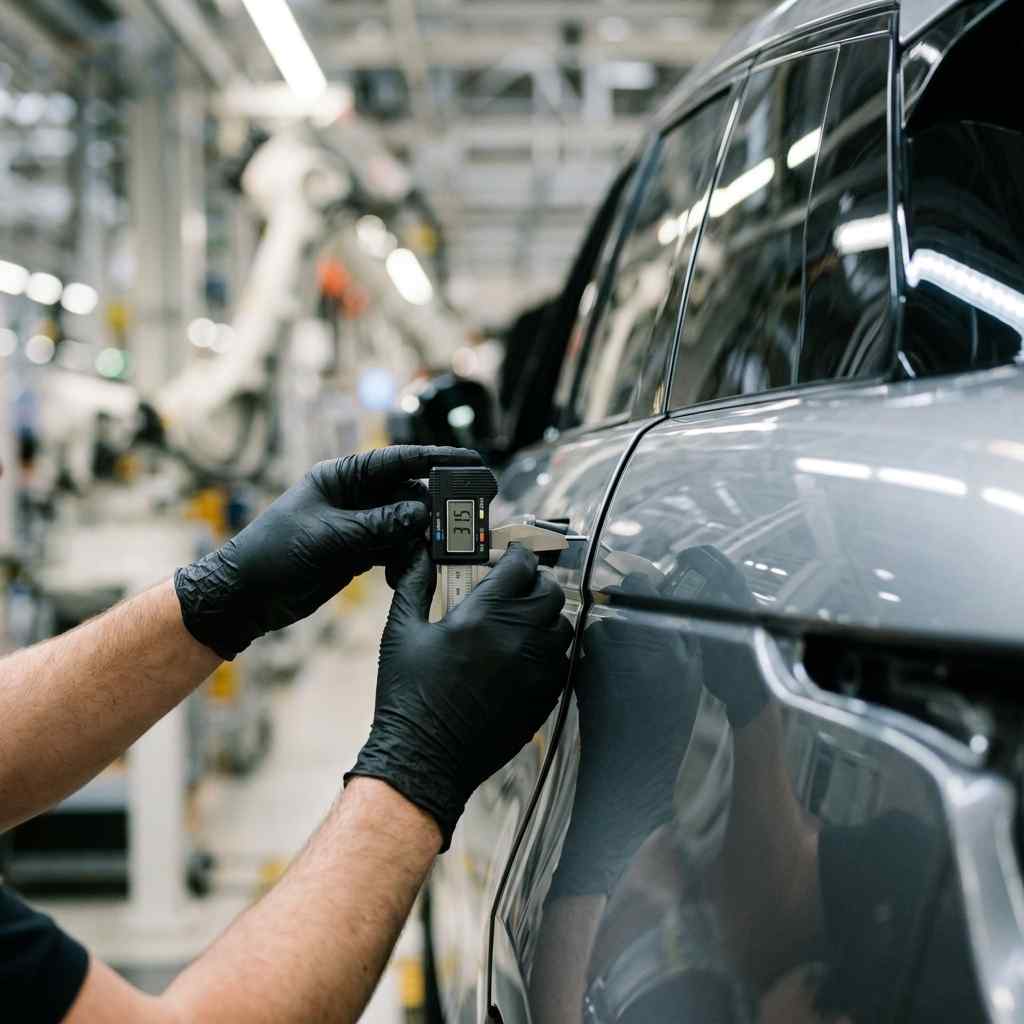
A local door dent is viewed through the strong shoulder and rising beltline. We compare front and rear door gaps, handle and latch function, glass travel, seal contact, mirror position and rocker continuity. A dent in the outer skin may stay local; a crease through an edge, hinge load or sill deformation changes the scope.
Paintless dent repair can be considered where paint is intact, access is safe and the material and reinforcement allow it. Conventional repair may be more controlled for broken paint or stretched metal. Door-shell replacement includes trim, glass, wiring, moisture barrier, seals, paint and final function rather than only the shell price.
Panoramic roof evidence needs a perimeter route
Many Evoques use a large panoramic roof. An upper-side or roof-edge impact can disturb the relationship between roof panel, fixed glass, pillar, door opening and tailgate. We record cracks, chips, seal position, roof-ditch condition, drainage, wind noise and water entry before any glass removal.
If bonded glass must be removed, the estimate identifies why, the preparation and adhesive system, setting position and cure time. After body repair, geometry and visible sealing are checked before targeted water testing. Additional sealer cannot compensate for a moved opening or incorrect glass position.
Lower-body contact is classified before lifting
Kerb, ramp and side impacts often leave marks on the rocker cover or lower edge. We distinguish removable trim damage from a crushed sill, displaced seam, damaged lift point or floor contact. The exact location, depth and direction are documented with wheel position and warning state.
Electrified Evoque variants require powertrain identification before lower-body work. A superficial scuff is not automatically high-voltage damage, but deep deformation, puncture, leakage, heat, odour or relevant warnings stop ordinary lifting and charging. The repair file defines safe handling and specialist assessment when needed.
Camera and parking checks follow physical fit
Bumper, mirror, windscreen and tailgate work can affect cameras, sensors or their mounting relationships. Physical correction comes first: fascia contour, bracket plane, lamp position, mirror housing or glass setting. Diagnostics and functional tests follow, with calibration or aiming only where current information for the fitted system requires it.
A clean scan does not confirm a straight bracket. The handover record connects each disturbed component to its mounting check, diagnostic result and required calibration or escalation. Unexplained warnings are resolved before release.
Evoque paint matching must preserve contrasting materials
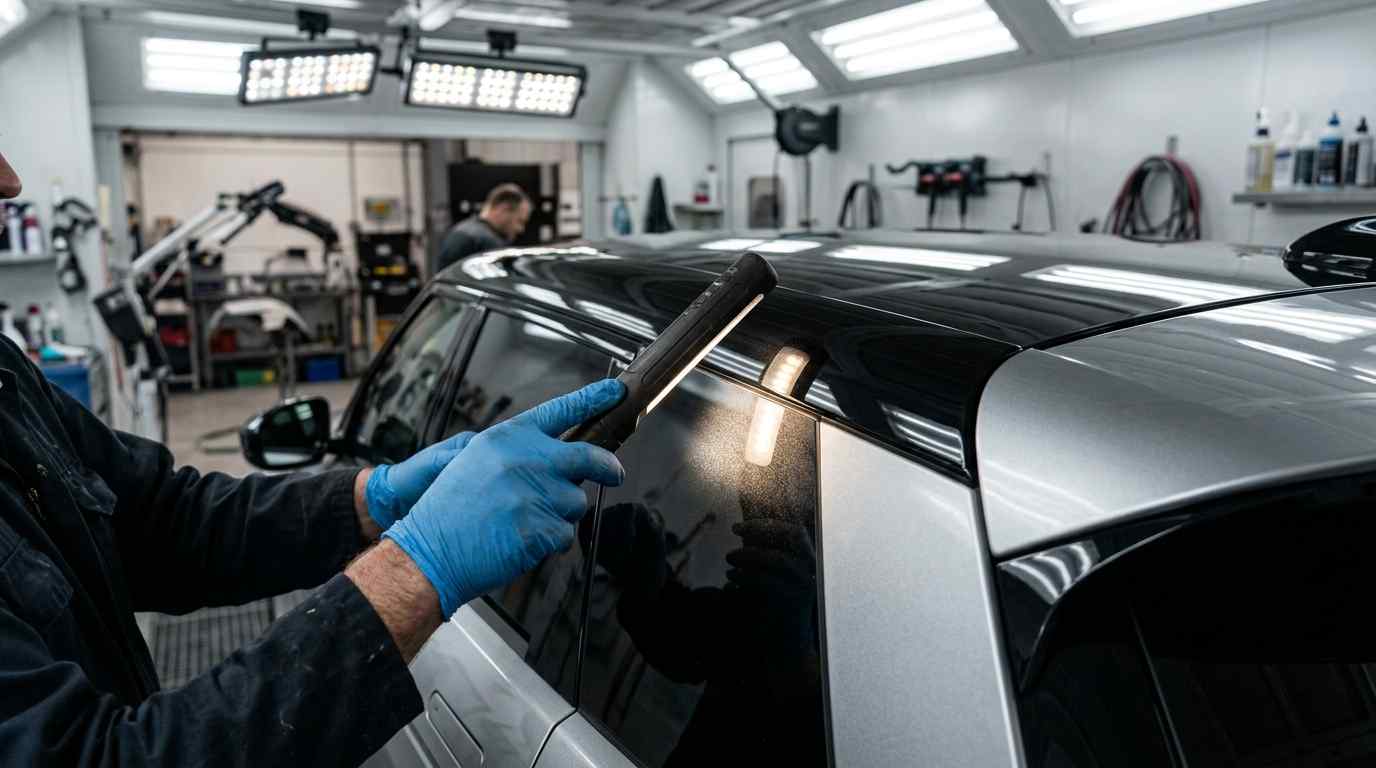
The Evoque may combine body colour with black, textured, bright or contrasting roof and trim finishes. The painter identifies the finish and existing condition, then verifies the variant with a spray-out. Metallic or pearl orientation is compared next to the car, and blending is selected only where needed to avoid a visible transition.
Glass, roof edges, textured arches, cameras, seals, badges and lower trims are protected from overspray and compound. The cured finish is reviewed from several heights because the shoulder line can expose texture and colour differences. Our car painting service explains the general refinishing method.
Indicative Evoque body repair costs
| Planning scope | Indicative range | Key variables |
|---|---|---|
| Small dent or scratch | AED 299 to 1,000 | Material, access, paint and body-line position |
| Bumper or arch area | AED 500 to 2,500 | Fascia, textured trim, mounts, sensors and paint |
| Door or wing | AED 1,000 to 3,000 | Edge damage, strip-down, glass and blending |
| Combined corner | AED 2,000 to 6,000+ | Lamp, brackets, several panels and diagnostics |
These ranges follow the site’s Dubai accident repair cost guide and are not fixed Evoque prices. Pillar, sill, panoramic-glass, structural, wheel or electrified-floor findings require inspection. Parts, paint variant, hidden attachments and calibration can move the final quotation.
A compact-SUV repair plan still needs full approval gates
- Intake: identity, impact direction, warnings, openings, wheels and photographs.
- Safe access: movement, lifting, charging and dismantling controls.
- Damage map: outer panel, hidden attachments, geometry and systems.
- Method: material-specific repair or replacement with current procedures.
- Body foundation: openings, mounts, sill, roof and panel lines restored.
- Finish: spray-out, masking, refinishing, curing and visual inspection.
- Systems: diagnostics, functions, calibration and documented escalation.
- Release: invoice, supplements, warranty and post-repair care.
A supplement is approved only after access reveals new evidence. The customer receives photographs, the finding, proposed operation, price and time effect. Active repair time is separated from waiting for approval, parts, glass or specialist support.
Collection checks for an Evoque
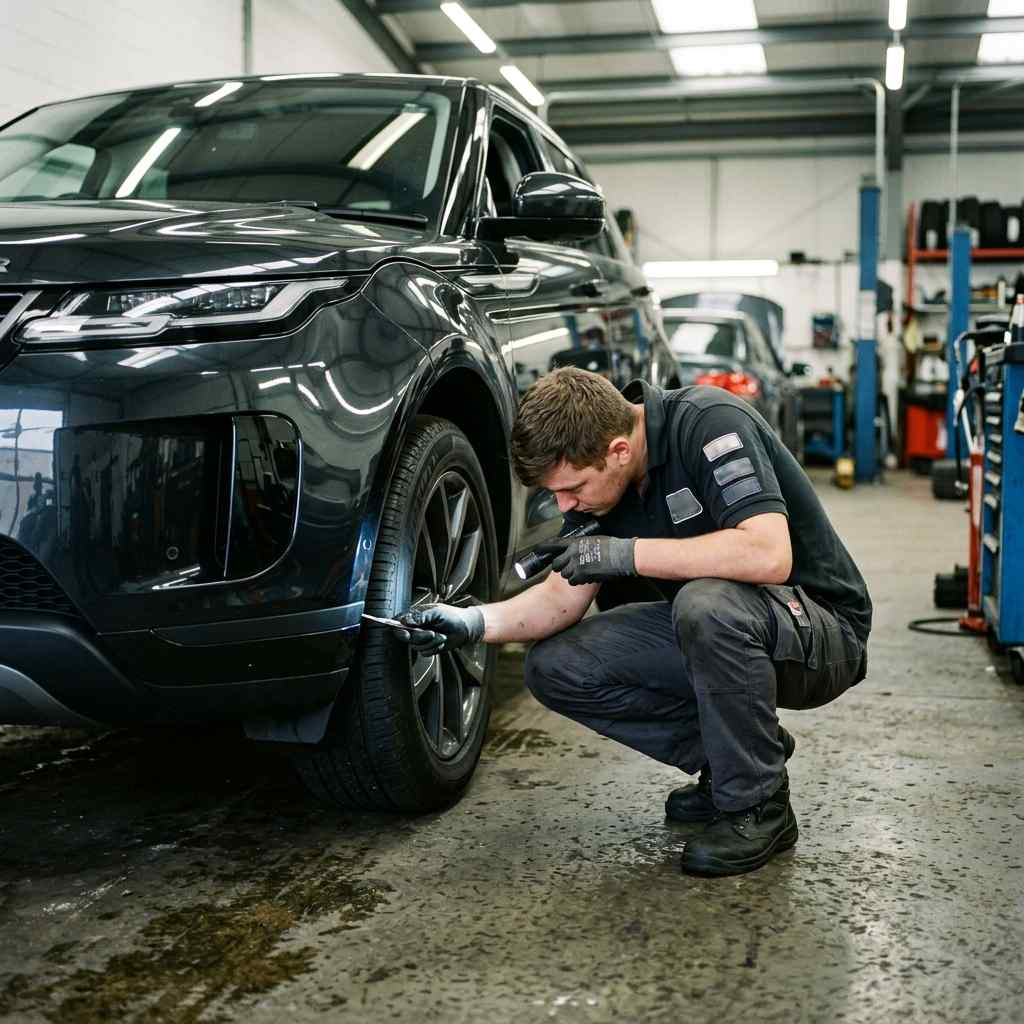
Compare bumper height, lamps, bonnet, doors, wheel arches, rocker line and tailgate opening from both sides. View repaired panels along the shoulder line and around contrasting trims. Operate the doors, windows, handles and every closure involved in the work.
Test parking functions, cameras, lamps and warnings affected by the repair. Inspect panoramic-roof edges and ask for any glass, alignment, calibration or specialist record included in the estimate. The invoice should name repaired and replaced components, paint panels and warranty terms.
Send the Evoque impact zone, not one close-up
Include the complete damaged side, nearest openings, wheel and arch, lower-body contact, roof edge where relevant and dashboard state. We will classify the connected repair route before promising paint.
Evoque evidence checkpoints before authorisation
A compact footprint does not make an impact simple. We separate the evidence into four checkpoints: the visible surface, the moving opening, the lower load path and the fitted electronics. The surface check maps crowns, scratches and old paint. The opening check records handle, latch, seal and glass behaviour. The lower check covers arch liner, sill cover, wheel position and safe lifting. The electronics check records warnings and hardware close to the damaged bumper or glass.
This separation prevents one attractive photograph from controlling the entire estimate. For example, a rear-door dent may be technically repairable while a broken lower retainer still requires replacement. A bumper corner may need only refinishing on its outer face but a lamp tab behind it can change part and labour requirements. Each finding is assigned to a repair operation, a monitoring note or a specialist boundary.
Before the owner approves work, the estimate states which trim will be removed, what condition is assumed beneath it and what would trigger a revised quote. We do not dismantle an unrelated area to inflate scope. We expose only the points necessary to resolve a credible uncertainty, then retain photographs of the discovery.
Compact-SUV usability after repair
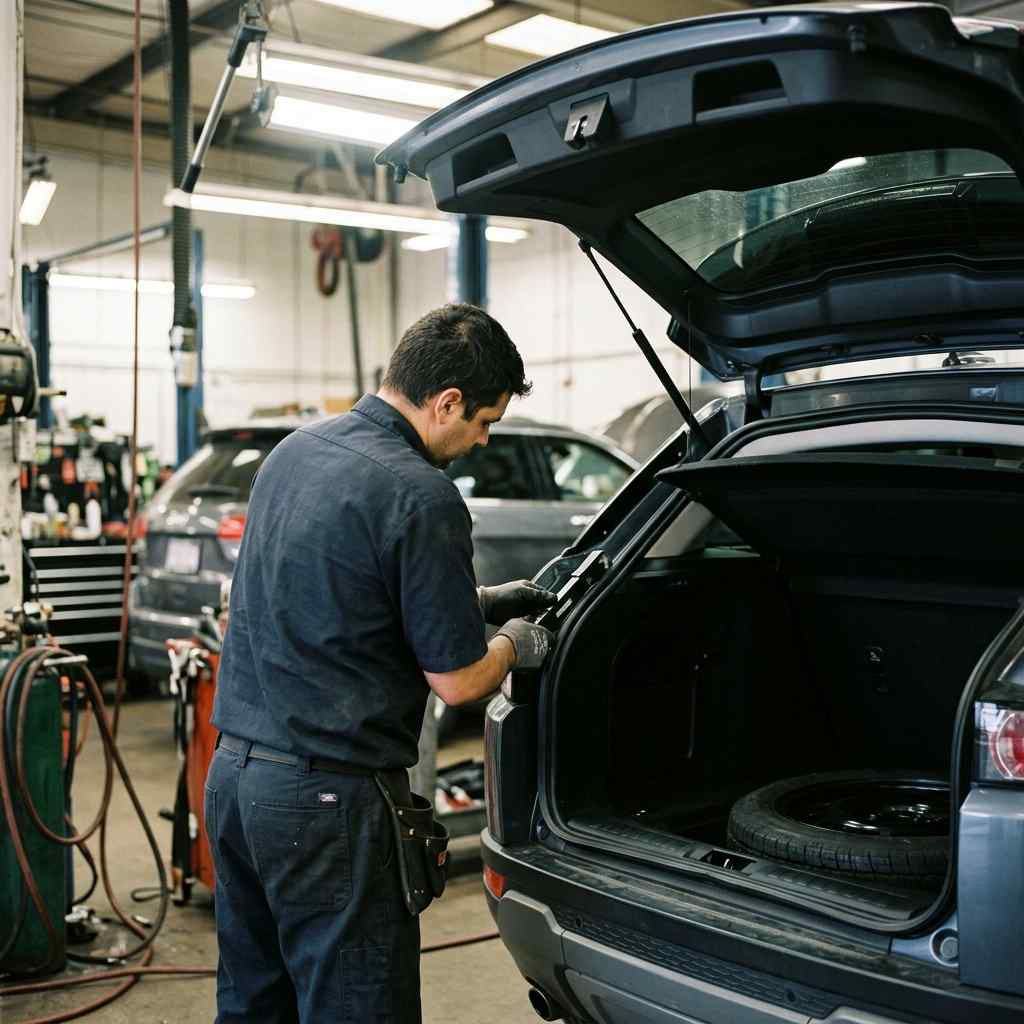
The Evoque is often used daily in tight Dubai parking spaces, so closure usability deserves practical testing. Door edges must clear neighbouring panels, exterior handles must return correctly, and the tailgate should open without contacting newly aligned trim. On three-door or convertible derivatives, where present, the closure and roof arrangement is different and requires its own generation-specific assessment.
Interior trim removed for access is checked for clips, illumination, speakers, switches and weather barriers before refit. A visually perfect outer skin is not a complete job if a window rattles, a seal folds or a door card stands proud. We use a refit checklist so these small but important outcomes are not left to the owner to discover.
After a lower-side repair, the vehicle is viewed at normal ride height on level ground. We compare wheel-arch spacing and the shadow under the sill, then confirm there is no loose liner or moulding near the tyre. If steering, alignment or suspension symptoms were part of the original impact, the mechanical outcome is recorded separately from the body finish.
Dubai heat, dust and repair durability
Dubai conditions expose weak preparation quickly. Heat cycles can reveal shrinking filler or a poorly feathered paint edge, while dust trapped under a seal can create noise and abrasion. We clean apertures before refit, use substrate-compatible primers and allow coating stages to cure within their process requirements rather than rushing assembly onto soft paint.
Black exterior trim and gloss panels are protected from sanding and compound. These surfaces can appear acceptable indoors but show swirls immediately in direct sun. The final review includes low-angle outdoor light, controlled workshop lighting and a close check around handles, badges, glass edges and textured lower cladding.
If paint protection film or ceramic coating was present, removal and reinstatement are treated as separate decisions. Film can hide an old edge or pull weak prior paint during removal. Coating changes surface preparation and should not be reapplied until the refinished panel has met the paint-system cure guidance.
The handover record

At collection, we walk around the repaired zone with the owner. The record identifies repaired and replaced parts, colour-blend boundaries, agreed scans or calibrations, and any item referred elsewhere. Care advice explains when washing, polishing or film installation can safely resume. This makes the handover useful months later if a trim or finish question arises.
A short road observation may be appropriate after wheel-adjacent work, but it is not described as proof of structural geometry or electronic calibration. Those conclusions require their own measurements or reports. The body-shop sign-off remains precise about what was tested and what was not.
Photographs from collection are retained with the repair notes, including the final roof edge, lower aperture and panel reflection. If the owner later asks about a closure or finish concern, the original impact, approved scope and handover condition can be compared instead of reconstructed from memory. That traceability is especially useful where previous repairs, wrap or protective film overlap the new work.