
RANGE ROVER COLLISION GEOMETRY, ALUMINIUM AND FINISH PLANNING
Range Rover Body Repair Dubai
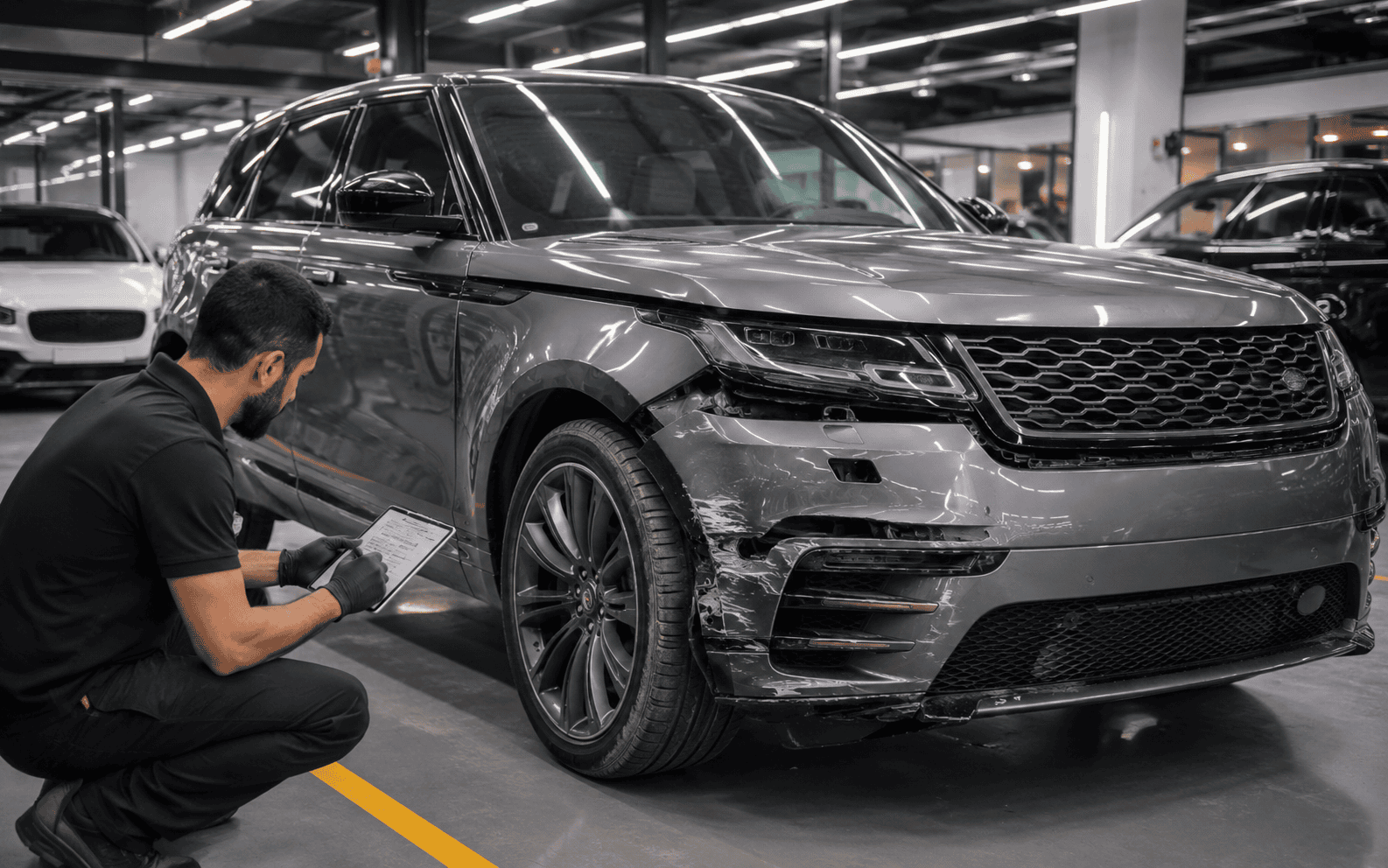
Range Rover body repair in Dubai requires the visible luxury finish and the hidden impact route to be assessed together. A high bumper corner can move a lamp, wing edge, bonnet relationship and camera mount. A side impact can involve the aluminium body, door opening, sill, wheel alignment and air-suspension stance. Rear damage can disturb the two-piece tailgate opening, seals and load-floor area. The estimate follows those connections before a repair method is selected.
This page is intentionally focused on model-specific collision, panel, aluminium, paint and system decisions for Range Rover vehicles. It does not duplicate a general brand-service hub. BodyShop.AE keeps the vehicle as an unpublished repair enquiry until the generation, impact zone, technical scope and workshop capability are confirmed. No unsupported manufacturer-authorised status is claimed.
- Identify: VIN, generation, wheelbase, trim, powertrain and fitted systems.
- Stabilise: Warnings, leakage, stance, wheel position, closures and safe lifting.
- Measure: Openings, body lines, lamp/bumper fit and underbody evidence.
- Authorise: Confirmed work, dismantling access, supplements and escalation.
Generation and specification come before a body method
The Range Rover name covers several body generations, wheelbases, trim levels and powertrains. A procedure, component or joining method used on an earlier vehicle cannot be assumed for a later one. The estimator records the VIN, production details and fitted equipment, then uses current model-specific repair information to identify materials, dimensions, joining, corrosion protection and restricted operations.
Land Rover introduced an all-aluminium unitised Range Rover body for the 2013 model generation, and the latest architecture continues lightweight aluminium construction while adding powertrain and system variations. The manufacturer’s New Range Rover technical overview describes that architecture and electrified derivatives. For repair, the exact component map and current procedure matter more than a general ‘aluminium SUV’ label.
The quotation must identify
- The exact Range Rover generation and damaged component.
- Material and strength classification for every structural operation.
- Wheelbase, powertrain and equipment that change parts or access.
- Permitted repair, replacement, sectioning and joining boundaries.
- Isolation, lifting or specialist controls for electrified variants.
- Corrosion protection, adhesives, fasteners and one-time-use items.
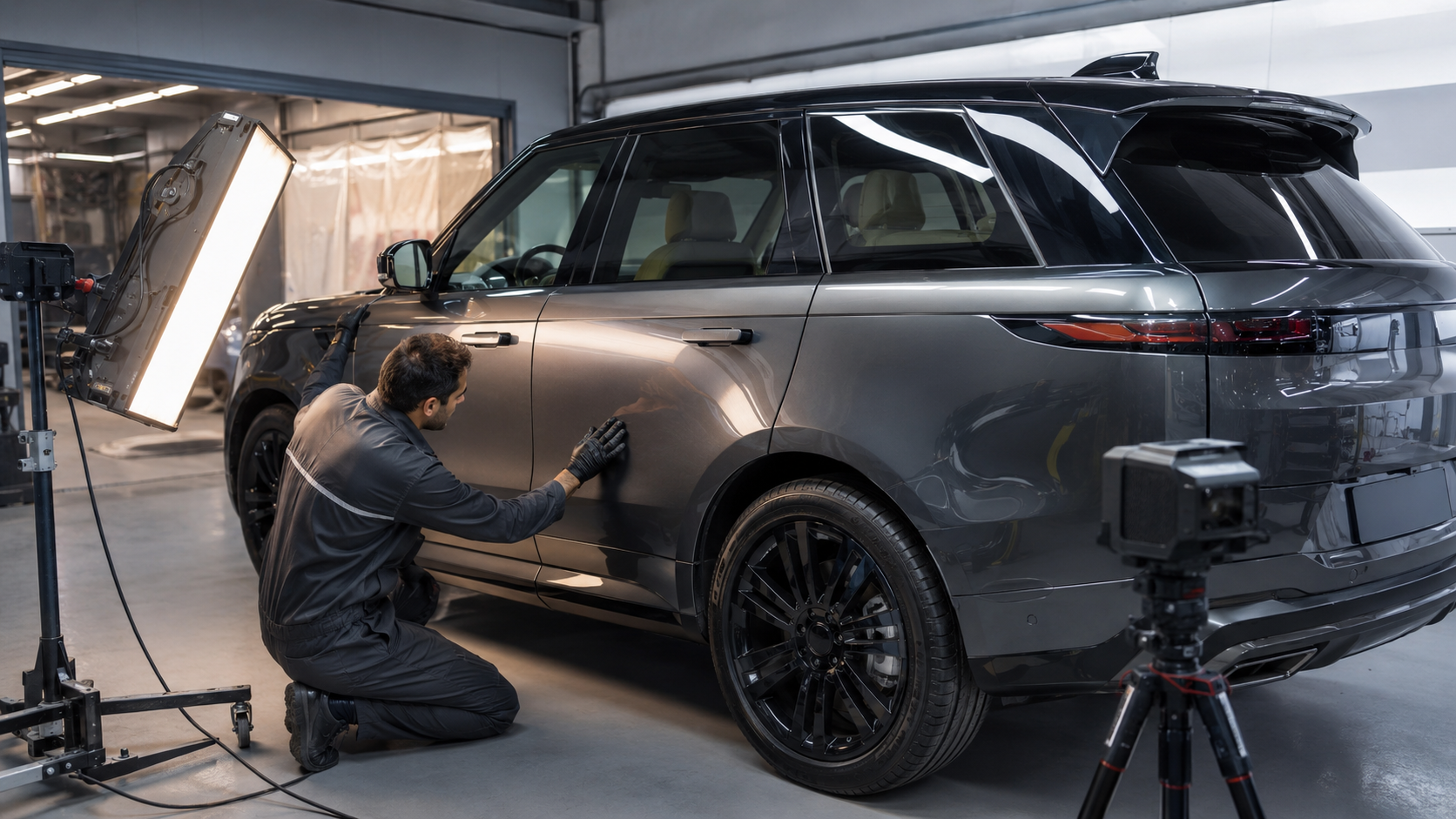
Aluminium correction is not simply steel dent repair performed with different tools. The work area, abrasives, hand tools and extraction practices must prevent contamination. Heat and straightening limits depend on the exact component and current procedure. A broad outer-panel dent may be repairable, while a sharp fold through an edge, stretched area or structural attachment can require replacement.
Replacement is priced as a complete operation. It can involve trim and glass removal, adhesives, rivets or other specified joining, seam preparation, corrosion protection, cavity treatment, sealing, paint and reassembly. Keeping the original panel is valuable when it can be restored predictably; replacing it is appropriate when the permitted method cannot recover geometry, strength or attachment. The estimate compares full operations rather than the bare panel price.
Air-suspension stance can affect what a gap appears to say
Range Rover vehicles may use adjustable air suspension. Ride-height mode, pressure loss, suspension warnings, loading and wheel damage can change the stance. Before declaring a body opening twisted, the technician records the selected height, warning state, tyre condition and wheel position. A corner that sits differently after impact needs mechanical and structural screening, not a door or wing adjustment used to disguise stance.
Where impact evidence reaches a wheel, the scope can include tyre, rim, suspension, steering and alignment assessment. Body geometry is restored with the vehicle supported according to the applicable method. The final road and height checks, when safe, verify steering centre, noise, vibration, braking and stable stance. Mechanical results are documented separately from paint quality.
High front corner
Compare bumper, grille, lamp, bonnet, wing, wheel and camera or radar mounting relationships.
Door and sill
Review hinges, latches, seals, step or trim, opening geometry, wheel arch and lower structure.
Rear opening
Measure upper and lower tailgate gaps, lamps, bumper, latch, seals, rear panel and load floor.
The two-piece tailgate is an opening, not two isolated panels
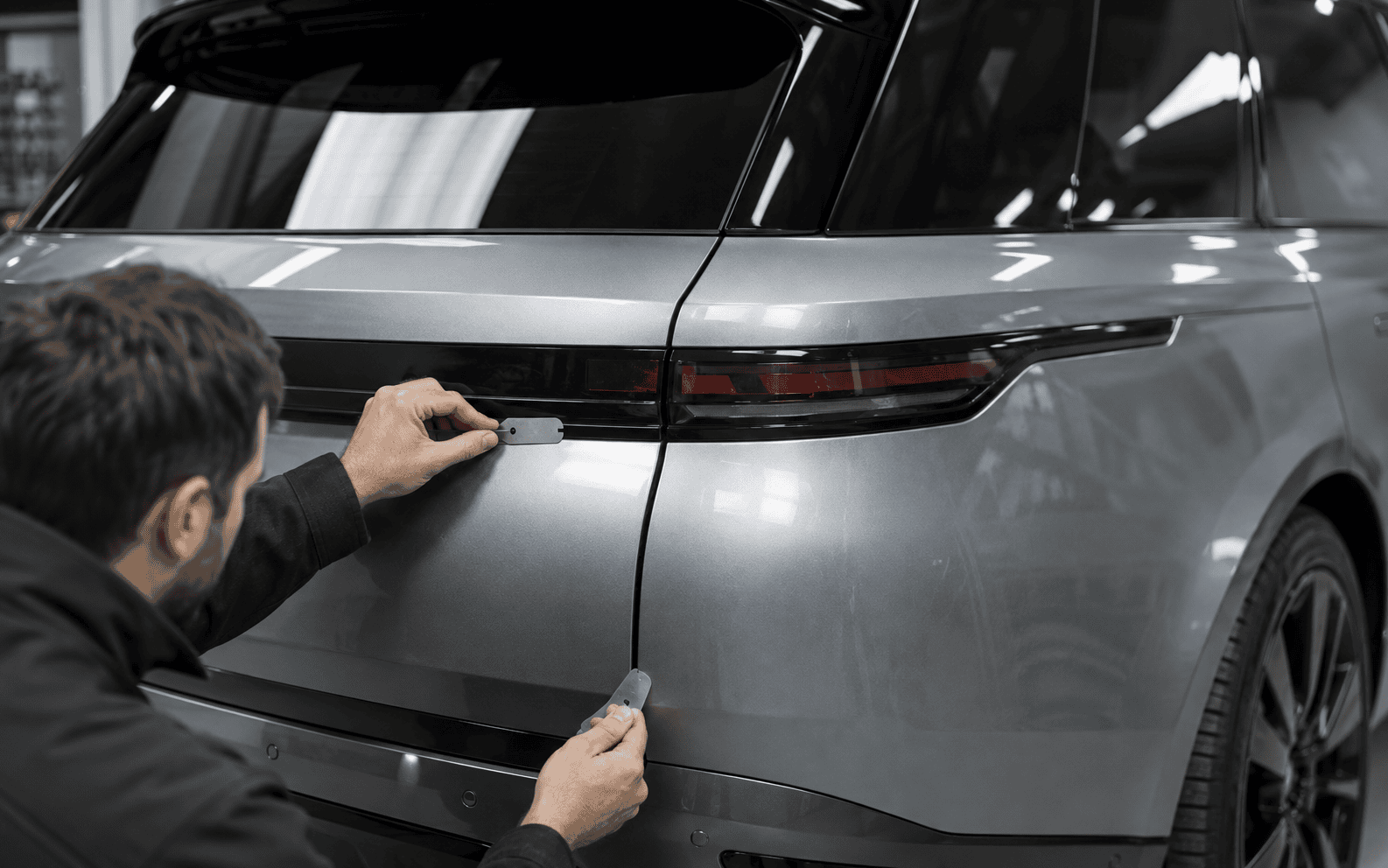
Rear impacts are assessed across the upper and lower tailgate, lamp pockets, quarter-panel edges, bumper height and lower floor. A local bumper mark may hide a moved retainer or rear-panel attachment. A tailgate gap that looks even at one corner can vary elsewhere. We record powered movement, latch effort and seal contact without forcing a damaged closure.
After repair, both tailgate sections operate in sequence and sit consistently across the opening. Wiring, camera, latch and trim routing are checked, and water-management paths remain clear. If rear glass or seals were removed, preparation, adhesive and cure records are part of closure. Water testing follows visible fit and sealing inspection.
Panoramic roof and upper-body damage needs perimeter evidence
A roof-edge, pillar or upper-tailgate impact can affect panoramic glass relationships even when the glass has not cracked. We inspect the roof ditch, glass perimeter, adjacent door or tailgate opening, trims, drains and any new wind-noise or leakage complaint. Glass removal is included only when required for safe access, joining or refinishing, and the reason should be clear in the estimate.
Fixed-glass replacement is a structural and sealing operation as well as a glazing task. The bonding surface, adhesive system, setting position and cure time are controlled. After assembly, trim pressure, seals and water paths are inspected along the complete perimeter. Additional sealer is not used to hide an opening that remains out of geometry.
Electrified Range Rover variants change lower-body handling
A plug-in hybrid or other electrified variant can place high-voltage components and protection in areas relevant to a sill or floor impact. The VIN and powertrain are confirmed before lifting or dismantling. A rocker scuff does not automatically mean battery damage, but deep deformation, puncture, displaced seams, warnings, heat, odour or leakage require controlled assessment.
When high-voltage or protected floor evidence is outside ordinary body screening, cosmetic work pauses. Safe movement, charging, storage and specialist assessment are defined first. The written outcome can be an in-house body scope, a split scope with technical support or documented escalation. Painting over unresolved lower evidence is not accepted.
Bumper and driver-assistance work follows restored mounting planes
Range Rover bumpers can carry cameras, parking sensors, trims, grilles and equipment whose operation depends on stable apertures and brackets. The fascia is assessed for cracks, distorted edges, torn tabs and refinish suitability. Hidden retainers and absorbers are inspected when the impact route justifies removal. Replacement is not automatic for every scuff, and repair is not approved when fit cannot remain stable.
Physical geometry comes before electronic closure. Bumper contour, lamp seating, bracket position and mounting planes are restored first. Diagnostics and functional tests follow, with calibration or aiming where current information for the fitted system requires it. A clean scan alone does not prove that a camera or sensor is correctly aligned.
Luxury paint matching must account for variants and previous work
Range Rover finishes can include metallic, pearl, premium and contrasting roof treatments. A colour code identifies the family, not always the final sprayable match. The painter checks sun exposure, previous repairs and adjacent-panel condition, then produces a controlled spray-out. Hue, brightness, metallic flop and pearl layer effect are compared next to the vehicle before blending is approved.
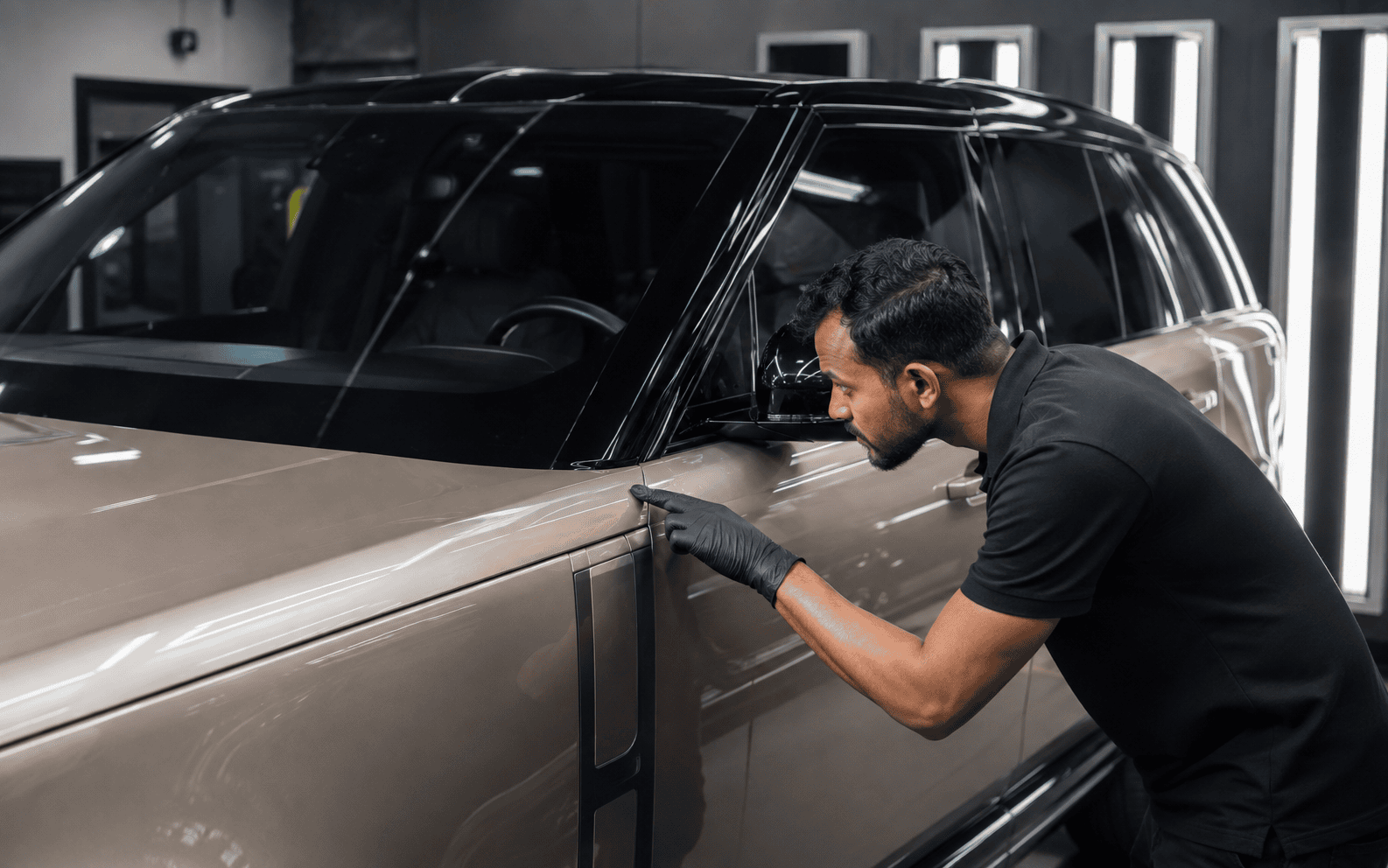
Black, bright, textured and painted trims are protected according to their material. Cameras, lamps, glass, seals, handles and badges are kept free of overspray and compound. The cured finish is reviewed under daylight and workshop lighting for colour, texture, dust, edge quality and blend visibility. See the published paint matching methods guide for the broader process.
Indicative Range Rover body repair costs in Dubai
Cosmetic dent or scratch
AED 299 to 1,000
Planning range where access, material and finish allow a local method.
Bumper-area work
AED 500 to 2,500
Varies with fascia damage, mounts, trims, sensors, paint and replacement.
Door or wing repair
AED 1,000 to 3,000
Depends on aluminium method, strip-down, body line and blending.
A combined corner involving bumper, lamp, wing, brackets and diagnostics may enter the AED 2,000 to 6,000+ band. Structural aluminium work, panoramic glass, suspension, electrified-floor assessment, premium paint and special-order assemblies require model-specific inspection. These figures follow the site’s Dubai accident repair cost guide and are not fixed Range Rover prices.
What changes a Range Rover estimate
- Generation, wheelbase, powertrain and trim specification
- Aluminium repair boundary and joining operations
- Hidden bumper, lamp, opening or lower-floor damage
- Air-suspension, wheel, alignment and steering findings
- Panoramic glass, seals and water-management work
- Paint system, two-tone finish, blending and trim protection
- Diagnostics, calibration, parts supply and approved supplements
Repair timing should show active work and waiting separately
A local dent or bumper repair may take a few working days when parts and paint are straightforward. Aluminium structural planning, panoramic-glass work, suspension findings, electrified-vehicle screening, specialist calibration and special-order parts can extend the timeline. The customer should see dismantling, method approval, parts, body work, paint cure, reassembly and final checks as separate stages.
If a supplement is needed after authorised access, the workshop provides photographs, the new finding, recommended method, price and time effect. Work does not continue merely to protect an earlier promised date. A revised forecast is more credible than a collection deadline built before the hidden scope was known.
A Range Rover repair file should contain five proof sets
- Identity proof: VIN, generation, wheelbase, powertrain, trim and fitted systems.
- Damage proof: intake photos, impact direction, gaps, openings, wheels, warnings and lower evidence.
- Method proof: component-specific repair or replacement decision, joining and corrosion protection.
- Closure proof: body measurements, finish review, diagnostics, functions, calibration and water management.
- Commercial proof: approved estimate, supplements, parts, invoice, warranty and unresolved escalations.
For wider collision triage, recovery and insurance workflow, use our published accident repair service. This Range Rover page remains limited to the model’s aluminium body, openings, suspension stance, luxury finish and fitted-system relationships so it does not compete with a broader brand-service page.
Collection-day checks
View the Range Rover at its documented ride height and compare wheel position, bumper and lamp levels, bonnet and door gaps, and the full tailgate opening. Inspect the repaired surface from several heights, then check contrasting trims, roof colour and panel edges. Operate every closure involved in the repair without forcing it.
Test cameras, parking functions, lamps, suspension state and warning messages affected by the job. Ask for alignment, calibration, glass, high-voltage or specialist records included in the estimate. The invoice should identify repaired and replaced components, paint panels, supplements and warranty terms. Release occurs only after body, finish, mechanical and electronic checks pass.
Build the Range Rover scope from the whole impact zone
Send the complete damaged side, neighbouring openings, wheels, ride-height state, lower-body contact and dashboard warnings. We will identify the model-specific inspection route before promising paint or panel work.
Side steps and lower trims can hide the real load path
A marked side step or rocker cover is inspected with its brackets, mounting points, sill edge and nearby floor. Fixed or deployable steps can appear cosmetic while a support has moved upward or twisted. We record extension and retraction behaviour only when safe, compare both sides and check that the step does not contact the door, trim or wheel-arch area.
Replacement of a cover alone is approved only when the underlying mounts and body points are stable. A bent bracket, torn fastener location or sill deformation is added as a separate operation with evidence. After repair, the step sits level, operates without abnormal noise and supports use according to its intended function. Lower coatings and corrosion protection are restored after geometry, not used to conceal it.