
Range Rover Velar Body Repair Dubai
Independent aluminium-intensive body and paint assessment in Al Quoz 4
Range Rover Velar body repair Dubai covers accident damage, dents, bumpers, doors, sills, quarter panels and paintwork. The repair then accounts for Velar-specific features such as flush deployable handles, slim lamp pockets, clean side reflections, aluminium-intensive construction and sensor mounting geometry. Those design choices make poor collision work easy to see, so the damaged area is judged as part of the complete body system rather than as an isolated cosmetic mark.
BodyShop.AE assesses bumper, door, sill, quarter-panel, tailgate and paint damage on the actual Velar before choosing a method. We are an independent Dubai body shop and do not claim Land Rover authorisation. When a repair needs manufacturer-only programming, restricted structural equipment or specialist high-voltage support on an electrified variant, that requirement is identified rather than folded into a vague cosmetic promise.
What we assess before deciding how to repair a Velar
A Velar can arrive with a simple bumper scuff, a dented door, a damaged quarter panel or a broader impact that has changed panel fit. We first trace how far the damage has travelled, then decide whether the job is limited to cosmetic repair or needs a wider accident repair assessment. The repair plan stays specific to the Velar, including its flush handles, panel geometry, sensor mounting points and the way its long body surfaces reveal poor alignment or paintwork.
Velar aluminium-intensive construction changes the repair decision
The Velar shares some repair considerations with other Range Rover models, but its body shape and hardware create their own checks. Our Range Rover body repair overview covers the wider brand-level repair approach, while this page stays focused on the Velar’s aluminium-intensive construction, flush handles, slim lamps, roof glass and long uninterrupted panel surfaces.
Land Rover introduced the Velar with an aluminium-intensive body architecture and flush deployable door handles. Build details can change by year, market and derivative, so the VIN and the damaged component must be identified before the material or joining method is assumed. The official Range Rover Velar technical introduction supports the broad construction context; current repair information and direct inspection decide the job.
Aluminium repair requires disciplined separation, clean tooling and controlled heat. Not every outer panel is repaired the same way, and not every dent is a candidate for reshaping. We check the alloy or steel identification, edge condition, stretch, access and proximity to bonded or riveted joints before pricing the panel.
The Velar’s restrained surfacing is another technical clue. Its main character line runs through broad doors with few visual distractions. Small ripples that might disappear on a heavily sculpted vehicle stay visible under Dubai sunlight. We evaluate the reflection from front fender to rear quarter rather than judging the damaged patch alone.
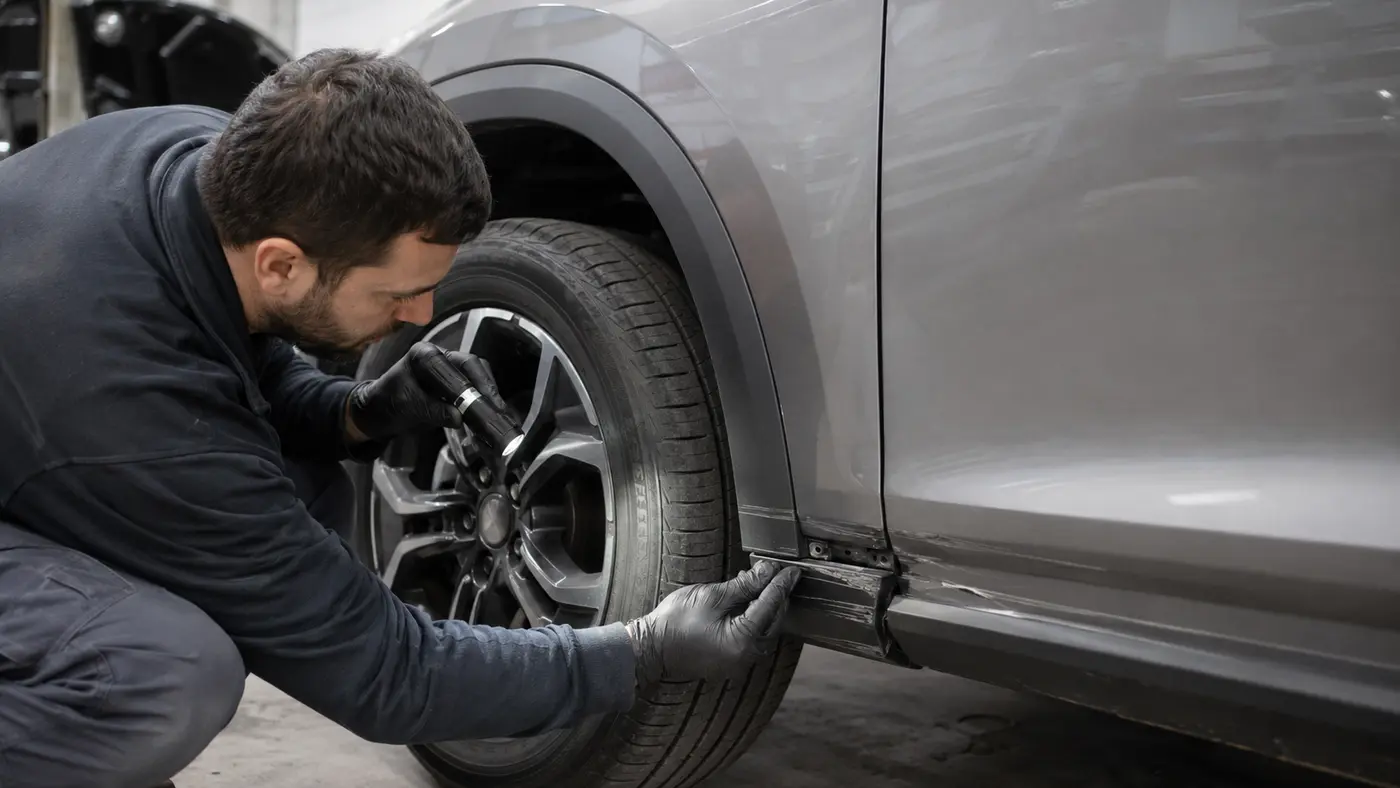
The flush-handle diagnostic
A handle that will not deploy is not automatically a handle fault. A side impact can alter door-skin shape, handle aperture clearance, internal carrier position, wiring, latch alignment or the relationship between the door and body opening. We note whether the problem is intermittent, temperature-related or present on more than one door, then inspect the struck area without repeatedly forcing the mechanism.
Before refinishing a door, we test handle presentation, retraction and manual access as appropriate. The handle recess must be shaped and coated without leaving a hard paint edge or excess film that changes clearance. Internal water barriers, clips and seals are reinstated after panel or mechanism access.
At final control, the handle should sit visually level with the door surface and operate without rubbing the fresh finish. We also check locking response and door closure. Electronic diagnosis or programming is quoted separately when needed; body alignment is not represented as a guaranteed cure for every handle warning.
Door, sill and aperture geometry
Parking impacts often touch the lower door and sill cover together. Plastic trim can hide broken clips, a deformed mounting flange or contact closer to a lifting point. We remove only the trim needed to see the evidence and compare the lower gap along the opening. A distorted sill is not covered with filler simply to recover a straight-looking shadow.
A front-door strike is checked against the fender, A-pillar region, mirror mount and rear-door leading edge. A rear-door strike is read into the quarter panel and wheel opening. The opening should support even seal compression and stable latch engagement; forcing a latch adjustment to compensate for panel movement can create noise, water or premature wear.
Where paintless dent repair is technically suitable, it may preserve the original coating on a soft, accessible dent. Sharp crown damage, stretched aluminium, torn edges, previous filler and blocked access can make conventional body repair or panel replacement more appropriate. We explain the trade-off instead of selling one technique for every mark.
Roof glass, upper body and water management
Many Velars have a panoramic roof, so upper-side damage deserves a wider inspection. We examine roof-side finish, glass edge, mouldings, drainage-related trim and the top of affected apertures. We do not disturb bonded glass without a reason, but we also do not ignore a changed roof-to-door relationship because the glass itself looks intact.
Water testing follows the actual repair scope. If a door, seal, roof trim or tailgate opening has been disturbed, controlled testing can reveal a fitting issue before handover. Drain passages are kept clear during sanding and refinishing; loose masking debris or polish residue should not become a later leak diagnosis.
A roof or upper-aperture impact may require specialist measurement. Visible paint condition cannot prove that the underlying bonded structure or glass support is correct. When the evidence exceeds a cosmetic repair, the estimate changes before work continues.
Air suspension and stance before measuring gaps
Some Velar specifications use electronic air suspension. Ride height and parked state affect how wheel-arch clearances look, so we record suspension warnings and the vehicle’s stance before drawing conclusions from photographs. A damaged wheel, displaced suspension corner or low system pressure can make one side appear like a body-alignment problem.
If the collision contacted a wheel, we inspect tyre sidewall, rim, wheel position and accessible suspension clues, then recommend alignment or mechanical diagnosis as indicated. Cosmetic refinishing is scheduled after the dimensional concern is understood. Painting first can conceal reference marks and add rework.
Correct lifting mode and approved points matter during underbody inspection. We do not place pads on trim or uncertain battery-area structures of an electrified variant. A safe lift plan is part of the estimate, not an afterthought.
Bumpers, slim lamps and sensor mounts
The Velar’s bumpers integrate painted surfaces, grilles, trim and driver-assistance hardware. A low-speed contact may leave the cover recoverable while splitting a retaining tab or moving a lamp support. We inspect the cover off the vehicle when damage position or fit indicates hidden attachment risk.
A lamp that illuminates can still have a cracked mounting ear or changed aim. Likewise, a sensor can remain online while its bracket is displaced. The repair plan distinguishes cover refinishing, plastic repair, bracket or lamp replacement, diagnostic scanning and any required calibration. Coating thickness and filler are kept away from functional sensor areas unless an approved method says otherwise.
Final bumper checks include corner retention, even lamp gaps, lower-trim security, parking-function observations and roadworthy clearance. An electronic fault outside our scope is documented for specialist follow-up rather than cleared from the narrative.
Paint matching the Velar’s uninterrupted surfaces
The Velar rewards a restrained paint process. We read the colour code, inspect the existing finish and prepare test cards before deciding where a blend should end. When refinishing is required, our car painting process is adapted to the actual panel and colour rather than treated as a fixed formula. Metallic orientation, pearl depth and side-tone can differ even when the paint code is correct, so the match is compared under booth light, linear inspection light and daylight.
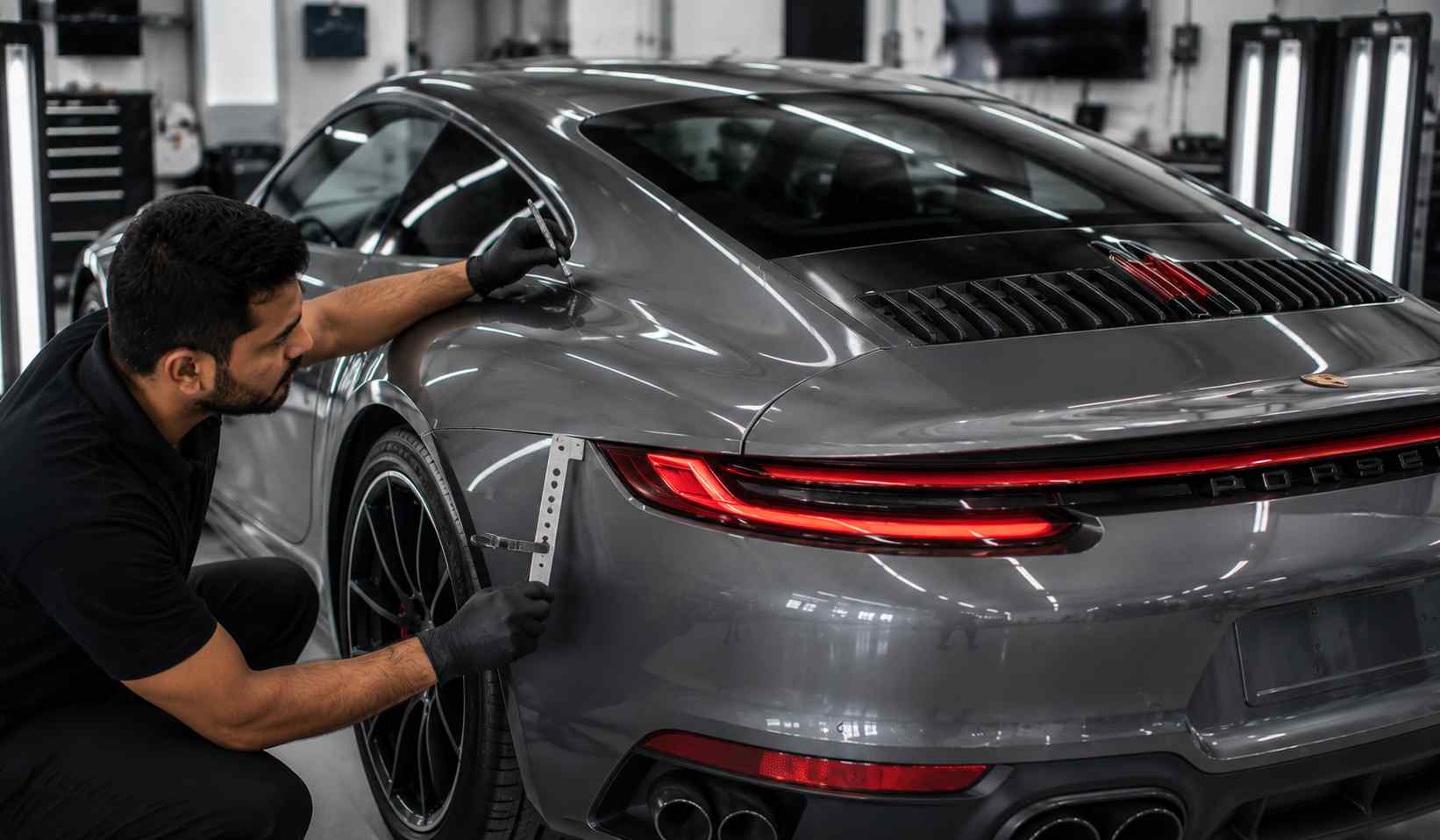
Surface preparation must remove damaged coating without erasing a sound body line. Aluminium contamination controls are applied where relevant, and compatible primers are chosen for exposed substrate. We avoid excessive filler across a broad door because heat and time can reveal shrinkage or edge mapping.
After clear coat and curing, the panel is checked as part of the complete side. Texture should not suddenly change at the blend, and polish should not leave holograms around the handle recess or black trim. Mouldings and seals are cleaned by hand rather than disguised with heavy dressing.
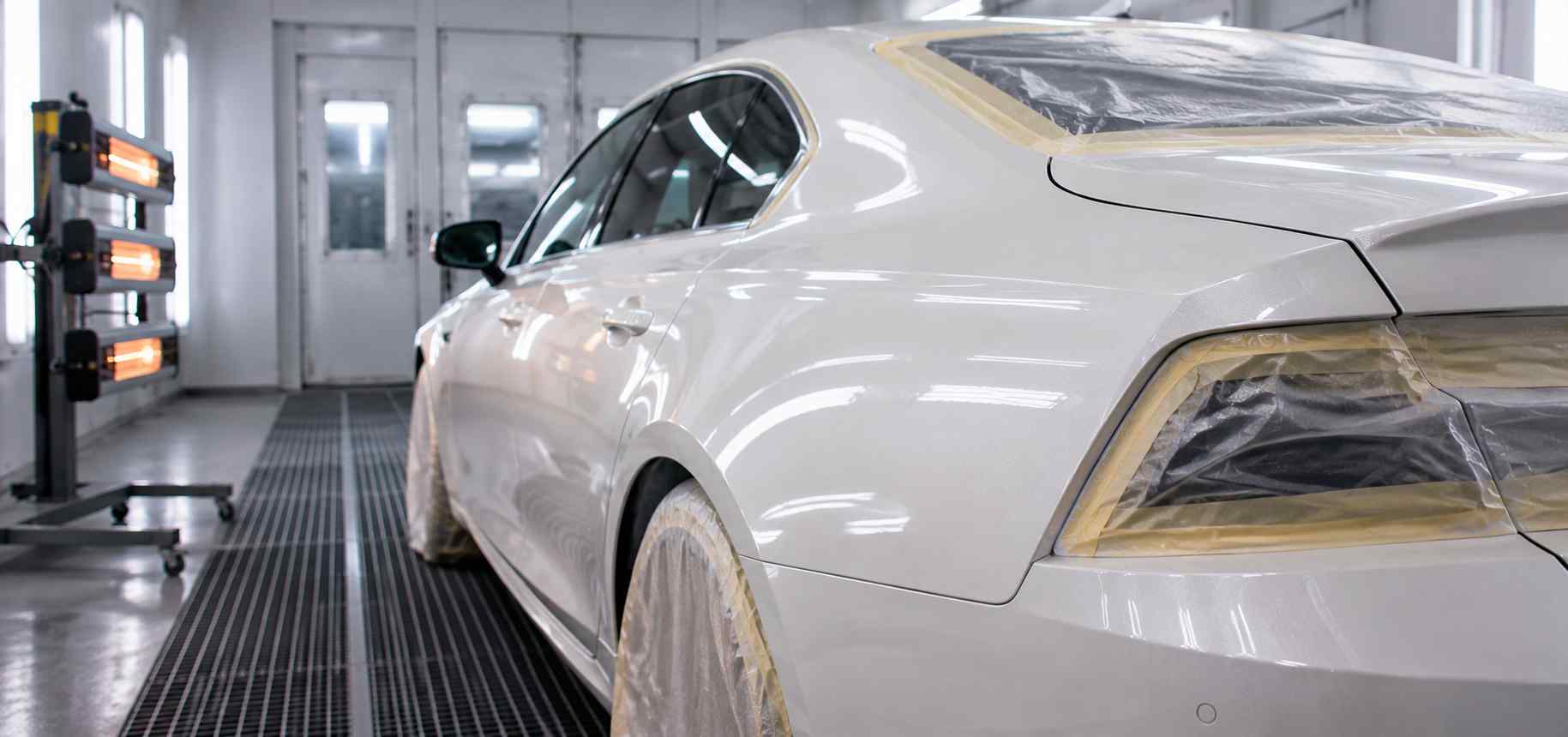
Repair versus replacement
A repair route can be efficient for an accessible, controlled deformation with stable edges and an approved method. Replacement becomes more credible when metal is torn, sharply folded, stretched across a handle pocket, damaged at a structural attachment or already compromised by an old repair. Part price alone does not settle the choice.
We also consider what replacement requires: adjacent trim, bonding materials, rivets or fasteners, corrosion protection, calibration, paint blending and delivery time. A cheap panel line on an estimate can become expensive if those supporting operations are omitted.
The owner receives a visible-damage estimate and a statement of what dismantling may reveal. If the discovery is minor, it is documented. If it changes safety, function, price or schedule, approval is requested before proceeding.
What changes Range Rover Velar body repair cost
Velar body repair cost depends on model year, material, panel access, paint type, part availability, flush-handle or lamp damage, sensors, hidden deformation and any specialist calibration or diagnosis. We quote from the confirmed repair scope rather than presenting an online figure as a guaranteed workshop price.
- Bumper scuff or cover repair depends on damage depth, mounting condition, sensor involvement and refinishing area.
- Door dent and paint work depends on panel material, access, flush-handle area, previous repair and blend need.
- Lower sill, wheel-arch and quarter-panel work depends on hidden deformation, trim removal, corrosion protection and structural proximity.
- Multi-panel collision work depends on parts, body measurement, paint blending, sensor or lamp damage and specialist operations.
Our published Dubai accident repair cost guide provides wider context. Phone images can narrow a range, but a Velar with closure, suspension, sensor or lower-body symptoms normally needs a physical inspection.
The workshop sequence
- Confirm VIN, build year, paint code, warning lights and the impact account.
- Map reflections, gaps, handle operation, wheel stance and nearby glass or trim.
- Identify materials and consult model-appropriate repair information.
- Expose hidden mounts or edges only where evidence warrants dismantling.
- Price labour, paint, materials, parts and specialist operations separately.
- Repair and refinish with checkpoints before covering access points.
- Refit, test closures and handles, inspect finish, scan or calibrate where agreed, and document handover.
A small bumper repair may take several working days. Aluminium panel work, parts-dependent closures or multi-panel damage can take longer. We give the schedule after inspection and update it when approved discoveries alter the sequence.
Prepare for an accurate first estimate
Photograph the whole affected side, the damaged area from two angles, the door gaps, handle at rest, nearby wheel and any warning message. Include the VIN or model year and mention whether the vehicle can be safely driven. A short safe video can help describe an intermittent deployable-handle or closure symptom.
Tell us about paint protection film, wrapping, ceramic coating and previous repairs. Those layers affect disassembly, colour reading and reinstatement. Do not polish through a scratch or force a sticking handle before inspection; both actions can remove useful evidence.
Reviewed by Ahmad — Bodyshop Service Advisor
This independent BodyShop.AE guide is reviewed against the visible repair scope, vehicle configuration and published Range Rover technical information. We do not claim Land Rover authorisation, and manufacturer-only or specialist work is identified separately where required.
Arrange a Velar body assessment in Dubai
BodyShop.AE provides independent Range Rover Velar body and paint repair assessment in Al Quoz 4. Our approach connects the clean exterior design to the hidden mechanisms, mixed repair operations and finish controls needed to restore it convincingly.
Send photos by WhatsApp or call the workshop with the model year, damaged area and any warning messages. We can usually tell you what needs to be inspected first, but the written quotation follows the vehicle evidence rather than a one-size-fits-all online package.
Velar finish acceptance under real viewing angles
The final side-profile review is performed from several heights because the Velar’s shallow upper body and deep lower doors reflect light differently. We look forward and rearward along the shoulder, then lower the viewing angle to expose ripples near the sill. Handle pockets are checked with the handle presented and retracted so no masking ridge or colour shadow is hidden.
A repaired panel is also compared after the vehicle has returned to normal stance. Workshop lift position can change gaps slightly and can conceal a loose lower moulding. The acceptance check therefore includes level-ground photography that can be attached to the work record.
Owners receive clear aftercare for fresh paint, washing and any later film or coating installation. Trim or electronic issues outside the authorised repair are listed explicitly, which keeps a cosmetic handover from being confused with a manufacturer diagnostic sign-off.
The signed estimate and handover images preserve that final reference.