
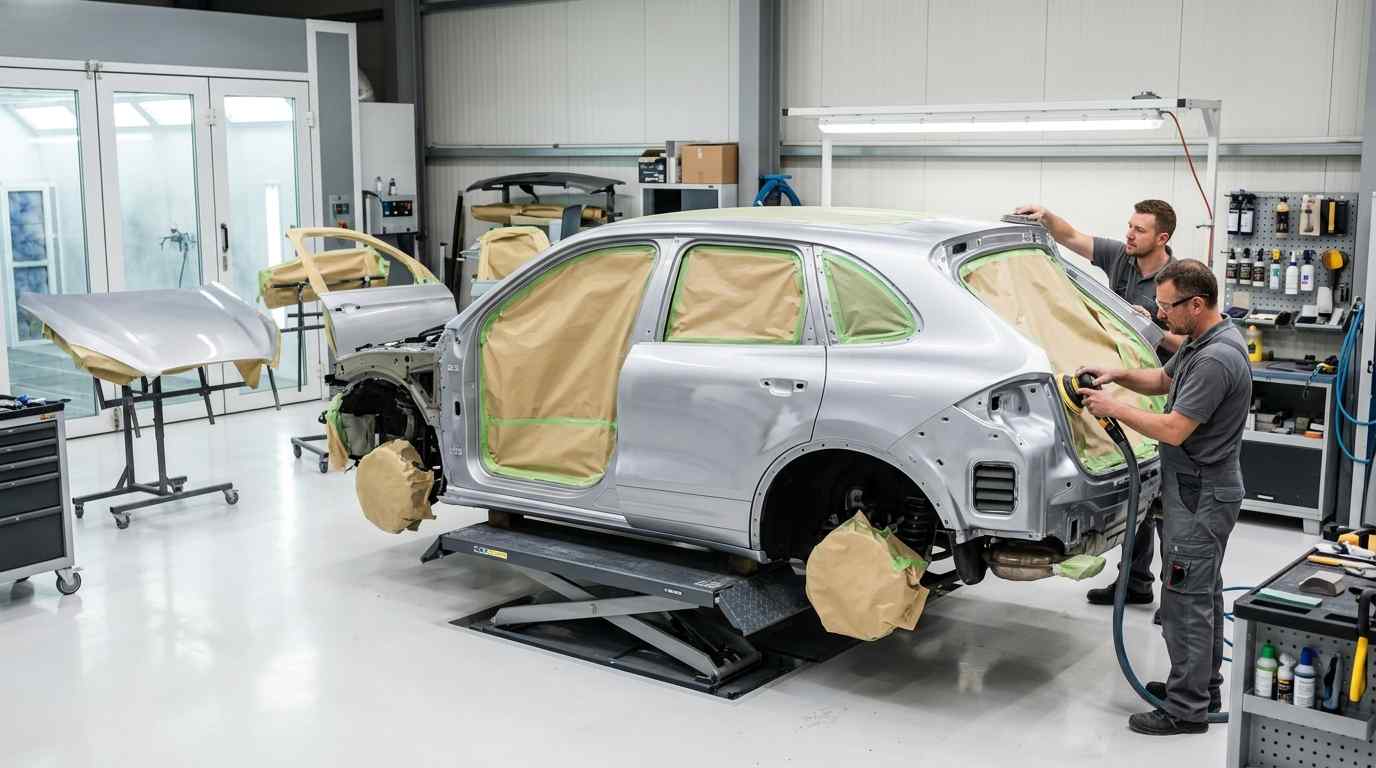
One vehicle, one coating history, one complete plan
Full Car Repaint Dubai
Our Full Car Repaint Dubai service is not a larger panel respray. It is a complete exterior refinishing project that starts with the condition of every painted panel, previous repair, edge, seal, trim item and corrosion point.
Bodyshop.ae separates restoration in the existing colour from a colour change, then defines what will be removed, repaired, sealed, painted and inspected before the quotation is approved.
Define the job before choosing paint
Full Car Repaint Dubai Starts with the Right Repair Scope
A complete repaint can restore the existing colour, correct widespread coating failure or change the vehicle to another colour. When the choice is between permanent refinishing and a removable finish, our car repaint vs wrap guide compares the practical differences before the scope is approved. All three fall within the broader car painting service in Dubai, but they do not share one fixed strip-down or one price. A faded clear coat may require coating removal and substrate correction, while a sound but unwanted colour may need a different preparation strategy.
The first inspection maps peeling clear coat, stone chips, dents, scratches, corrosion, old filler, previous blends, edge wear, overspray and panels that have already been repainted. Paint thickness readings can support the assessment, but they do not identify every material below the surface. Suspect areas may need controlled sanding before the final repair scope is known.
The quotation must also state the finish boundary. Painting only visible outer faces is different from including door shuts, jambs, the inside of the fuel flap, boot aperture edges, bonnet returns or an engine-bay colour change. These areas affect labour, disassembly, masking, parts handling and the final visual relationship.
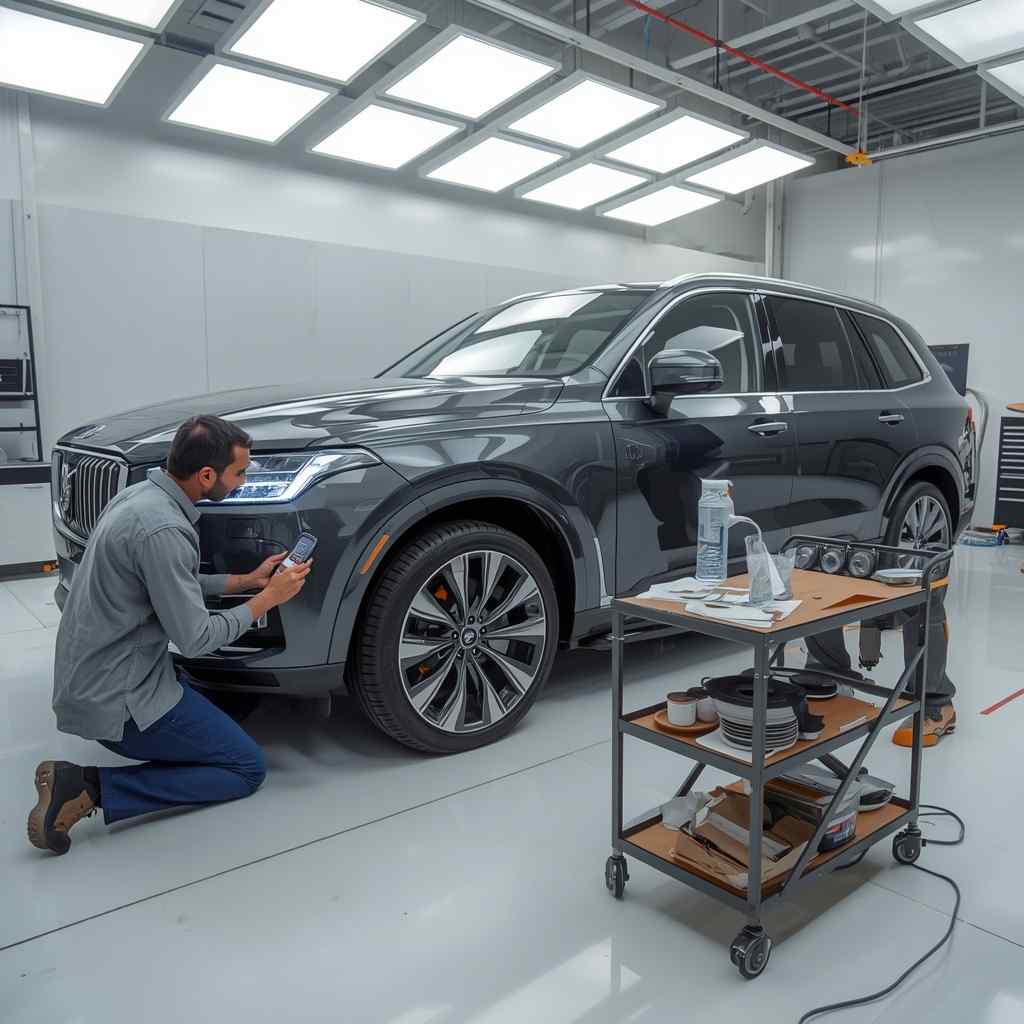
Scope ladder
Choose the finish boundary deliberately
A full repaint can still have several definitions. The written estimate should identify the selected boundary instead of relying on the phrase complete paint.
| Scope | Usually includes | Key exclusions to confirm | Best suited to |
|---|---|---|---|
| Exterior restoration | Visible exterior painted panels, agreed repairs and full exterior clear-coat system | Jambs, hidden returns, engine bay and extensive dismantling unless listed | Fading, widespread scratches or finish failure in the existing colour |
| Exterior colour change | Visible exterior faces in the approved new colour with agreed trim removal | Original colour can remain visible inside closures unless those areas are added | A deliberate appearance change with a controlled exterior boundary |
| Extended colour change | Exterior faces plus selected jambs, apertures and returns named in the estimate | Mechanical bay areas and inaccessible factory seams unless specifically included | Owners who want less original colour visible when doors and closures are open |
| Restoration-led repaint | Coating removal or correction, dent and corrosion work, substrate treatment and complete refinishing | Unknown hidden deterioration until access or sanding confirms it | Older vehicles, unstable previous paint or several repair generations |
The correct scope depends on inspection. Bodyshop.ae will not describe an outer-face repaint as a bare-shell restoration.
Controlled production route
A complete repaint is built through linked decisions
The sequence may change for the vehicle, but each stage must produce evidence for the next one.
-
Stage 01
Record the starting condition
Photograph all panels, gaps, trims, glass edges, badges, chips, dents, peeling areas and previous colour differences before work starts.
-
Stage 02
Map coating stability
Check paint thickness, adhesion concerns, corrosion, old filler and repair edges. Mark areas that may require deeper removal or metalwork.
-
Stage 03
Approve dismantling
List handles, mouldings, lamps, badges, mirrors, seals and other items to remove, replace or protect. Fragile clips and aged seals are priced conditionally.
-
Stage 04
Correct shape and corrosion
Complete agreed dent, scratch, chip and corrosion repairs before final surfacing. Paint is not used to hide unstable metal or distorted panels.
-
Stage 05
Prepare a consistent foundation
Strip or sand as required, feather repair edges, apply suitable primers and surfacers, block the panels and verify the shape under inspection light.
-
Stage 06
Approve colour and effect
Confirm the colour family, variant and finish using automotive paint types explained. Metallic, pearl and low-gloss systems need their own sample and application controls.
-
Stage 07
Apply the coating system
Clean, mask and spray according to the selected product system. Flash-off, booth conditions, application sequence and curing are managed as one process.
-
Stage 08
Reassemble without marking edges
Refit serviceable parts after the coating has reached the required handling condition. Renew authorised clips or seals rather than forcing damaged items back.
-
Stage 09
Inspect the whole vehicle
Review gloss, texture, colour, effect orientation, dust, edges, overspray, panel gaps and disturbed functions under more than one useful light.
What changes the quotation
The paint volume is only one cost layer
A useful full repaint quote explains labour, access and risk instead of presenting one number for every sedan or SUV.
Existing coating
Stable factory paint can support a different preparation plan from peeling clear coat, thick previous repairs, cracking filler or incompatible coatings.
- Thickness variation
- Adhesion
- Repair history
Body correction
Dents, stone chips, deep scratches, corrosion and poor prior bodywork must be priced separately from the colour coats that follow.
- Metal shape
- Filler limits
- Rust extent
Strip-down
Removing trims usually improves edge control, but aged clips, bonded items, seals and model-specific disassembly add time and part risk.
- Handles and mouldings
- Lamps and badges
- Glass-edge access
Finish system
Solid, metallic, pearl, matte, satin and custom effects have different material, sampling, application and repair requirements.
- Variant selection
- Layer count
- Clear-coat type
Substrate and coating control
The finish can only be as stable as the layers below it
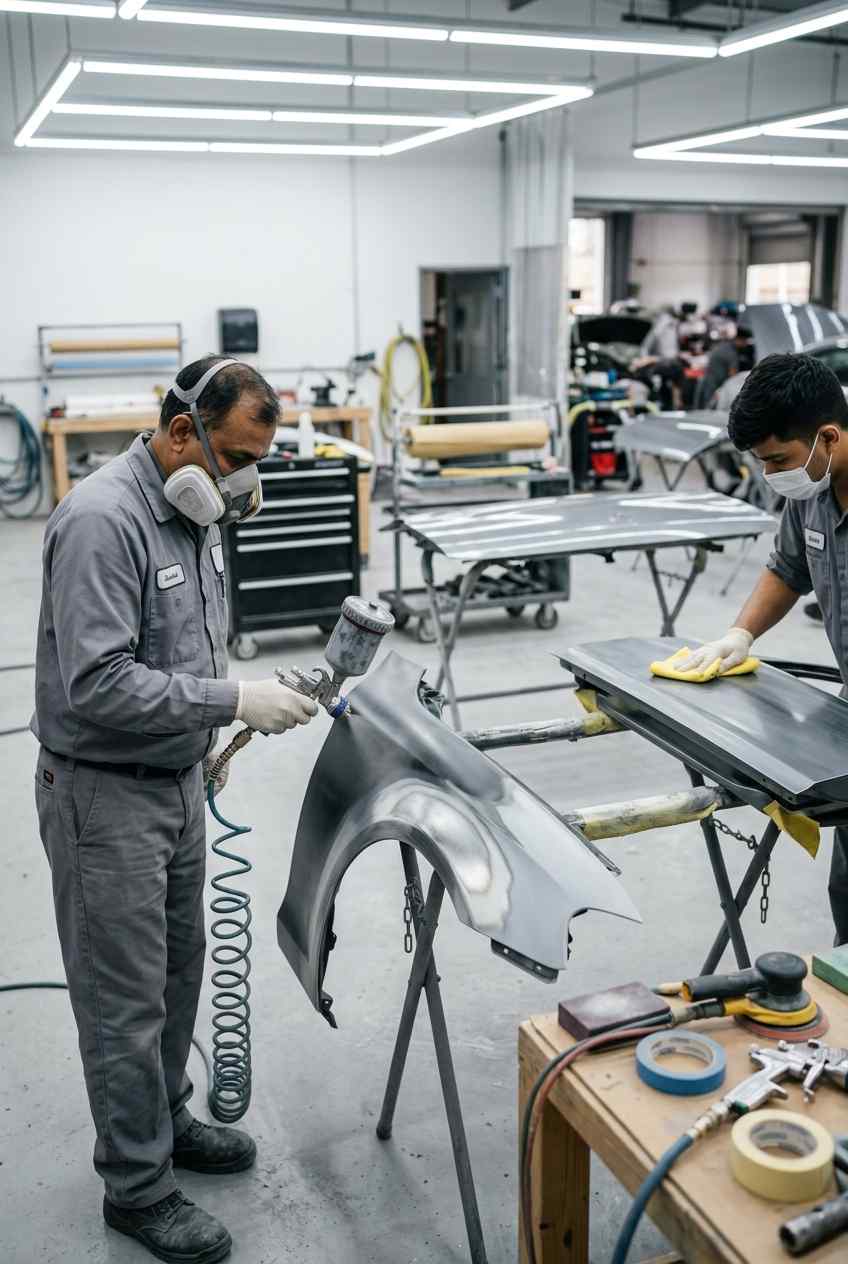
A complete repaint starts with washing and decontamination before sanding. Road film, silicone, wax, tar, iron deposits and polishing residue can be driven into the coating if the surface is abraded first. After cleaning, paint-thickness readings and controlled sanding help separate sound factory coating from thick filler, weak clear coat, cracking primer and incompatible previous repairs. The findings determine whether an area is feathered, isolated, stripped further or repaired at the metal.
Bare steel, aluminium, galvanised surfaces, plastics and existing coatings do not accept one universal primer. The selected refinish system may require corrosion-resistant primer, adhesion promoter, primer surfacer or a sealer before colour. A sealer can improve foundation uniformity, but it cannot stabilise rust, loose filler or peeling paint. Product compatibility, flash time, sanding grade and film build must follow the chosen system rather than a generic complete-paint recipe.
Basecoat establishes colour and effect while clearcoat supplies protection, gloss and much of the final texture in conventional systems. Solid, metallic, pearl and low-gloss finishes change the application plan. Metallic orientation and pearl layer count require sample control; matte clearcoat requires sheen control and cannot be polished like gloss clear. The quotation should name the finish family so material and inspection requirements are visible before work begins.
Door jambs, aperture returns and closure edges need a separate decision during a colour change. Extending new colour into those areas increases dismantling around hinges, latches, wiring, seals, trim and labels. Some factory labels and safety information must remain readable and should not be casually removed or painted over. An exterior-only boundary can be valid when it is written clearly; it should not be presented as an extended or bare-shell colour change.
Final correction also needs limits. Dust nib removal and polishing may refine a conventional gloss finish after curing, but polishing cannot correct wrong metallic orientation, an incorrect pearl ground coat, sinking bodywork or low-gloss sheen variation. Those defects require diagnosis at the affected layer. Handover should therefore record colour, texture, gloss or sheen, edge coverage, overspray, reassembly and the specific aftercare for the coating system.
Quote the scope rather than the vehicle class
Request a panel-by-panel repaint assessment
Send the vehicle details and photographs first, then arrange inspection so the quotation can name repairs, dismantling, finish boundaries, paint system, exclusions and quality checks.
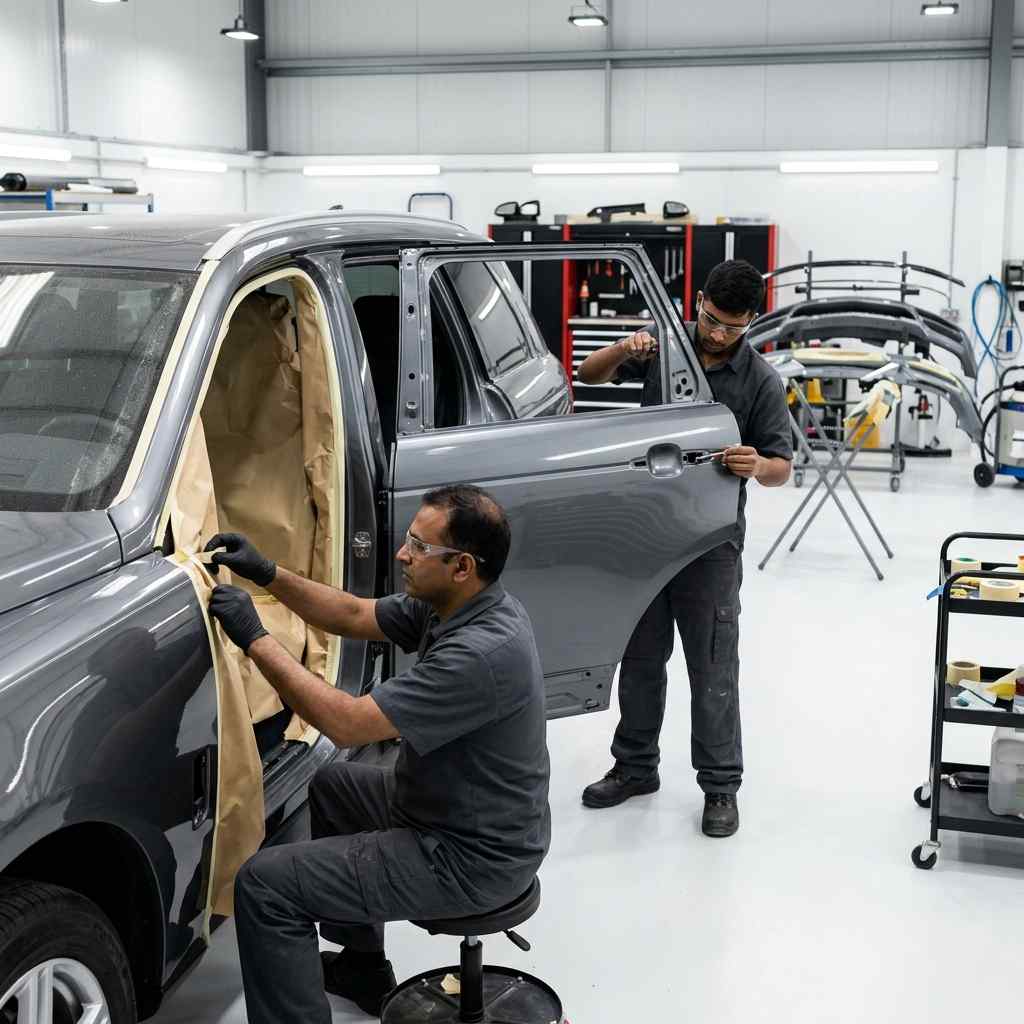
Colour change decisions
Door openings expose whether the plan is complete
An exterior colour change can look convincing with the vehicle closed and still reveal the original colour around doors, tailgate, bonnet or fuel-flap openings. That is not automatically poor workmanship if the outer-face boundary was clearly agreed. It becomes a dispute when the boundary was never written down.
Extended colour changes require more dismantling and masking around hinges, latches, wiring, labels, seals and aperture edges. Some identification or safety labels must not be painted over or removed casually. The exact approach depends on vehicle construction, access and parts availability.
Complex effect colours also need a realistic approval method. Digital formula retrieval helps select a starting point, while a spray-out verifies colour and effect before the vehicle is committed. PPG describes digital formula management through its official PaintManager colour platform. The painter still controls preparation, application and final comparison.
If the goal is simply to recover gloss on an otherwise sound finish, a full repaint may be excessive. Oxidation, local clear-coat failure and widespread coating breakdown need different solutions. Inspection should decide whether correction, selected panel refinishing or complete repainting provides the defensible result.
Quotation anatomy
Compare estimates line by line
Two repaint quotations are comparable only when they define the same outcome.
| Quotation line | What a clear estimate should state | Why it matters |
|---|---|---|
| Body preparation | Named dents, chips, scratches, corrosion and unstable previous work | Unlisted correction can appear later as variation or remain visible |
| Dismantling | Parts removed, masked, renewed, reused or excluded | Edges and reassembly quality depend on access and component condition |
| Paint boundary | Exterior faces, jambs, returns, apertures and any original colour left visible | Prevents disagreement about what full means |
| Coating system | Solid, metallic, pearl or low-gloss system with primer, base and clear where applicable | Layer count and process control affect material and labour |
| Quality and rectification | Inspection lighting, defect limits, rework process and written job-specific warranty terms | A shiny handover is not the same as a documented finish standard |
| External dependencies | Special-order trims, seals, badges, glass work or calibration handled separately | Waiting time and responsibility stay visible |
Handover proof
Inspect the result as a complete vehicle
The handover should take place with the car clean, dry and available under controlled light and a second useful viewing condition.
Surface and shape
- Long reflections remain continuous across repaired panels
- No sanding scratches, pinholes or repair edge shows through
- Texture is consistent with the approved finish standard
- Dust or local defects are assessed under direct inspection light
Colour and effect
- Colour relationship is checked across adjoining panels
- Metallic or pearl orientation remains even at several angles
- Matte or satin sheen is uniform without polished patches
- Jamb and aperture boundaries match the written scope
Edges and reassembly
- Mouldings, handles, lamps, badges and seals sit correctly
- No overspray appears on glass, rubber, liners or underbody items
- Fresh paint is not chipped at fasteners or panel edges
- Doors, bonnet, boot lid and fuel flap operate normally
Records and aftercare
- Invoice names the paint and repair scope
- Variations and replaced items are recorded
- Job-specific warranty wording is supplied in writing
- Washing, curing and protection guidance is understood
Remaining repaint questions
Full car repaint questions
Does a full repaint remove every old paint layer?
Not automatically. Stable coatings may remain as a prepared foundation, while peeling, cracked, incompatible or excessively repaired areas can require deeper removal. The inspection and sanding findings determine the safe extent.
Can the car be changed to a completely different colour?
Yes, subject to an agreed boundary and any required administrative steps. Decide whether only visible exterior faces or selected jambs, apertures and returns are included before work starts.
Will all dents and rust be included in the repaint price?
Only if they are identified and listed. Dent repair, corrosion treatment, welding, panel replacement and hidden deterioration are separate operations that should be itemised.
How long does a full car repaint take?
Timing depends on inspection, repairs, coating removal, dismantling, parts, paint system, curing, reassembly and rectification. Our car painting time guide explains how these stages affect workshop duration. A completion date should be confirmed after the scope and parts position are known.
Can a full repaint reproduce a factory finish?
A professional refinish can achieve a high-quality colour, gloss, texture and effect relationship, but it is a repair coating process rather than the original factory production line. The approved finish standard should be discussed honestly.
Should paint protection be applied immediately?
Follow the refinish product and workshop curing guidance. Some coatings or films require a waiting period, and applying protection too early can interfere with solvent release or adhesion.
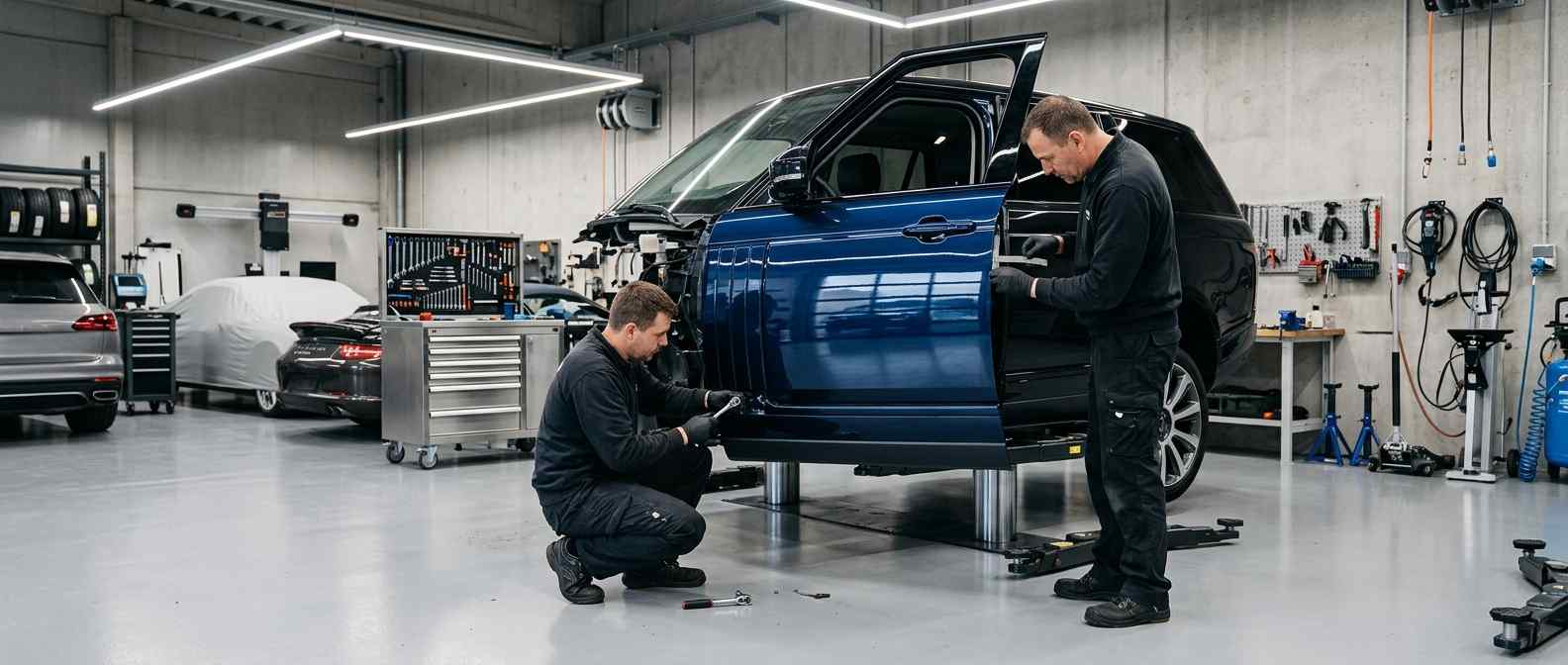
Finish quality includes every reassembled edge
Arrange a panel-by-panel repaint assessment
A full repaint succeeds when every visible boundary, repair layer and reassembled edge belongs to the same written plan.
Use the car paint defect guide to identify finish concerns you want recorded before authorisation. At collection, compare the completed vehicle with the approved scope and starting photographs.