
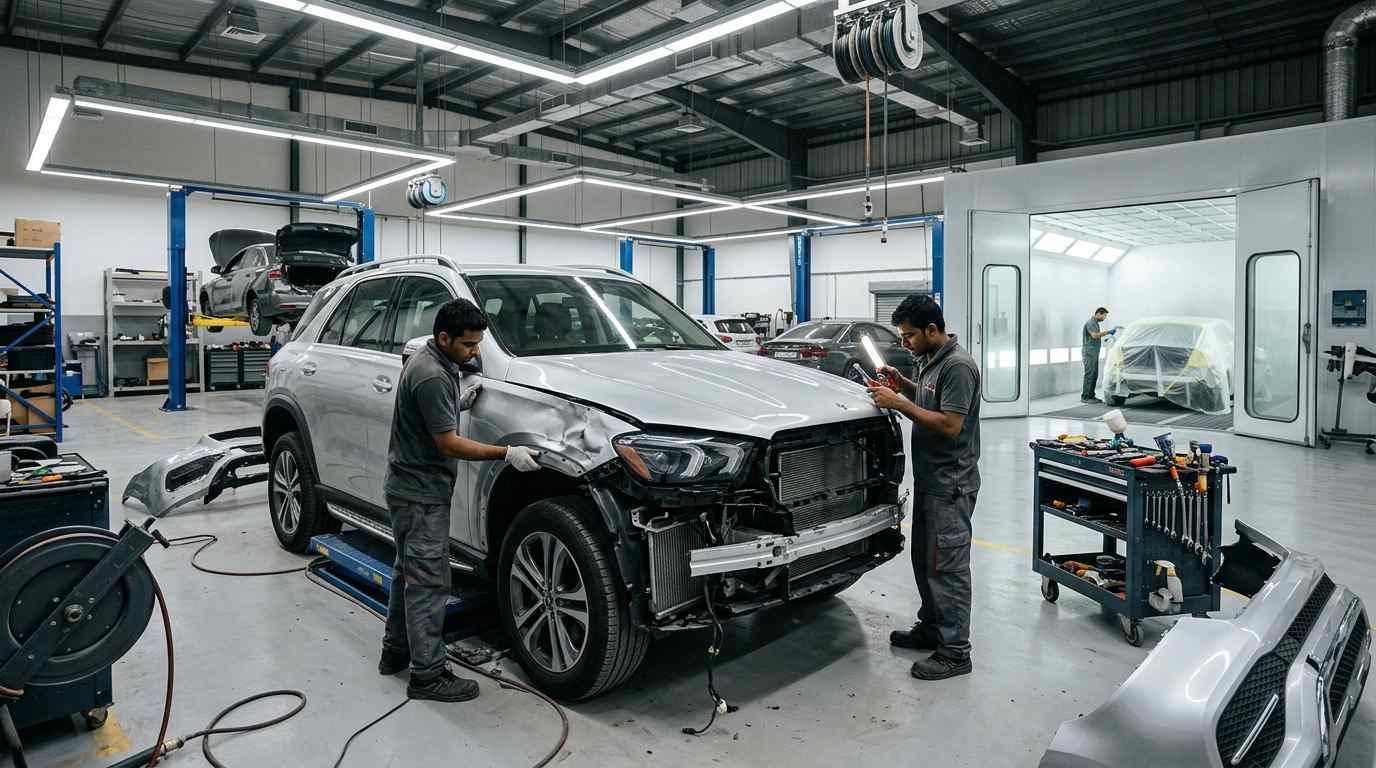
Impact mapping before structural, panel and paint work
Collision Repair Dubai
Collision repair Dubai starts by reconnecting the impact path, body geometry, panel decisions, paintwork and fitted systems rather than treating each visible mark as a separate job. We inspect the impacted end or side first, then define which work belongs to structure, body, refinishing and specialist verification.
Different from an accident-administration page
Collision Repair Dubai Starts With the Impact Path
Our wider accident repair service covers the broader customer route around reporting, insurance, estimates and repair coordination. This page focuses on the technical collision-restoration sequence after the vehicle reaches the workshop.
Visible bumper or panel damage can sit beside moved brackets, openings, lamps, wheel relationships or structural reference points. None of those findings is assumed from a photograph. The first task is to record what is visible, what functions changed and which areas justify controlled access or measurement.
Not every collision needs chassis repair, panel replacement or calibration. The scope should expand only when the evidence supports it.
Three connected repair streams
Structural, panel and paint work must be sequenced correctly
Structure and geometry
Reference points, openings, rails, sills, floors, mounting areas and wheel relationships are checked when the impact pattern justifies measurement. Cosmetic alignment should not hide unresolved geometry.
Panels and attachments
Bumpers, doors, fenders, quarters, bonnets, tailgates, lamps, brackets and trim are assessed for repair, replacement, fit and transfer requirements.
Refinishing and finish control
Substrate preparation, colour strategy, blending, clear coat, texture and final inspection follow a stable repaired surface rather than preceding body correction.
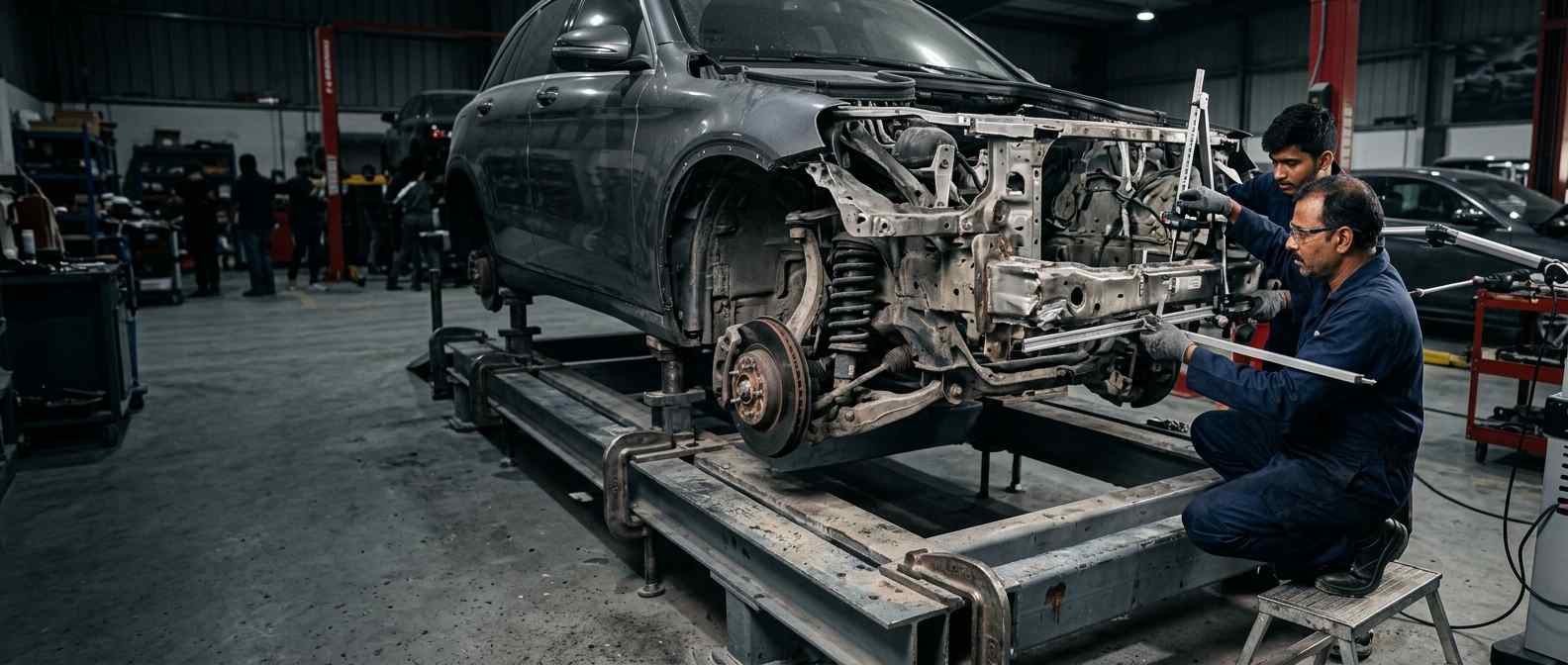
Geometry gate
Body measurement comes before cosmetic alignment when structure may have moved
A bumper cover can spring back while the reinforcement, brackets or body references behind it remain changed. A door may close while the aperture, sill or hinge relationship carries impact movement. A wheel can appear visually normal while a mounting or suspension relationship has shifted.
When structural involvement is suspected, the repair route connects to our car chassis repair service for measurement and repairability planning. Frame straightening, sectioning, heat, pulling and joining are not universal rights; the material, damage location and applicable repair information control the method.
Impact direction changes what must be checked
Front, rear and side collisions have different hidden-risk patterns
Front-end collision
Cooling-area mounts, lamps, bonnet, fenders, bumper reinforcement, wheel position and front sensing equipment can become connected concerns.
Rear-end collision
Bumper reinforcement, boot floor, rear opening, lamps, quarter relationships, tailgate or boot-lid fit and rear sensing equipment can change together.
Side impact
Doors, hinges, apertures, sills, pillars, glass, quarter panels and wheel-adjacent areas may need connected assessment rather than an isolated dent estimate.
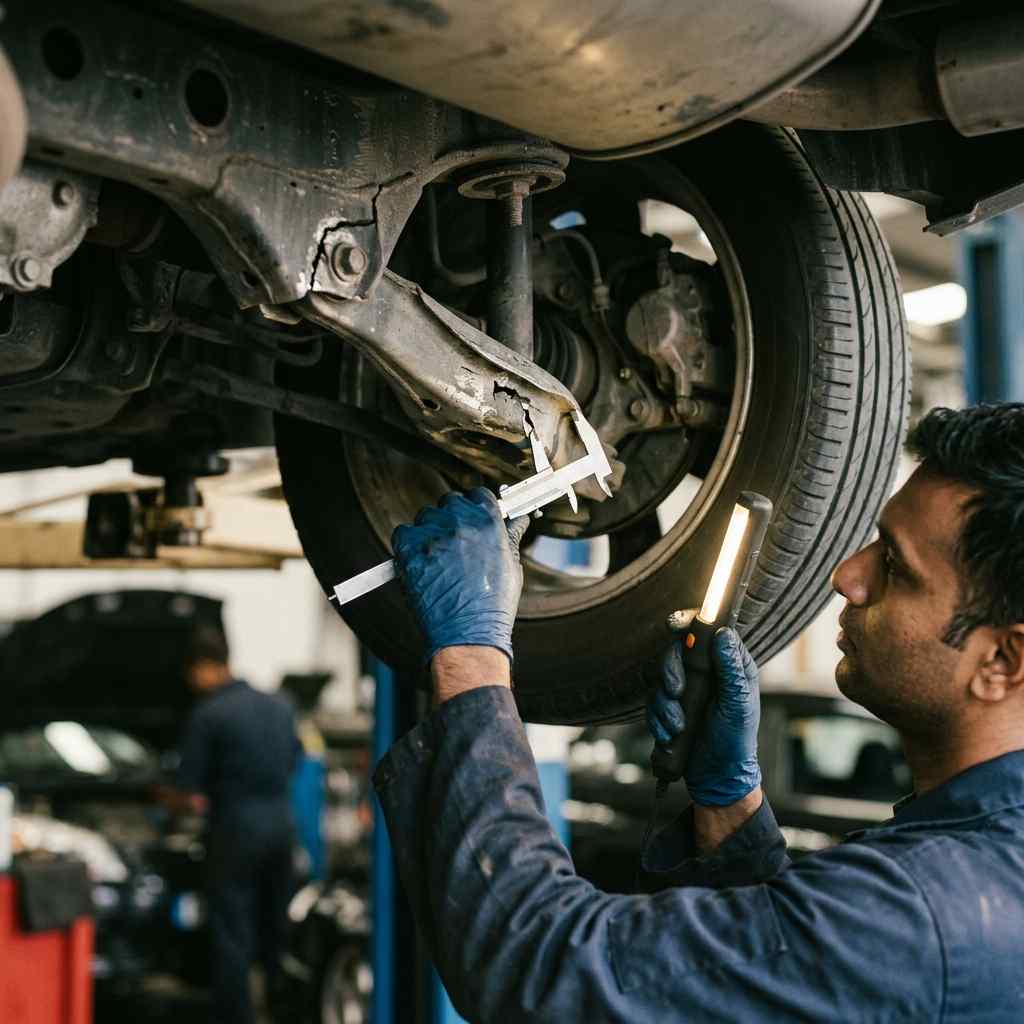
Controlled production sequence
Six gates keep one trade from hiding another
Record
Photograph impact direction, panel gaps, warning state, wheel position and visible damage before disturbance.
Access
Remove only the components needed to expose justified hidden-risk areas and document newly revealed damage in place.
Measure
Verify structure, openings and relevant mechanical relationships before pulling panels into cosmetic alignment.
Repair or replace
Choose the panel route from material, stretch, edge damage, attachments, access, total operation and procedure limits.
Refinish and assemble
Complete preparation, colour, clear coat and reassembly after the body is stable and fit has been verified.
Verify
Check gaps, finish, functions, scans and any separate calibration or alignment requirement before handover.
Panel restoration
Repair and replacement compete on the complete operation
A repairable panel is not automatically the cheaper or better route if access, severe stretch, damaged edges, reinforcement, corrosion or repeated previous repair makes the complete operation unstable. Replacement is also not automatically simpler: part identity, transfer items, joining, corrosion protection, fit and paint still need planning.
For a focused decision framework, use our repair-versus-replace car panel guide. When the panel itself is stable and the remaining work is refinishing, the scope can move into a panel respray plan.
Sensors and connected systems
Diagnostics follow repaired geometry; they do not replace it
Parking sensors, cameras, radar, lighting, powered closures and warning systems are identified from the actual fitted vehicle. A connected sensor can still sit on a moved bracket or look through a distorted aperture.
Where the collision or repair operation triggers a calibration requirement, the body, wheel and mounting conditions must first meet the relevant prerequisites. Our ADAS calibration after accident repair page explains that separate verification route.
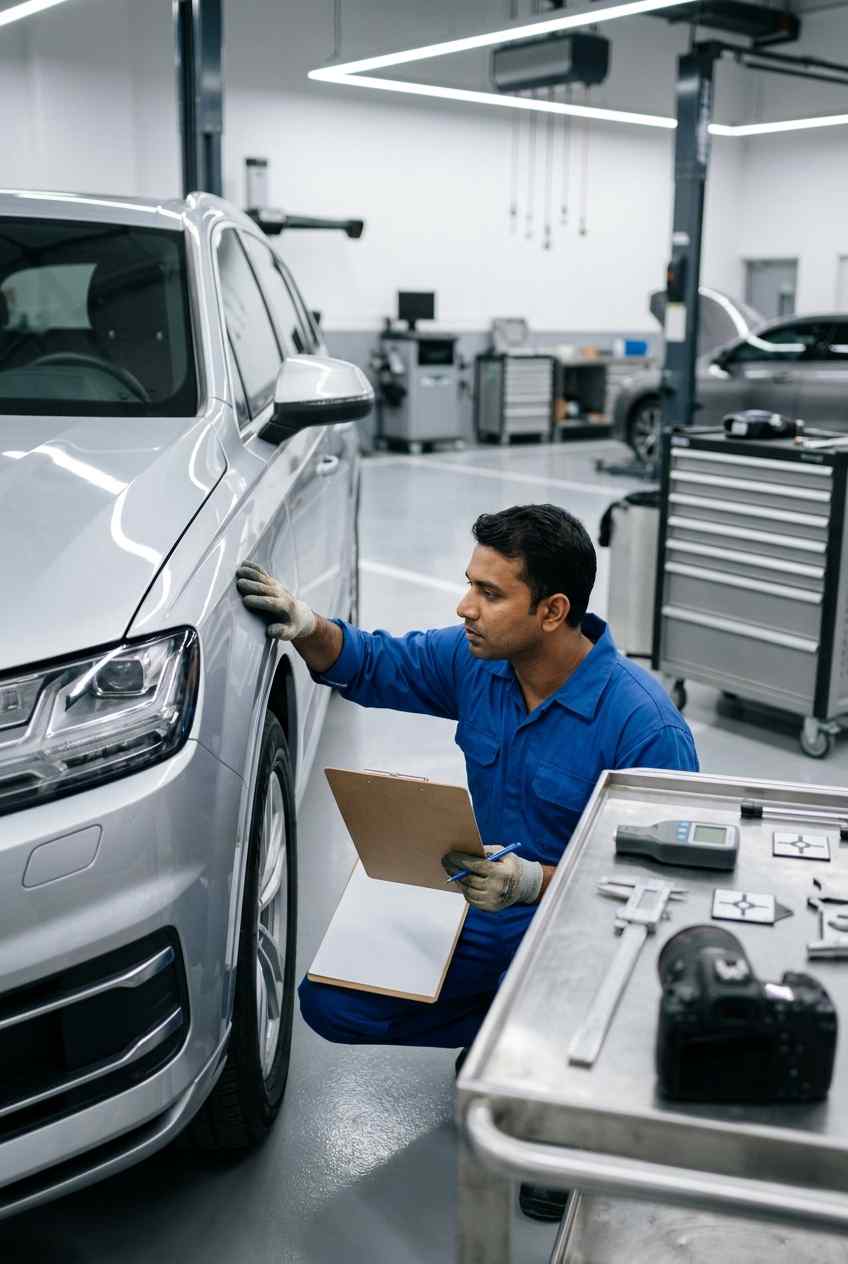
Final quality gate
Handover should retrace the contacted end or side
Fit and finish
Compare gaps, openings, lamp and bumper relationships, long reflections, colour, metallic or pearl travel, gloss, texture, masking edges and trim seating.
Functions and records
Check the agreed lamps, cameras, sensors, closures and warning state. Keep separate evidence for wheel alignment, scans, calibration or specialist work when those operations were required.
Common owner questions
Collision repair FAQs
What is included in collision repair?
The scope can include structural inspection, panel repair or replacement, bumper and attachment work, paint refinishing, reassembly, diagnostics and final quality checks. The exact operations depend on the impact and fitted vehicle.
Does every collision need chassis straightening?
No. Structural work is justified by evidence such as measured movement, changed openings, mounting relationships or impact conditions. Cosmetic damage alone does not prove chassis damage.
Can photos provide a final collision repair quote?
Photos can identify visible damage and help choose the inspection route, but they cannot confirm hidden brackets, structural measurements, internal panel condition or every fitted system.
Will repaired panels need blending?
Sometimes. Existing colour, metallic or pearl behaviour, panel orientation and available transition space affect whether a controlled adjacent colour blend is justified.
When is ADAS calibration needed after a collision?
It depends on the vehicle, fitted equipment, damaged area and repair operation. The applicable procedure should be checked after body geometry and relevant wheel conditions are correct.
How is the final repair checked?
The handover should review repaired geometry, gaps, closures, finish quality, disturbed trim and agreed functions, with separate records for any required scans, alignment or calibration.
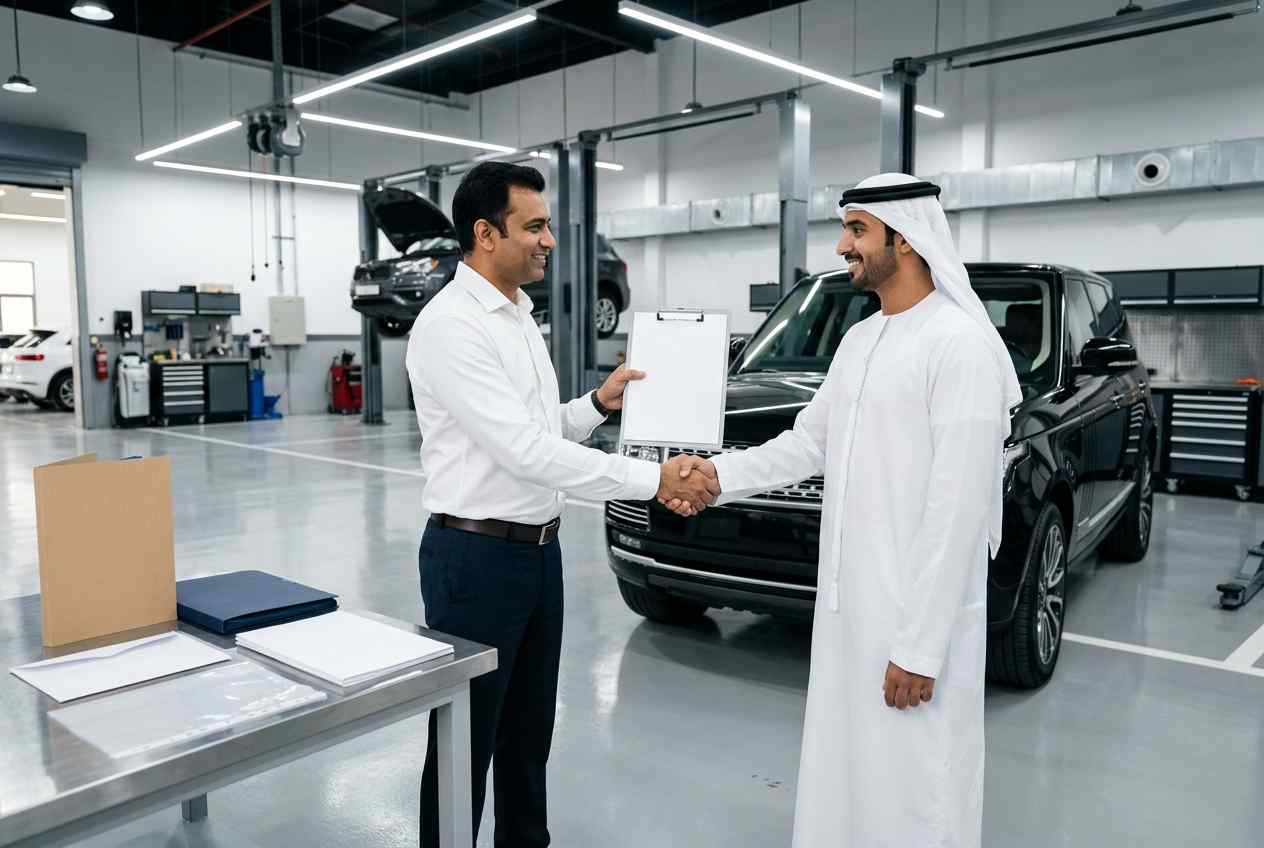
Start with the complete impact area
Arrange collision repair in Dubai
Send the full damaged end or side, both adjacent panel relationships, wheel position if relevant and any warning messages. We will identify what can be assessed from photographs and what needs workshop inspection before the repair scope is agreed.