
Premium refinishing assessment in Al Quoz 4
Luxury Car Paint Repair Dubai for Premium Finishes
Specialist assessment and refinishing for metallic, pearl, matte, satin and multi-layer paint systems where colour, effect, texture, gloss and panel preparation all have to read correctly together.
What premium really means
The repair standard is controlled by the finish, not the badge
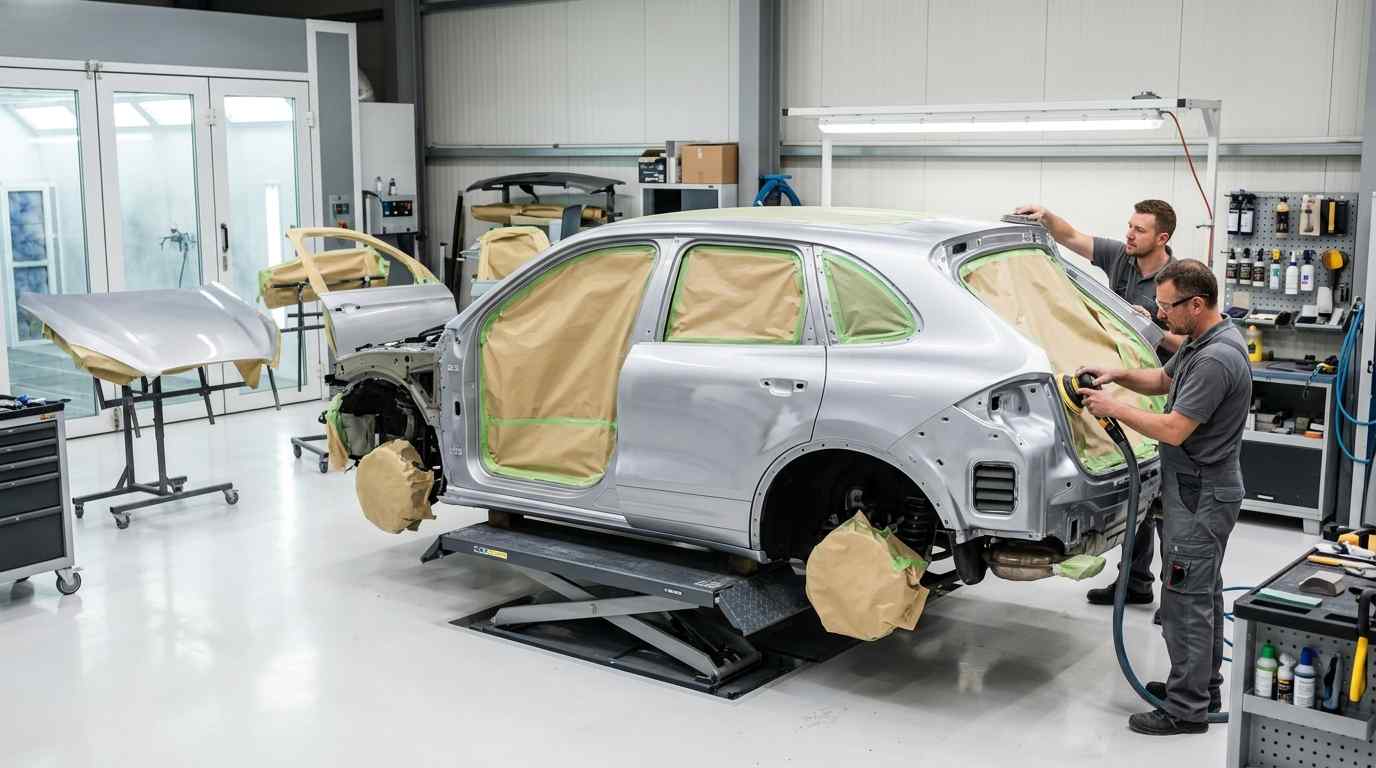
Luxury car paint repair is the disciplined control of colour, effect, gloss, texture, film build, panel preparation and reassembly on vehicles where a small visual difference can be obvious.
The repair plan must respond to the actual finish, substrate, previous paint history and damage. A generic “premium package” does not answer whether the colour is metallic or pearl, whether the clear coat is low gloss, whether the panel is aluminium or plastic, or whether previous refinishing changes the new repair.
For standard panel refinishing, bumper painting and complete repaints across everyday vehicles, use our car painting service in Dubai. This page stays focused on complex finishes, sensitive materials and premium presentation requirements.
Finish principle: colour can look acceptable from one angle and still drift in face tone, metallic travel, pearl effect or gloss from another. We judge the surface from more than one useful viewing position.
When specialist handling matters
Four conditions change the paint plan quickly
Complex colour or effect
Metallic flake, pearl mid-coats, tinted clear coats and special-effect pigments can change with application technique, film thickness and viewing angle.
Matte or satin finish
Gloss level and surface texture are part of the appearance. Conventional polishing or a small local blend may not be suitable.
Sensitive substrate
Aluminium, plastics and composite parts need compatible preparation, contamination control and material-aware repair decisions.
High presentation standard
Trim edges, apertures, surface texture, overspray control and reassembly matter as much as the headline colour.
Finish architecture
Premium paint behaves differently layer by layer
The finish type changes what must be controlled before the first coat is applied and how the result is judged afterwards.
Metallic
Flake size, orientation, brightness and face-versus-flop appearance make spray technique and spray-out cards important. See metallic paint matching.
Pearl or three-stage
Ground coat and pearl mid-coat thickness can change the result. Multiple spray-outs may be needed. See pearl paint repair.
Matte or satin
Colour, gloss level, texture and uniform application define the finish. Spot polishing is generally unsuitable. See matte paint repair.
Solid colour
Hue, value, undertone, gloss and texture still need comparison with the actual neighbouring panels and previous repair history.
Tinted clear
Layer thickness and transparency can shift the visible colour, especially where the repair meets an original adjacent panel.
Special effect
Uncommon pigments or layered appearances may require staged test panels and a wider colour-management plan before production.
Assessment before quotation
Clean panels and useful light come before the price
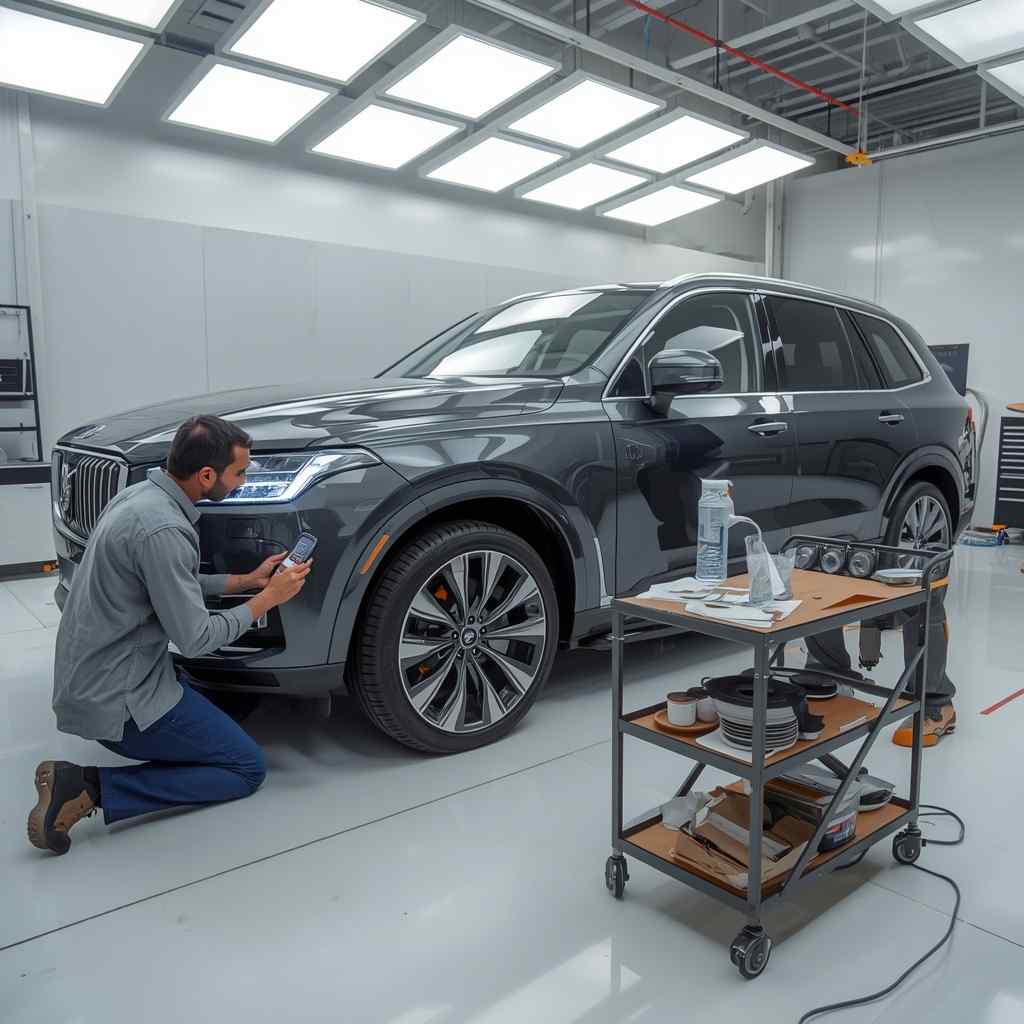
A useful estimate records the damaged area, adjacent panels, paint code, visible colour variant, texture, gloss level and signs of previous work.
Thickness readings can help identify repainted or filled areas, although they do not explain every layer beneath the surface. The inspection also considers chips, corrosion, cracked plastic, distorted aluminium, failing clear coat, trim condition and whether sensors or cameras are attached to parts that must be removed.
- Visible damage and neighbouring finish
- Paint code, variant and previous refinishing evidence
- Gloss, texture and special-effect behaviour
- Trim, sensor or camera removal requirements
- Any hidden condition that remains inspection-dependent
Repair or repaint
The smallest visible defect does not always mean the smallest paint operation
A shallow defect may be correctable without repainting if the coating is intact. A deep scratch that penetrates colour, a cracked coating, exposed substrate or a damaged effect layer usually needs refinishing.
Preserve the original finish when
- The coating remains stable and the defect can be corrected without creating a larger visual problem.
- The area can be restored without damaging a matte, pearl or effect layer.
- The correction will not leave a visible gloss or texture island.
- Previous work beneath the finish does not compromise the result.
Refinish when
- The colour or clear layer is broken through.
- The substrate is exposed or the coating is cracked.
- Matte or satin abrasion has permanently changed local gloss.
- A sensible blend or clear boundary needs more space than the visible mark itself.
The repair area should be only as large as necessary but large enough to execute the correct colour transition and clear-coat boundary. Artificially restricting the area can leave a visible blend or an unsuitable edge.
Colour development
The match is developed before the vehicle enters the booth
The paint code identifies a starting family, not always the exact colour now on the vehicle. Production variants, age, exposure and earlier repairs can create differences.
Prepare the reading area
Clean and, where appropriate, lightly prepare a representative section.
Confirm the code
Verify the paint code and search relevant formula variants.
Take stable readings
Use instrument readings when the finish and surface permit them.
Spray a candidate
Mix a candidate and apply it to a test card using the intended process.
Compare the effect
Judge colour, brightness and effect under more than one useful light and viewing angle.
Adjust when needed
Change the formula or application and repeat when the evidence requires it.
Our car paint matching process explains why a spectrophotometer supports the technician but cannot promise an invisible match by itself.
Send the finish, not only the scratch
Wide daylight and angled reflection photos help us understand whether colour effect, surface shape or gloss is likely to control the repair.
Blending, texture and gloss
A colour match can still look wrong when the surface reads differently
A blend transitions colour into a suitable adjacent area so a small formula difference is less visible. Whether blending is appropriate depends on the colour, repair position, panel shape, finish and process.
Premium presentation also depends on matching the surrounding orange-peel texture and gloss. Excessive sanding and polishing can create a flat, highly polished island next to the original texture.
On low-gloss finishes, altering the surface after application may permanently change appearance, so booth cleanliness and application control are especially important.

Substrates below the finish
Paint quality cannot rescue an unstable panel underneath
Steel
Corrosion removal, metal preparation, compatible primers and protection of repaired edges.
Aluminium
Controlled tools, contamination prevention and material-appropriate repair limits.
Plastic
Identify the plastic, inspect deformation and cracks, then use compatible cleaning, adhesion and flexible repair processes.
Composite or carbon fibre
Check for damage beyond the coating. Cosmetic refinishing must not conceal a structural laminate concern.
The panel must be stable, shaped correctly and prepared through the appropriate abrasive and primer stages before colour is applied.
Trim removal or masking
Clean edges require a deliberate access decision
Remove when access earns the disturbance
Removing mouldings, handles, lamps or seals can provide cleaner edges and reduce masking lines, but removal adds time and may require new clips, seals, coding or calibration.
Mask when removal adds more risk than value
The decision should consider access, part condition, the agreed finish standard and whether aged trim or adhesive parts may need replacement after disturbance.
Complete repaint, restoration or colour change
The scope must define every visible boundary before dismantling
A complete repaint in the original colour can address widespread coating failure or support restoration, but the scope must define apertures, engine bay, luggage area, underside edges and removable trim.
A colour change is broader because original colour can remain visible behind seals, panels and interior openings unless those areas are included.
For collectible or high-value vehicles, originality, paint history and future documentation may influence the decision. Sometimes preserving sound original paint and repairing a smaller area is preferable to a full repaint.
Quality control before handover
The final inspection follows the finish from colour to reassembly
Colour and effect
Inspect colour and effect from practical viewing angles and under suitable lighting.
Gloss and texture
Check gloss or low-gloss uniformity, texture, dust inclusions and polishing transitions.
Edges and apertures
Confirm panel edges, apertures and masking boundaries are clean.
Trim and function
Check refitted trims, handles, lamps, seals and panel operation.
Electronics
Review sensor or calibration requirements created by removal and refitting.
Aftercare
Provide care instructions appropriate to the coating system and finish type.
A strong handover explains the work completed, any remaining limitations and what the customer should avoid while the coating completes its initial curing process.
Dubai ownership and aftercare
Fresh premium paint needs finish-specific care
Dust should be removed with safe washing methods rather than dry wiping. Bird droppings, insect residue and other contamination should be addressed promptly using products suitable for the finish.
Avoid automatic brushes that can mark gloss paint and are especially risky for matte or satin surfaces. Do not apply polish, compound, wax or ceramic products to low-gloss paint unless the finish-specific process permits them.
For fresh refinishing, follow the workshop’s handover advice because the product system, bake cycle and repair scope affect the initial care window.
Protect the finish that was actually applied. Generic polishing or coating advice should not override the repair system, gloss level or cure guidance given at handover.
What moves the quotation
Luxury car paint repair cost follows the operation, not the badge
For planning ranges and the variables behind estimates, see our Dubai car painting cost guide. A vehicle inspection is still needed for a job-specific quotation.
Frequently asked questions
Luxury car paint repair questions
Do luxury cars always need brand-specific paint?
The repair needs the correct colour formula, compatible refinishing system and process for the vehicle and finish. The badge alone does not determine the paint product or guarantee a match.
Can a spectrophotometer guarantee an exact match?
No. It provides valuable measurement and formula-ranking data. Spray-out testing, application control and visual evaluation remain necessary, particularly for metallic, pearl and aged finishes.
Can one scratched area on matte paint be polished?
Conventional polishing changes gloss and can create a visible patch. The correct approach depends on defect depth, finish and repair boundaries.
How long will the repair take?
Timing depends on assessment, part and trim access, colour development, preparation, coating stages, curing and reassembly. Hidden damage or uncommon finishes can extend the plan.
Should adjacent panels always be blended?
No. Blending is a colour-management technique used where justified. The finish, panel position, colour evaluation and repair procedure determine the plan.
Arrange a premium paint assessment in Dubai
Send the vehicle model, affected panels and clear daylight photos. We will explain what can be assessed remotely and what needs an in-person inspection before the repair scope is agreed.