
Independent EV body & paint repair · Al Quoz 4
Tesla Body Shop Dubai for EV Collision and Paint Repair
Tesla accident damage should be assessed as an impact path, not only as a dent or scratched bumper. We inspect the visible body damage, adjacent panel fit, underbody and sill exposure, sensor-area mounting and paint condition before the repair scope is agreed.
Direct answer
What is different about Tesla body repair?
The visible outer panel is only one part of the decision. Tesla construction varies by model, year and component, and a repair can involve steel, aluminium, plastics, cast sections, bonded or welded joints, cameras, parking equipment, large glass areas and high-voltage components elsewhere in the impact path.
A shallow outer-panel mark may remain a conventional body-and-paint job. A lower-side strike, wheel-corner impact, warning message, distorted opening or underbody contact can require a wider inspection before cosmetic work begins. When damage changes panel shape, the repair-versus-replacement decision should be based on material, access, joining areas and the permitted repair method rather than panel size alone.
Damage map
Trace where the force entered before deciding what to repair
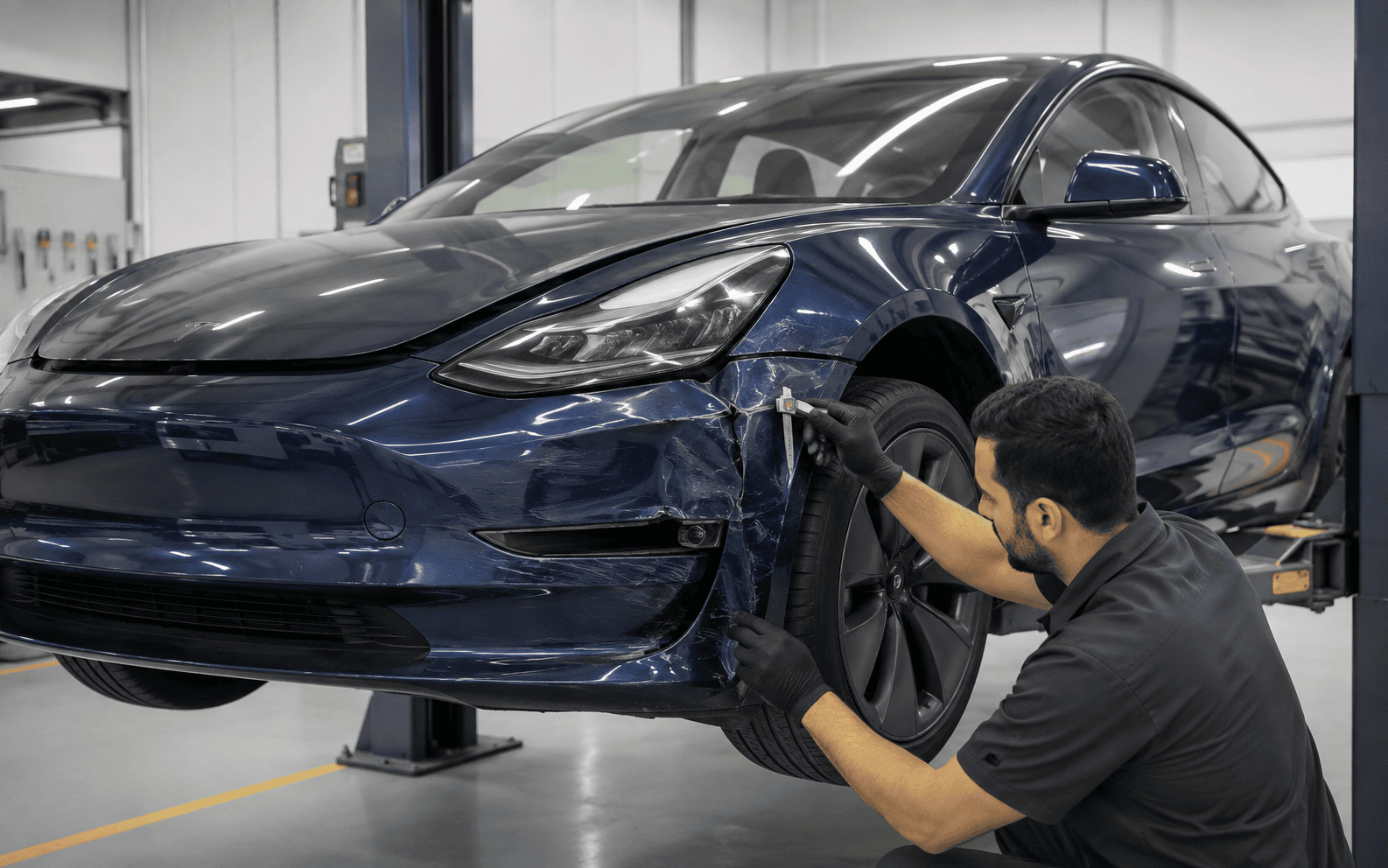
A Tesla can look lightly marked from one angle while bumper carriers, brackets, panel edges or lower-body areas need separate attention. The first inspection follows the impact from the outer surface into the neighbouring zones.
Front bumper and lower front
Check the cover, retainers, absorber or reinforcement relationship, cooling openings, lamps and any sensor-area mounting affected by the strike.
Door, wing and quarter panel
Follow the dent through character lines, edges, handles, glass relationships and the adjacent opening before choosing repair or replacement.
Sill and underbody
Lower-side contact deserves extra care because exterior trim can hide deformation or impact evidence closer to structural and battery-adjacent areas.
Wheel and suspension corner
A body mark beside the wheel can arrive with steering, wheel, tyre, suspension or alignment concerns that are not solved by paintwork.
Rear bumper and liftgate
Review panel gaps, lamps, closures, rear camera or sensor mounting and the loading-floor relationship when the impact came from behind.
Glass, cameras and trim
Large glass areas and camera mounting points must be treated as fitment and evidence questions, not simply masked around during refinishing.
If photos are your first step, our damage-photo estimate guide shows the angles that are useful for initial planning and explains what still needs workshop access.
EV-aware intake
Body repair pauses when the impact path reaches high-voltage or underbody risk
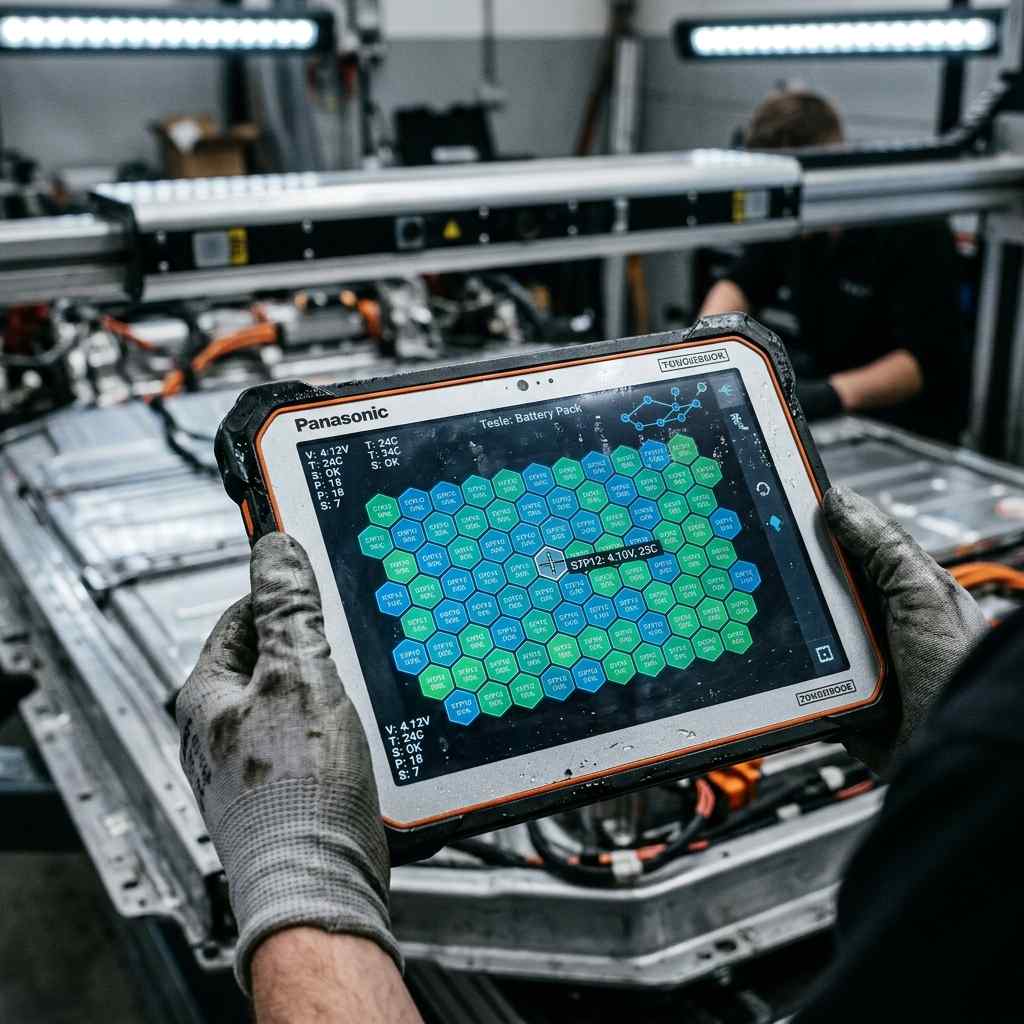
Electric-vehicle body work should not begin with casual dismantling around an uncertain impact. The vehicle condition, warnings, underbody contact and the area being opened need to be understood first. A body technician also needs to know when the job moves beyond cosmetic repair into an EV safety or specialist diagnostic question.
Construction changes the method
Not every Tesla panel should be repaired the same way
The label “Tesla aluminium body” is too broad for real repair planning. Material and construction vary by model, year and location. The estimator should identify what is actually damaged and how that component is joined before promising a repair method.
Steel and high-strength areas
Damage in steel outer or reinforcement areas is assessed for shape, stretch, joining condition and any limits on straightening, sectioning or heat.
Aluminium panels
Aluminium needs appropriate tools and contamination control. Cracks, sharp edge damage, work hardening and access can change repairability.
Plastic exterior parts
Bumper covers and trims may be repairable when material, crack position and mounting tabs remain suitable; damaged mounting geometry can favour replacement.
Cast or model-specific construction
Some Tesla structures use large cast sections or other model-specific construction. Visible damage near those areas needs procedure-led assessment rather than generic panel-beating assumptions.
Paint and finish control
A Tesla paint code is the starting point, not the finished match
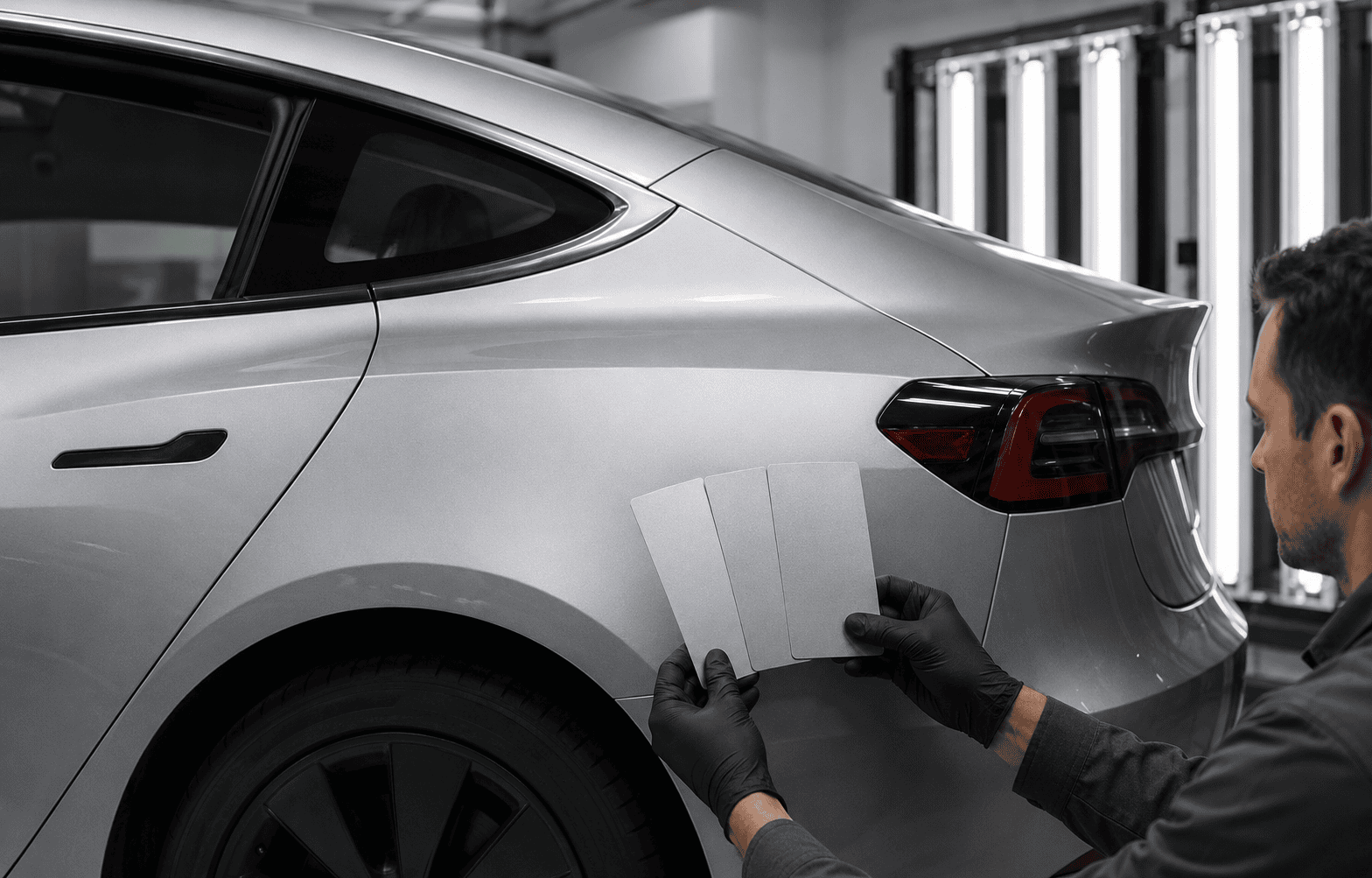
Colour can vary with production batch, age, previous repainting and effect orientation. The useful workflow starts with the vehicle code and formula family, then compares the actual panel using a spray-out or other controlled reference before the blend boundary is committed.
Our car paint-matching process explains why colour variants, spectrophotometer readings, spray-out cards and multi-angle inspection work together. When a scratch or accident has removed colour or damaged the coating system, the job moves into panel refinishing and car painting rather than endless polishing.
Body shop scope
What a Tesla accident-repair estimate can include
The final scope depends on the impact, model and parts required. These are repair categories, not a promise that every damaged vehicle needs every operation.
Bumper and exterior trim repair
Assessment of scratches, cracks, deformation, retainers, mounting tabs, neighbouring lamps and the fit of the repaired or replacement exterior component.
Dent and outer-panel repair
Metal or panel shaping where material, access, paint condition and repair limits support it, followed by a controlled refinishing plan when paint is broken.
Panel replacement planning
Part identification, trial fit, joining or fastening method, sealing, corrosion protection and the surrounding paint or trim operations required by the replacement.
Panel gap and closure fit
Door, bonnet, liftgate and exterior panel relationships are checked when impact distortion or dismantling could change alignment and operation.
Sensor-area and camera mounting checks
Disturbed brackets, bumper geometry and camera or sensor locations are documented so any scan, setup or calibration requirement can be handled appropriately.
Paint and handover inspection
Colour, gloss, texture, overspray, edges, disturbed trim and the agreed repair boundary are reviewed before the vehicle is presented as complete.
Model-specific repair pages
Use the Tesla model page when construction or impact zones change the answer
This page is the brand-level body-shop guide. The model pages go deeper into the body zones and repair questions that are more specific to each Tesla.
Sills, lower-body exposure, panel fit and front- or rear-corner impact planning.
Liftgate, bumper, quarter-panel, lower-body and accident paint-repair relationships.
Long body panels, hatch fit, aluminium-area decisions and finish inspection.
Falcon-wing door relationships, large openings, fitment and accident repair planning.
Stainless exterior construction and model-specific body-damage assessment.
Repair workflow
From damage photos to a documented Tesla body repair
The sequence keeps safety, hidden damage and finish decisions ahead of cosmetic shortcuts.
Photo triage and intake
Record model, year, impact area, warning messages, whether the vehicle moves normally and useful full-panel plus close damage photographs.
Safe-movement screening
Review underbody, sill, wheel-corner and EV warning evidence before deciding whether normal workshop intake or recovery is appropriate.
Expose hidden relationships
Remove only the trim or components needed to inspect mounting points, reinforcements, panel edges, wiring and adjacent damage.
Approve repair or replacement
Identify the material, access, repair limit, part requirement, joining method, paint boundary and any conditional work before production continues.
Refinish and reassemble
Complete substrate preparation, colour matching, paint application and controlled reassembly without using final gloss to hide unresolved fit problems.
QC and handover
Review panel fit, closures, finish, disturbed trim, warning status and job records. Our body-shop quality-control checklist explains the wider evidence used at handover.
Cost and timing
A useful Tesla body repair quote names the dependencies
One fixed “Tesla body repair price” is not a reliable way to estimate accident work. Cost and duration change with the model, impact path, panel construction, part availability, dismantling, hidden damage, paint scope and any specialist diagnostic or calibration dependency.
Handover evidence
The repair is not finished when the paint becomes shiny
A convincing handover checks the visible finish and the parts that were disturbed to create it. The final invoice should reflect the actual method if the scope changed after dismantling.
Questions Tesla owners ask
Tesla Body Shop Dubai FAQ
Do you repair Tesla accident and body damage in Dubai?
Yes. BodyShop.AE provides independent Tesla body and paint repair assessment in Al Quoz 4 for bumpers, exterior panels, dents, accident paintwork and related fitment. The actual scope is confirmed from the model, damage and inspection.
Are you an authorised Tesla Collision Center?
No. BodyShop.AE is an independent body and paint workshop and is not Tesla, an authorised Tesla Service Center or an official Tesla Collision Center. We state this clearly so customers can choose the repair route that suits them.
Can aluminium Tesla panels be repaired instead of replaced?
Sometimes. Repairability depends on the exact panel, alloy or construction, crack or stretch condition, edges, access and the applicable repair method. Not every Tesla panel is aluminium, so material should be identified before a method is promised.
Can a Tesla dent be repaired without repainting?
A suitable shallow dent may be considered for paintless repair when the original paint is intact and access supports it. A crease, cracked coating, stretched metal or damaged edge can require conventional body repair and refinishing.
Does a bumper repair affect Tesla cameras or sensors?
It can if the impact or repair changes a mounting point, bracket, bumper geometry or related component. Disturbed areas should be documented and any scan, setup or calibration requirement should be confirmed for the specific vehicle and repair.
How do you match Tesla paint after an accident?
The paint code identifies a formula family, but the vehicle finish is still compared for colour and effect. Variant selection, spray-out testing and multi-angle inspection help decide whether the repair can remain on one panel or needs a controlled blend.
How long does Tesla body repair take?
There is no honest single duration for every repair. A bumper cosmetic job and a repair needing parts, hidden-damage access, panel replacement, paint, reassembly and specialist checks have different timelines. The estimate should separate production time from parts or external waiting time.
Can you give a final Tesla repair price from photos?
Photos are useful for initial triage and visible-scope planning, but they can miss hidden mounts, reinforcement damage, previous repairs, lower-body contact and sensor-area issues. A final quote may need workshop access or dismantling.
Tesla body repair assessment
Send the impact, not just the closest scratch
Share the model, year, full damaged side, close impact area, panel gaps and any dashboard warning. We can use that evidence to plan the next inspection step before repair or replacement is approved.